KASH proteins transform from passive tethers to dynamic conductors of motor-driven nuclear dynamics
G. W. Gant Luxton, Selin Gümüşderelioğlu, Kassandra M. Ori-McKenney, Daniel A. Starr, Richard J. McKenney

TL;DR
This paper explores how KASH proteins act as dynamic organizers of nuclear movement and positioning, impacting various cellular processes and diseases.
Contribution
The paper introduces a new framework highlighting KASH proteins' roles beyond structural tethers, emphasizing their regulatory and disease-related functions.
Findings
KASH proteins selectively recruit microtubule motor proteins to control nuclear dynamics.
They coordinate actin and microtubule systems for cytoskeletal interactions.
Tissue-specific regulation of KASH proteins explains diverse disease manifestations.
Abstract
Nuclear-cytoskeletal coupling orchestrates critical cellular processes from migration to tissue organization. At the core of this machinery, outer nuclear membrane Klarsicht/ANC-1/SYNE homology (KASH) proteins function as sophisticated molecular conductors rather than simple structural tethers. This review examines three principles redefining these versatile proteins: specialized interfaces for selective microtubule motor protein recruitment that orchestrate diverse chromosomal and nuclear dynamics, coordination of multiple cytoskeletal systems through simultaneous engagement with actin and microtubules, and tissue-specific regulation that explains the diverse KASH protein-related disease manifestations. This framework provides insights into conditions from muscular dystrophy to neurodegeneration and suggests targeted therapeutic opportunities.
Genes, proteins, chemicals, diseases, species, mutations and cell lines named across the full text — each resolved to its canonical identifier and authoritative record.
Click any figure to enlarge with its caption.
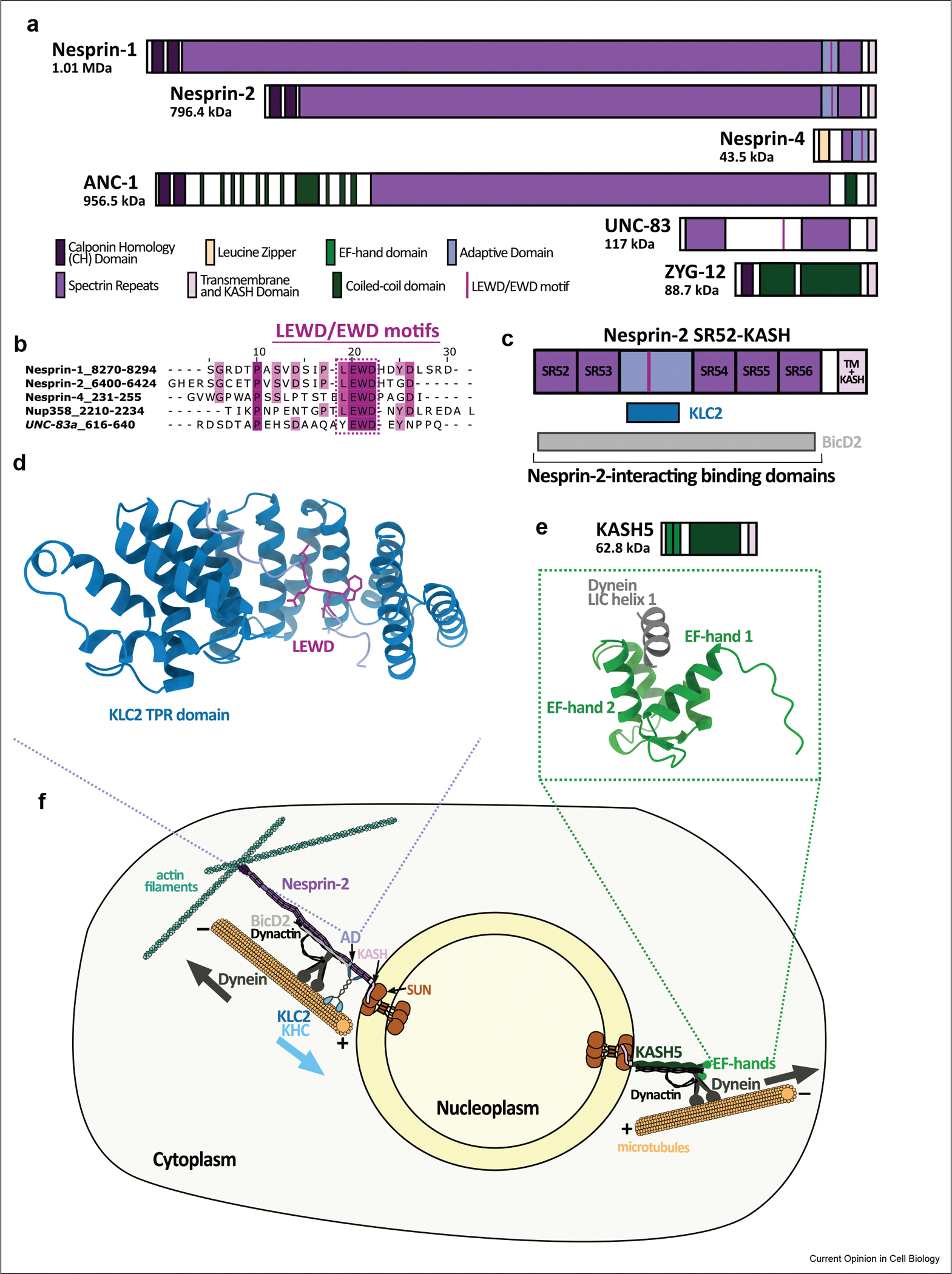 Figure 1
Peer Reviews
No public reviews on file for this paper yet. If you reviewed it on a platform where reviews are public (OpenReview, ICLR, NeurIPS, ICML), you can paste yours below so the community can read it here.
Videos
No videos yet. Explain this paper in a talk, walkthrough, or lecture? Add one.
Taxonomy
TopicsNuclear Structure and Function · RNA Research and Splicing · Virus-based gene therapy research