Proximal 4p deletion syndrome in a woman with intellectual disability: a case report and literature review
Liqiang Wei, Yu He, Denghe Liu, Xiaojv Chi, Xi Qin

TL;DR
A Chinese woman with a rare 4p chromosome deletion is reported, offering insights into the genetic basis of proximal 4p deletion syndrome and its associated traits.
Contribution
This case report expands the clinical and genetic understanding of proximal 4p deletion syndrome by identifying potential causative genes and enhancing genotype-phenotype correlations.
Findings
The patient had an 11.7 Mb deletion in 4p16.2-p15.32 and a 1.25 Mb duplication in 16p13.13.
Genes DRD5, WFS1, CC2D2A, PROM1, and QDPR were linked to the patient's intellectual disability and ovarian dysfunction.
Overlap in the deleted region was found in 17 of 37 published cases, aiding genotype-phenotype correlation studies.
Abstract
Deletions in chromosome 4p can lead to two distinct phenotypes, Wolf-Hirschhorn syndrome (WHS) and proximal 4p deletion syndrome. While WHS, associated with distal deletions, has well-characterized phenotypic features, proximal 4p deletion syndrome, involving the 4p14-p 16.1 region, shows moderate manifestations, and its causative gene remains unknown with fewer reported cases. Here we report a Chinese case: a 21-year-old female with a peripheral blood chromosomal karyotype of 46,XX, del(4)(p15.3-p16). NGS-CNVA further revealed an 11.7 Mb deletion in the 4p16.2-p15.32 region and a 1.25 Mb microduplication in 16p13.13. She had ovarian dysfunction, and moderate Intellectual Disability(ID) without typical proximal 4p deletion phenotypes. Through analysis of Genecards and OMIM databases, we identified two neurodevelopmental genes DRD5 and WFS1, and four ovarian dysfunction-related genes…
Genes, proteins, chemicals, diseases, species, mutations and cell lines named across the full text — each resolved to its canonical identifier and authoritative record.
Click any figure to enlarge with its caption.
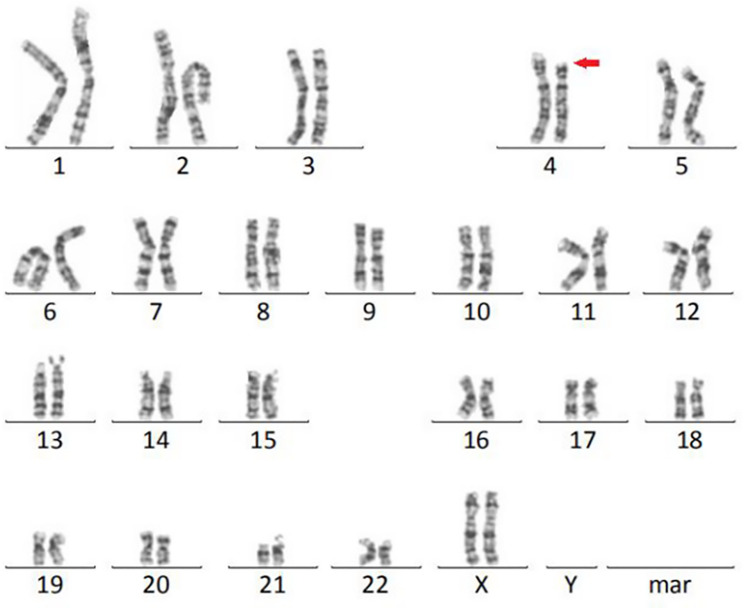 Figure 1
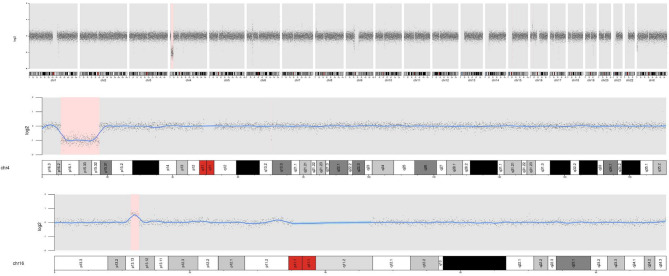 Figure 2
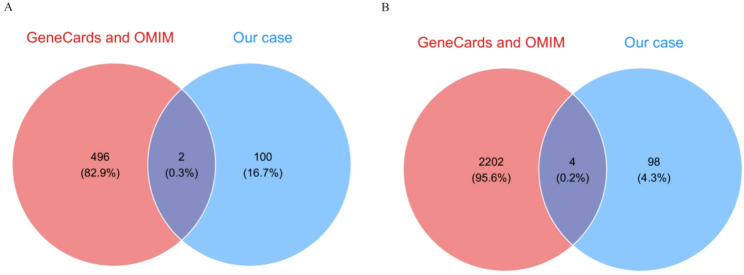 Figure 3
Peer Reviews
No public reviews on file for this paper yet. If you reviewed it on a platform where reviews are public (OpenReview, ICLR, NeurIPS, ICML), you can paste yours below so the community can read it here.
Videos
No videos yet. Explain this paper in a talk, walkthrough, or lecture? Add one.
Taxonomy
TopicsGenomic variations and chromosomal abnormalities · Genome Rearrangement Algorithms · Prenatal Screening and Diagnostics