Analyses of contiguous reference genomes of Amaranthus tuberculatus highlight the landscape of the sex-associated region and PEBP gene family diversity
Damilola A. Raiyemo, Luan Cutti, Eric L. Patterson, Victor Llaca, Kevin Fengler, Jacob S. Montgomery, Sarah Morran, Todd A. Gaines, Patrick J. Tranel

TL;DR
This study explores the genome of waterhemp, focusing on the sex-determination region and PEBP gene family, offering insights into its evolution and genetic diversity.
Contribution
The study provides a high-quality genome assembly and identifies a sex-associated region with unique genomic features and gene expression patterns.
Findings
A ~31.8 Mb sex-associated region on chromosome 1 was identified, rich in LTR retrotransposons and containing gene expression differences between male and female flowers.
Synteny analysis suggests chromosome 1 originated from the fusion of two ancestral chromosomes.
The PEBP gene family was characterized, shedding light on FLOWERING LOCUS T diversity in amaranths.
Abstract
Amaranthus tuberculatus (waterhemp) is a troublesome agronomic weed species that is dioecious with an XY sex-determination system. The evolution of the sex-determining region (SDR), the contiguity of the region, genomic landscape, and the expression pattern of genes within the region remain poorly understood. We assembled a high-quality, chromosome-level nuclear genome and chloroplast and mitochondrial genomes of a male A. tuberculatus. Combining the genomes with restriction site-associated DNA genome-wide association (RAD-GWA) analysis, comparative genomics, adaptive evolution analysis, and transcriptomic profiling, we identified a ~ 31.8 Mb region on chromosome 1 that is strongly associated with sex. This region is gene-poor, abundant in long terminal repeat (LTR) retrotransposons, and harbors two inversions and a 3.19 Mb haplotype-specific region. Synteny analysis revealed that…
Genes, proteins, chemicals, diseases, species, mutations and cell lines named across the full text — each resolved to its canonical identifier and authoritative record.
Click any figure to enlarge with its caption.
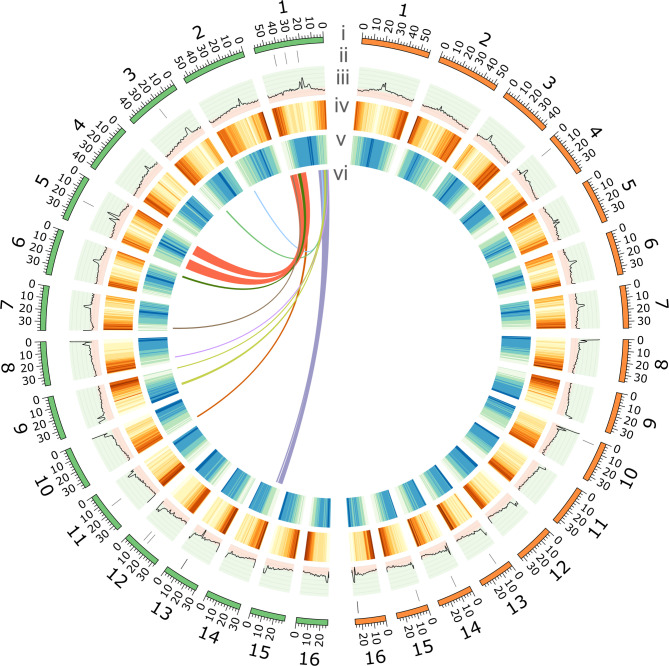 Figure 1
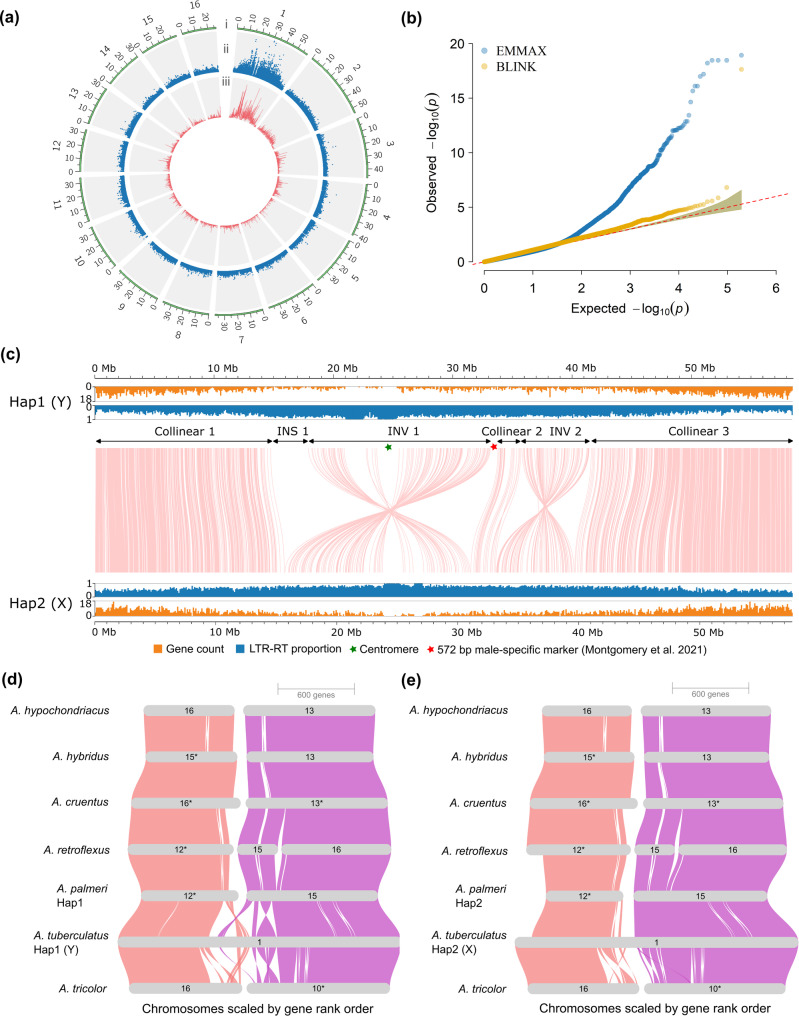 Figure 2
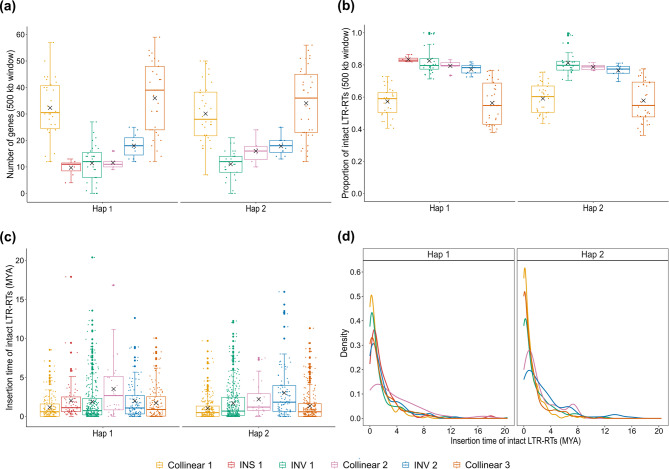 Figure 3
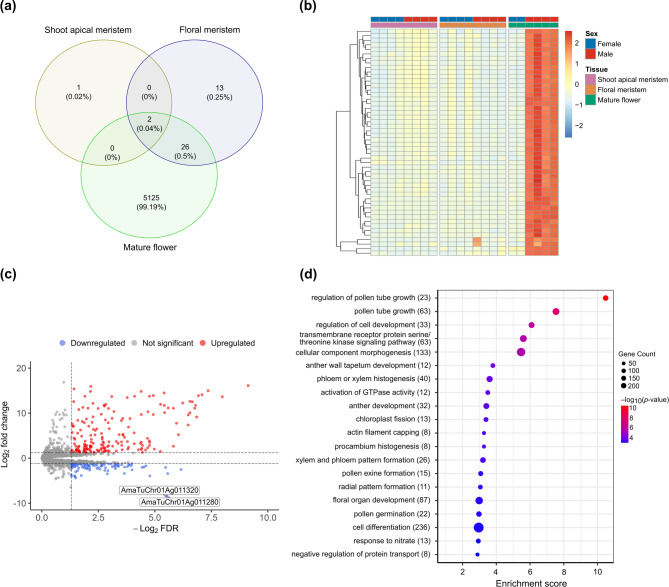 Figure 4
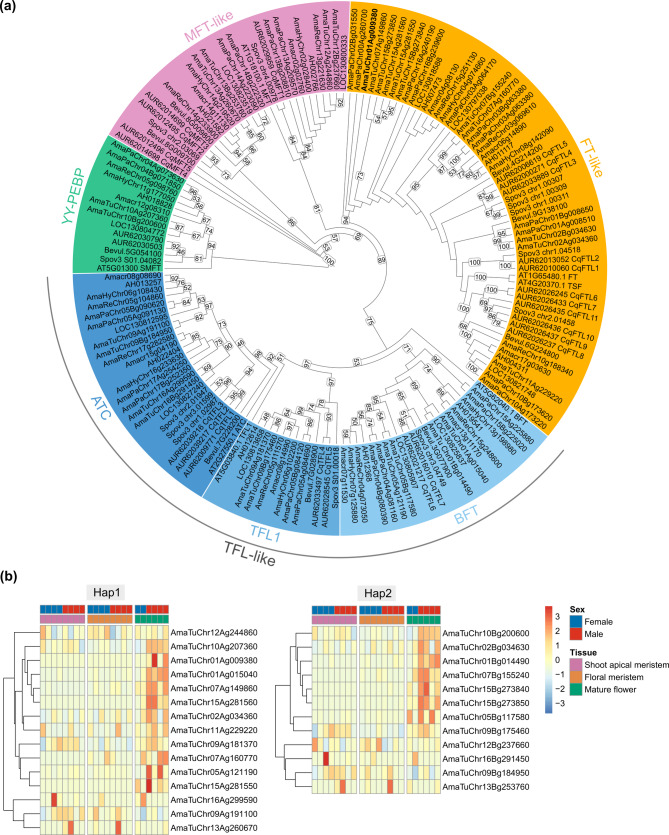 Figure 5
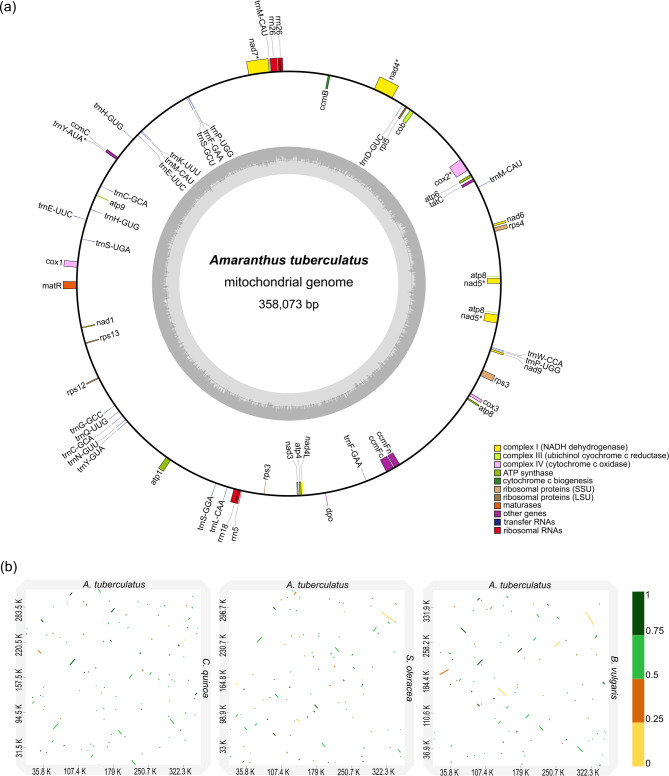 Figure 6
Peer Reviews
No public reviews on file for this paper yet. If you reviewed it on a platform where reviews are public (OpenReview, ICLR, NeurIPS, ICML), you can paste yours below so the community can read it here.
Videos
No videos yet. Explain this paper in a talk, walkthrough, or lecture? Add one.
Taxonomy
TopicsGenetic and Clinical Aspects of Sex Determination and Chromosomal Abnormalities · Seed and Plant Biochemistry · Chromosomal and Genetic Variations