Thyroid hormone receptor beta-2 (TRβ2) overexpression modulates photoreceptor phenotype diversity in a ligand-dependent manner
Emmanuel Owusu Poku, Matthew R. Fonte, Tyler J. Jensen, Sydney P. Inman, Robert D. Mackin, Deborah L. Stenkamp

TL;DR
This study shows how thyroid hormone and its receptor TRβ2 influence the development of different types of light-sensitive cells in zebrafish eyes.
Contribution
The study reveals that TRβ2's effect on photoreceptor diversity depends on ligand availability and can cause subtype-specific changes.
Findings
Unliganded TRβ2 promotes lws2 opsin expression, while liganded TRβ2 upregulates lws1 in a dose-dependent manner.
TRβ2 overexpression leads to co-expression of lws2 in non-LWS cones, suggesting possible transfating of photoreceptor subtypes.
TH supplementation alters cone subtype numbers and morphologies without inducing cell death.
Abstract
Vertebrate color vision results from the specification of photoreceptor subtypes expressing distinct opsins. Thyroid hormone (TH) and its receptor TRβ2 are essential regulators of long-wavelength-sensitive (LWS) cone development, but their ligand-dependent roles in regulating cone subtype fate remain unclear. We investigated how varying TH availability and TRβ2 overexpression impact cone photoreceptor diversity and opsin expression using a gain-of-function transgenic zebrafish line (crx:trβ2), which expresses TRβ2 in all photoreceptors, and manipulated TH levels through T3 supplementation or ablation of the thyroid gland. Samples were analyzed through a combination of hybridization chain reaction in situ hybridization, confocal microscopy, and quantitative RT-PCR. we found evidence consistent with the hypothesis that unliganded TRβ2 predominantly promotes lws2 expression, while…
Genes, proteins, chemicals, diseases, species, mutations and cell lines named across the full text — each resolved to its canonical identifier and authoritative record.
Click any figure to enlarge with its caption.
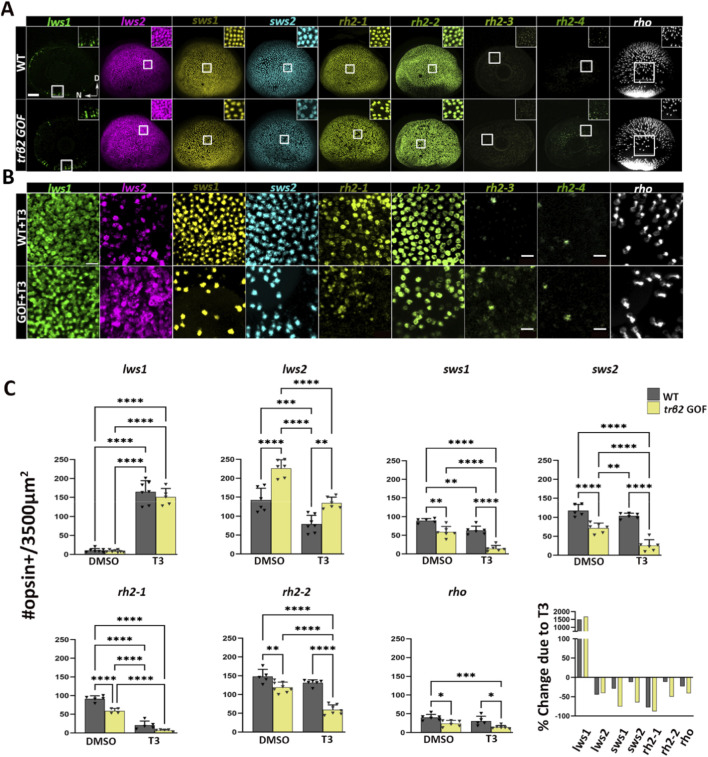 Figure 1
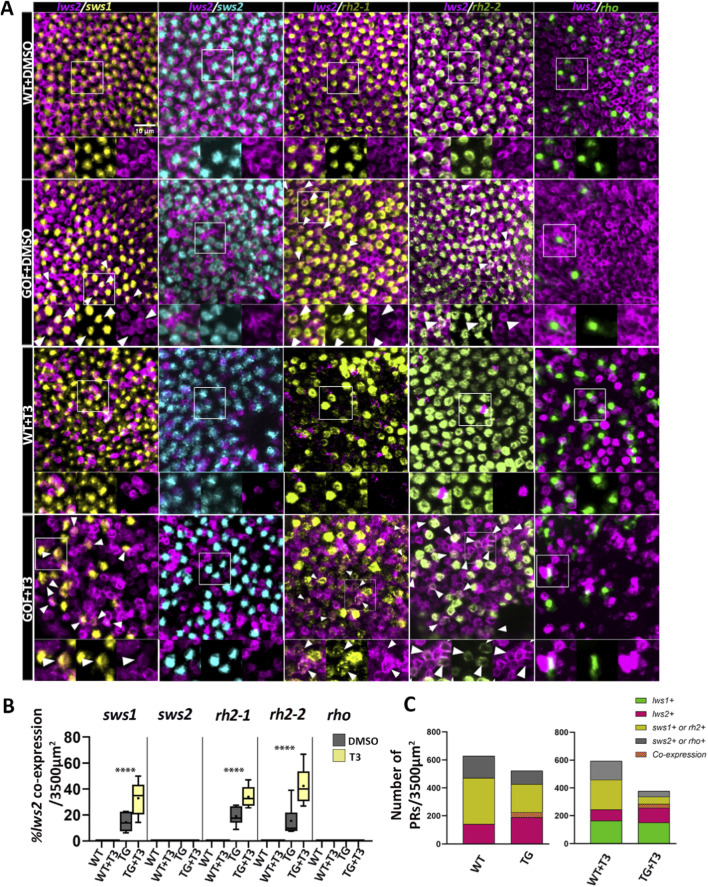 Figure 2
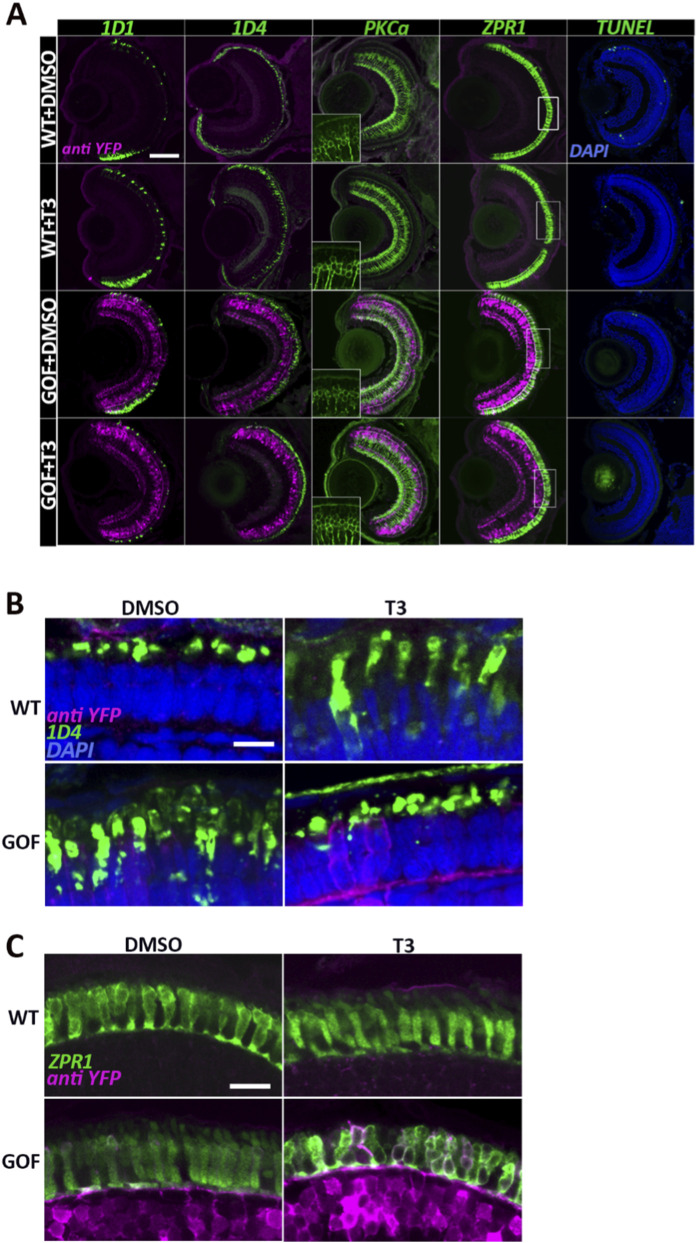 Figure 3
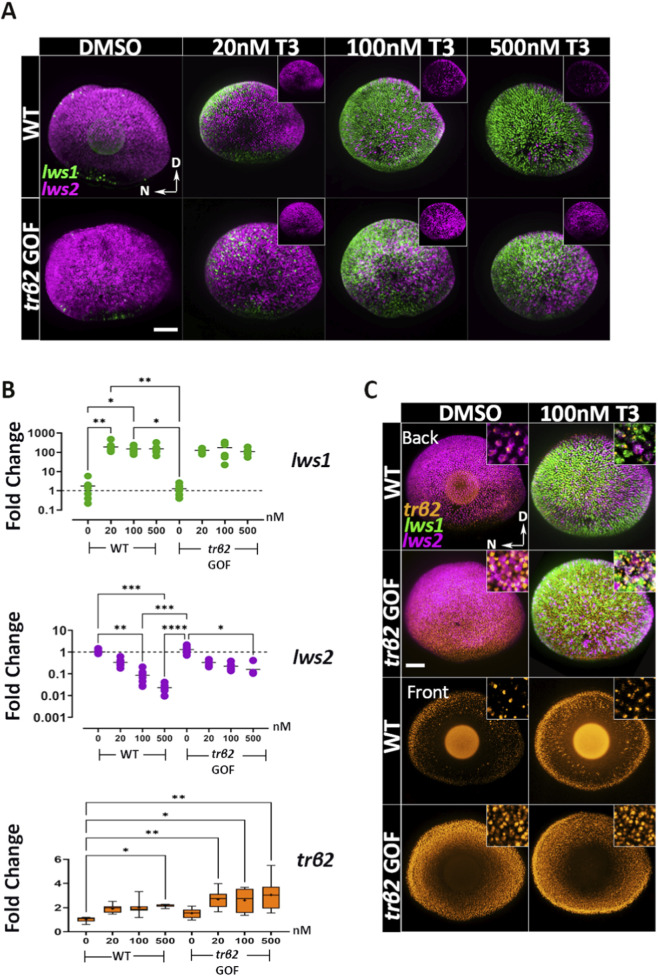 Figure 4
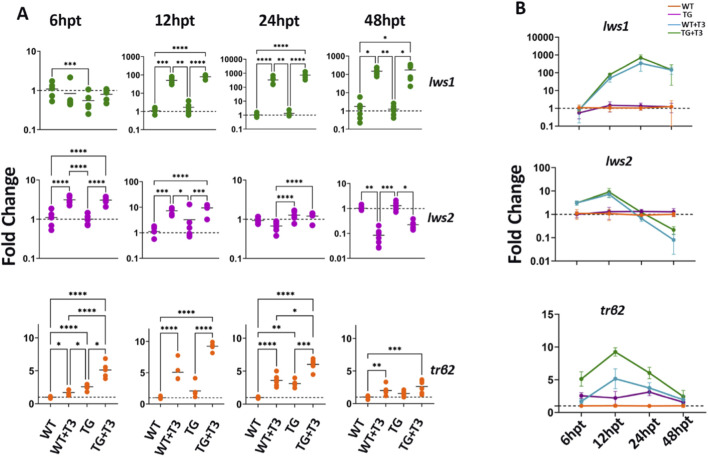 Figure 5
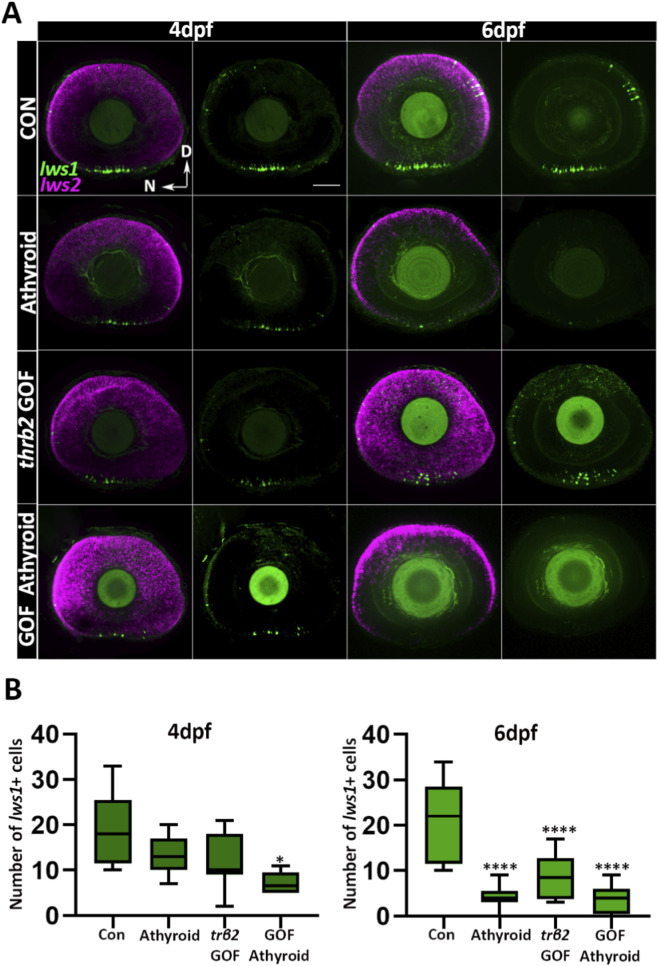 Figure 6
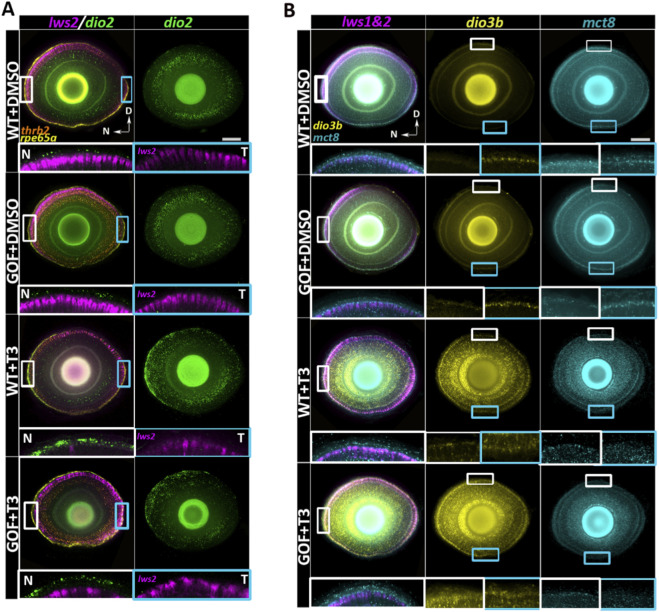 Figure 7
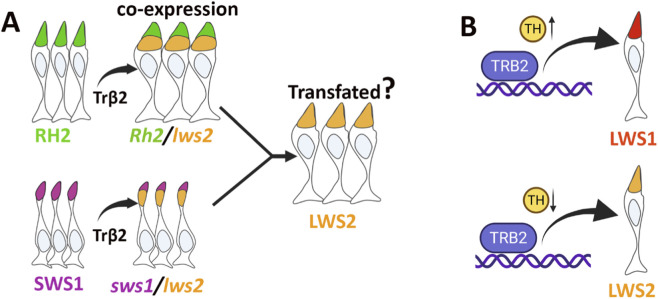 Figure 8
Peer Reviews
No public reviews on file for this paper yet. If you reviewed it on a platform where reviews are public (OpenReview, ICLR, NeurIPS, ICML), you can paste yours below so the community can read it here.
Videos
No videos yet. Explain this paper in a talk, walkthrough, or lecture? Add one.
Taxonomy
TopicsRetinal Development and Disorders · Retinoids in leukemia and cellular processes · Photochromic and Fluorescence Chemistry