Do predictors of abstinence change in the medium- and long-term follow-up of smokers who have quit smoking? A prospective cohort study
José I. de Granda-Orive, Carlos A. Jiménez-Ruiz, Maria Isabel Cristóbal-Fernández, Carlos Rábade-Castedo, Paz Vaquero-Lozano, Elia Pérez-Fernández, María Inmaculada Gorordo-Unzueta, Lourdes Lázaro-Asegurado, Eva de Higes-Martínez, Juan Antonio Riesco-Miranda

TL;DR
This study examines how factors influencing smoking cessation change over time, finding that some predictors remain consistent in the medium and long term.
Contribution
The study identifies and compares predictors of smoking cessation at 24 and 52 weeks, revealing which factors remain stable over time.
Findings
Baseline weight, previous quit attempts, and sedation levels predict 24-week abstinence.
Male gender, low self-efficacy, and adherence to treatment predict 52-week abstinence.
Three predictors—no previous quit attempts, lower sedation, and treatment adherence—are consistent over time.
Abstract
We hypothesize that the predictors of smoking cessation in the medium-term are not the same as in the long-term of follow-up. The aim of this study was to identify predictors for smoking cessation (continuous abstinence) and determine if these are maintained over time. This is an observational longitudinal (prospective cohort) multicenter study conducted in daily clinical practice in Spain. Patients were consecutively enrolled as they attended consultations, and all patients followed for 12 months. To identify predictors of smoking cessation (at 24 and 52 weeks post-cessation) we have collected sociodemographic and clinical data, smoking consumption characteristics, and psychological and physical dependence variables. Multivariate logistic regression models were fitted. The analysis was by intention to treat. A total of 337 participants were considered for the study. Predictors of…
Genes, proteins, chemicals, diseases, species, mutations and cell lines named across the full text — each resolved to its canonical identifier and authoritative record.
Click any figure to enlarge with its caption.
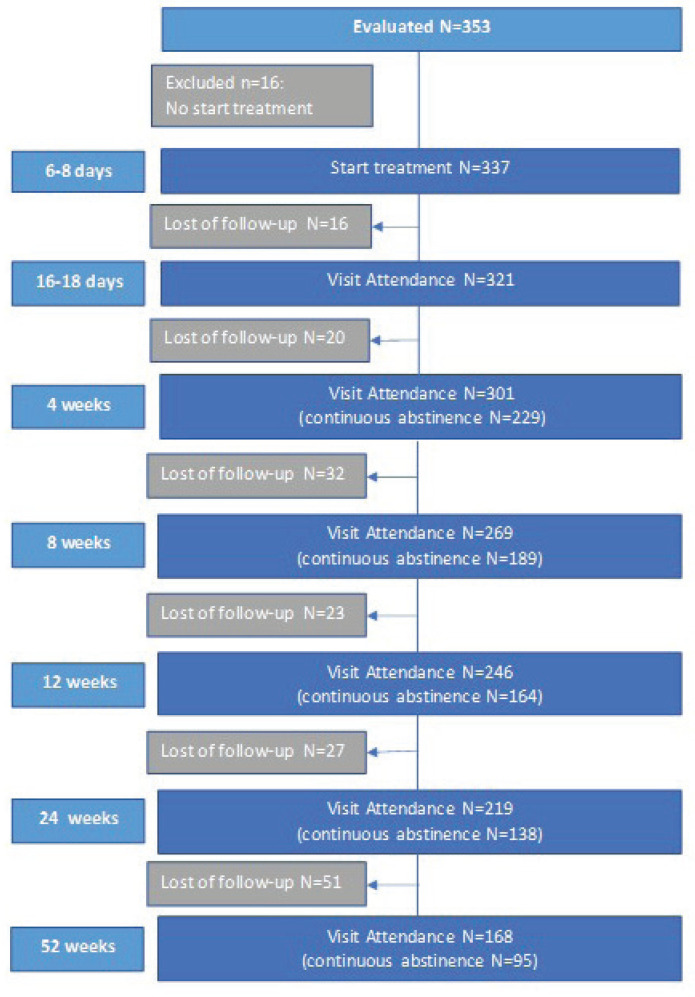 Figure 1
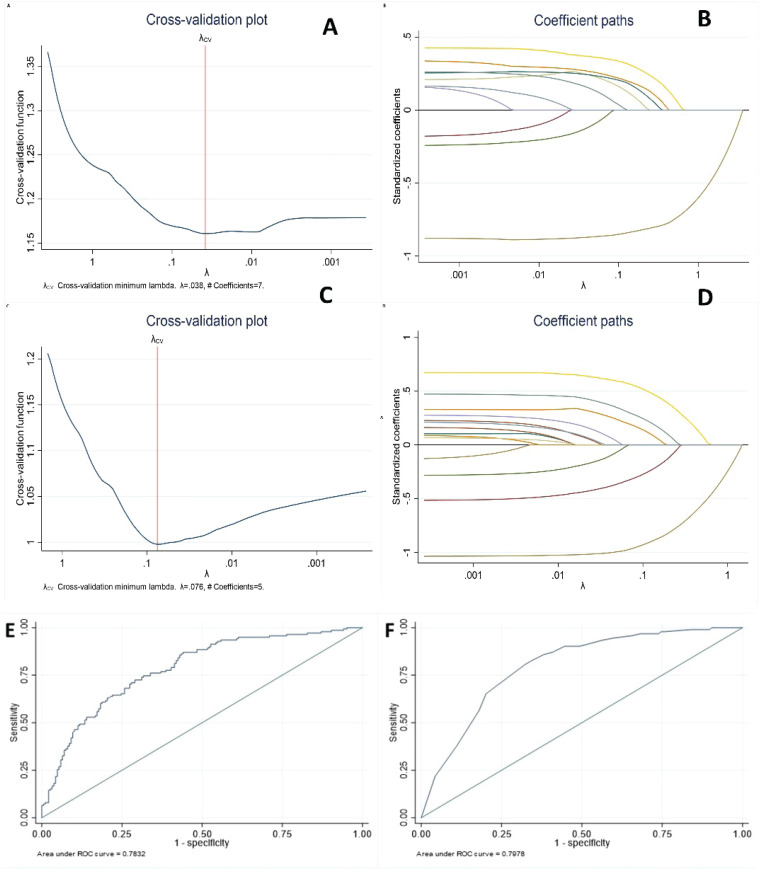 Figure 2
Peer Reviews
No public reviews on file for this paper yet. If you reviewed it on a platform where reviews are public (OpenReview, ICLR, NeurIPS, ICML), you can paste yours below so the community can read it here.
Videos
No videos yet. Explain this paper in a talk, walkthrough, or lecture? Add one.
Taxonomy
TopicsSmoking Behavior and Cessation · Substance Abuse Treatment and Outcomes · Gambling Behavior and Treatments