Correlations in the Binding Energy of Triexcitons and Biexcitons in Single CdSe/CdS Nanoplatelets Revealed by Heralded Spectroscopy
Daniel Amgar, Dekel Nakar, Nadav Frenkel, Dan Oron

TL;DR
Researchers studied how triexcitons and biexcitons bind in CdSe/CdS nanoplatelets and found a strong correlation between their energies, which could help design better photon emitters.
Contribution
The study reveals a strong correlation between triexciton and biexciton binding energies and shows how these can be tuned via nanoplatelet dimensions and composition.
Findings
Triexciton binding energy is 5.9 ± 0.7 meV and recombines through 1S bands.
Biexciton and triexciton exhibit a blue shift, indicating repulsive interactions.
Nanoplatelet dimensions and composition can tune binding energies for photon triplet emission.
Abstract
Semiconductor nanoplatelets present reduced Auger recombination, giving rise to enhanced multiexciton emission. This virtue makes them good candidates to investigate higher-order carrier dynamics, allowing extraction of important excitonic properties, such as biexciton and triexciton binding energies that highly influence applications involving high excitation fluxes. Here, we explore triexciton emission, emanating from single core/shell CdSe/CdS nanoplatelets. We apply heralded postselection of photon triplets using an advanced home-built single-photon spectrometer in order to resolve the triexciton–biexciton–exciton–ground state cascaded relaxation in both time and spectrum, and unambiguously determine the triexciton relaxation route and interaction nature. The results show a characteristic blue shift of the biexciton and triexciton, pointing to repulsive multiexciton interaction in…
Genes, proteins, chemicals, diseases, species, mutations and cell lines named across the full text — each resolved to its canonical identifier and authoritative record.
Click any figure to enlarge with its caption.
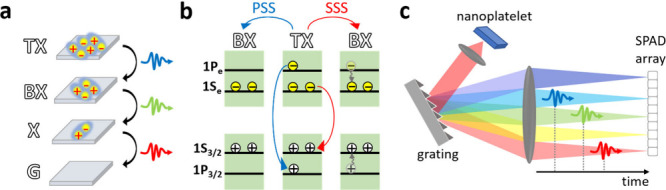 Figure 1
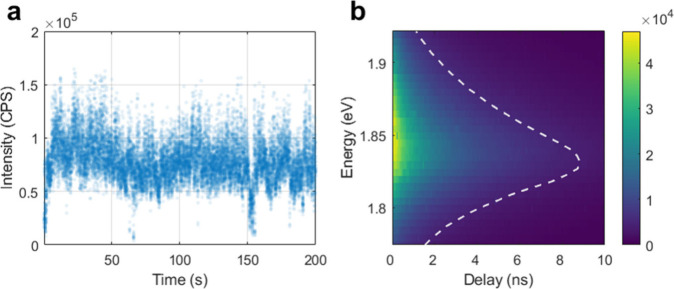 Figure 2
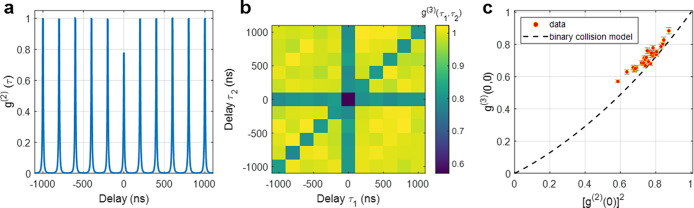 Figure 3
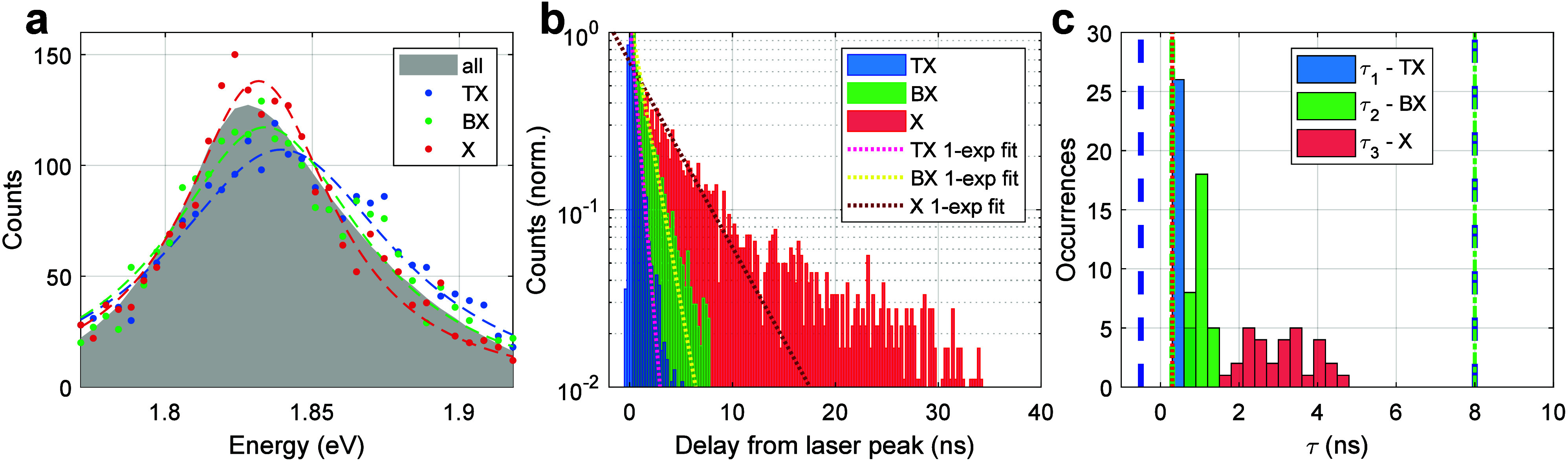 Figure 4
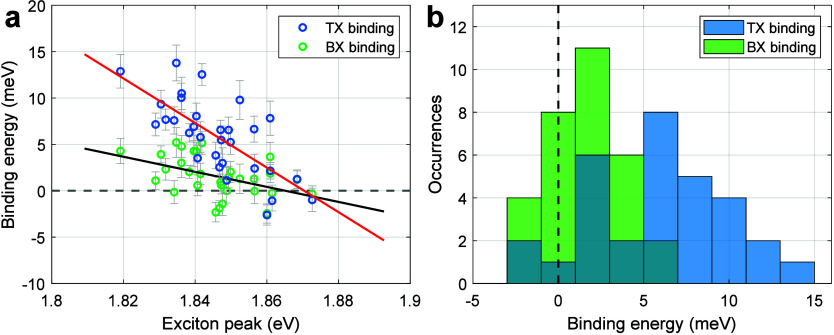 Figure 5
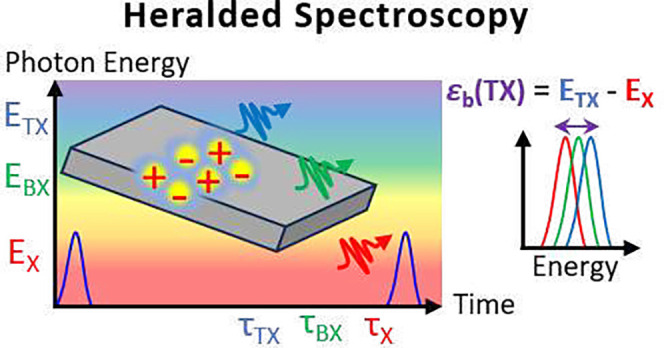 Figure 6
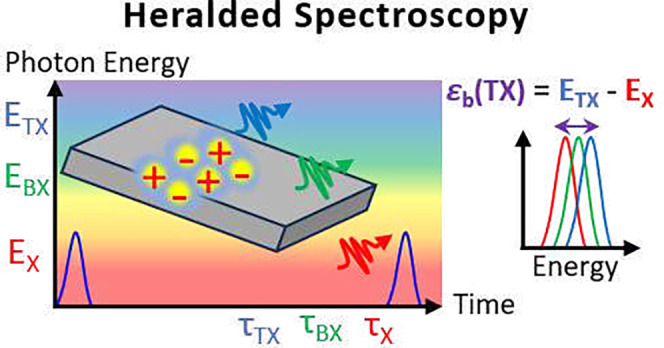 Figure 7
 Figure 8
Peer Reviews
No public reviews on file for this paper yet. If you reviewed it on a platform where reviews are public (OpenReview, ICLR, NeurIPS, ICML), you can paste yours below so the community can read it here.
Videos
No videos yet. Explain this paper in a talk, walkthrough, or lecture? Add one.
Taxonomy
TopicsQuantum Dots Synthesis And Properties · Chalcogenide Semiconductor Thin Films · Semiconductor Quantum Structures and Devices