How Important Are Dimers for Interpreting the Chiroptical Properties of Carboxylic Acids? A Case Study with [5]-Ladderanoic Acid
Andrew R. Puente, Prasad L. Polavarapu

TL;DR
This study investigates how dimer formation affects the chiroptical properties of [5]-ladderanoic acid using experimental and theoretical methods.
Contribution
The study reveals the importance of dimer contributions in interpreting VCD and ORD data for chiral carboxylic acids.
Findings
Dimer contributions are important for reproducing vibrational absorption and VCD spectra with a 30:70 monomer:dimer ratio.
Dimer contributions do not significantly improve Raman and ROA spectra, indicating a 100:0 monomer:dimer ratio.
A 70:30 monomer:dimer mixture achieves quantitative agreement with experimental ORD data.
Abstract
Chiroptical spectroscopy is sensitive to the formation of intermolecular interactions for chiral molecules. Experimental Vibrational Circular Dichroism (VCD), Vibrational Raman Optical Activity (ROA), and Optical Rotatory Dispersion (ORD) data of (−)-[5]-ladderanoic acid in chloroform have been analyzed using theoretical predictions for both monomeric and dimeric structures of (R)-[5]-ladderanoic acid to better understand their utility for the interpretation of experimental data. B3LYP, B3PW91, and M06-2X functionals, with and without dispersion corrections, and the 6-31+G(2d,p) basis set were used for theoretical predictions. It is found that dimer contributions are important to better reproduce the experimental vibrational absorption and associated VCD spectra, and a monomer:dimer ratio of 30:70 is indicated at the B3LYP level. However, no significant improvement is evident from…
Genes, proteins, chemicals, diseases, species, mutations and cell lines named across the full text — each resolved to its canonical identifier and authoritative record.
Click any figure to enlarge with its caption.
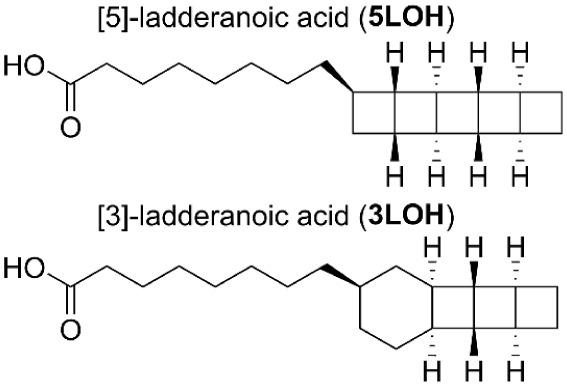 Figure 1
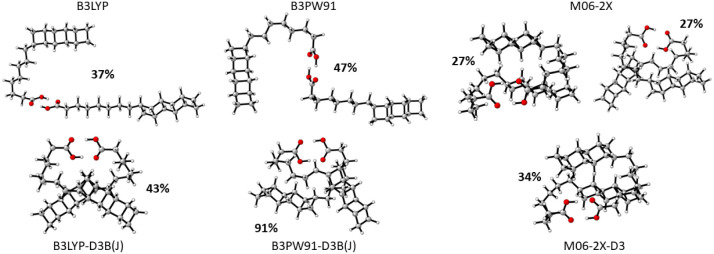 Figure 2
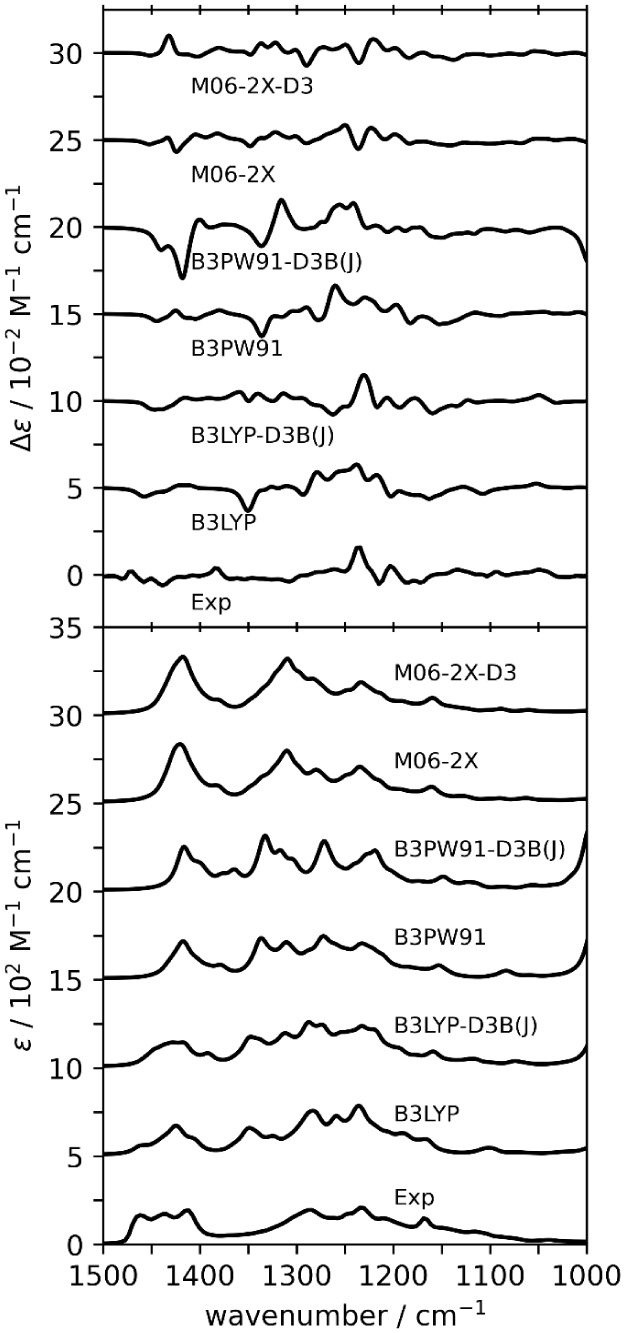 Figure 3
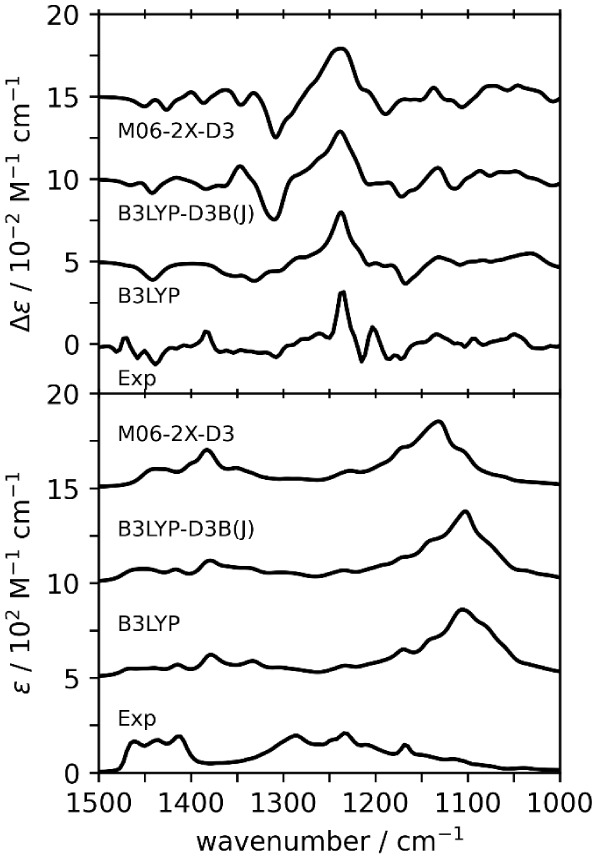 Figure 4
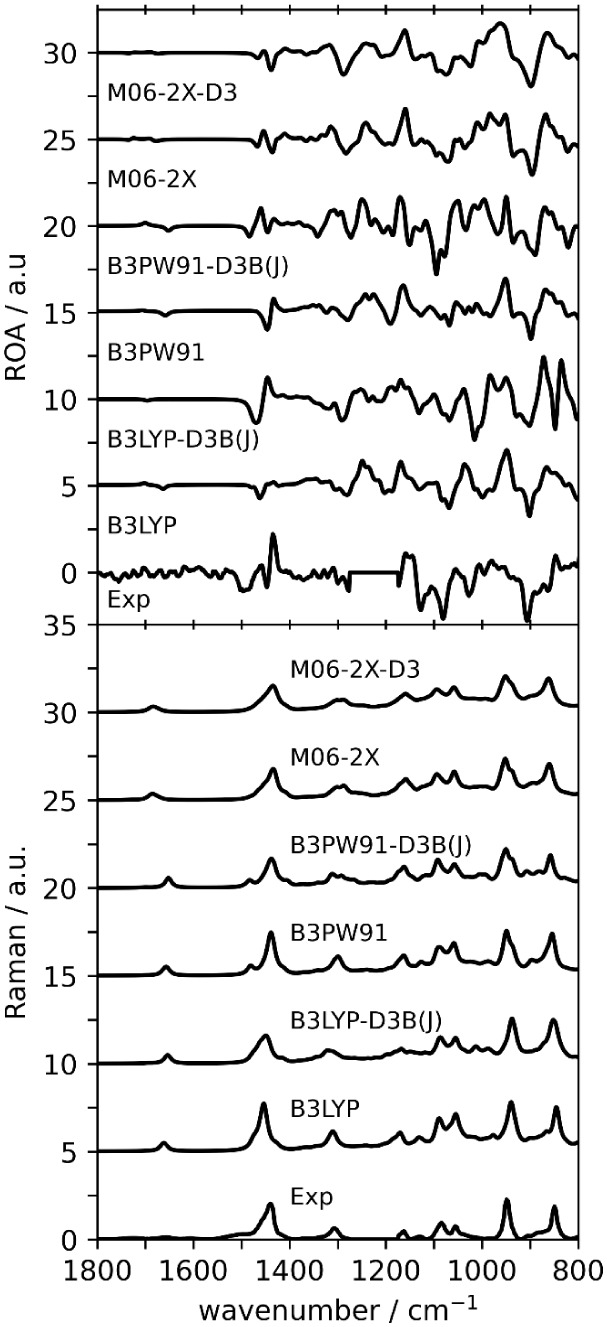 Figure 5
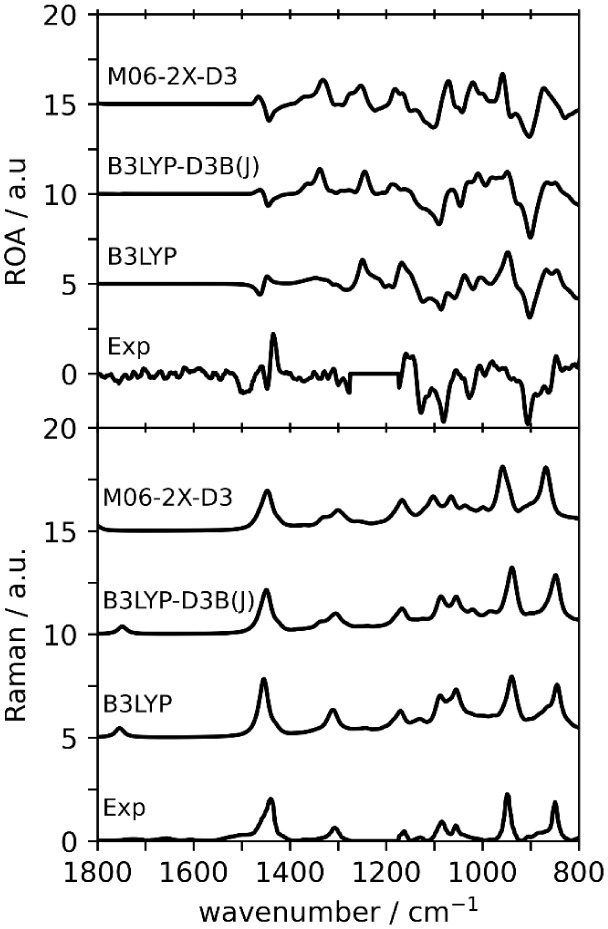 Figure 6
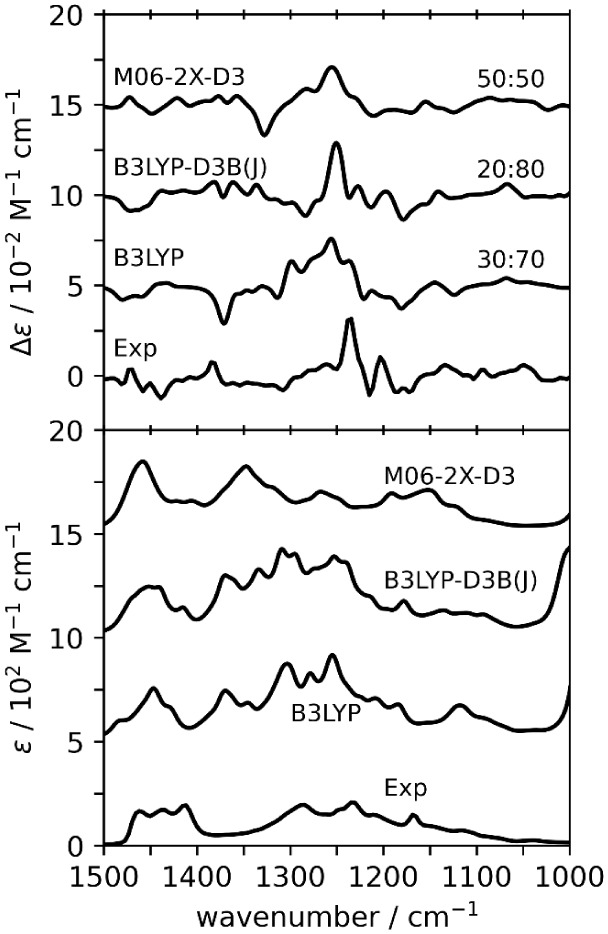 Figure 7
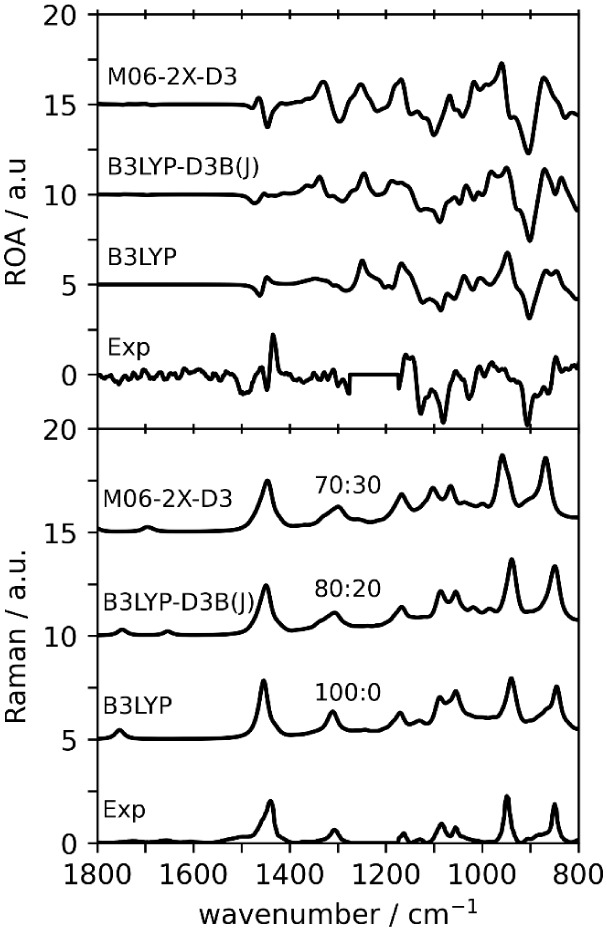 Figure 8
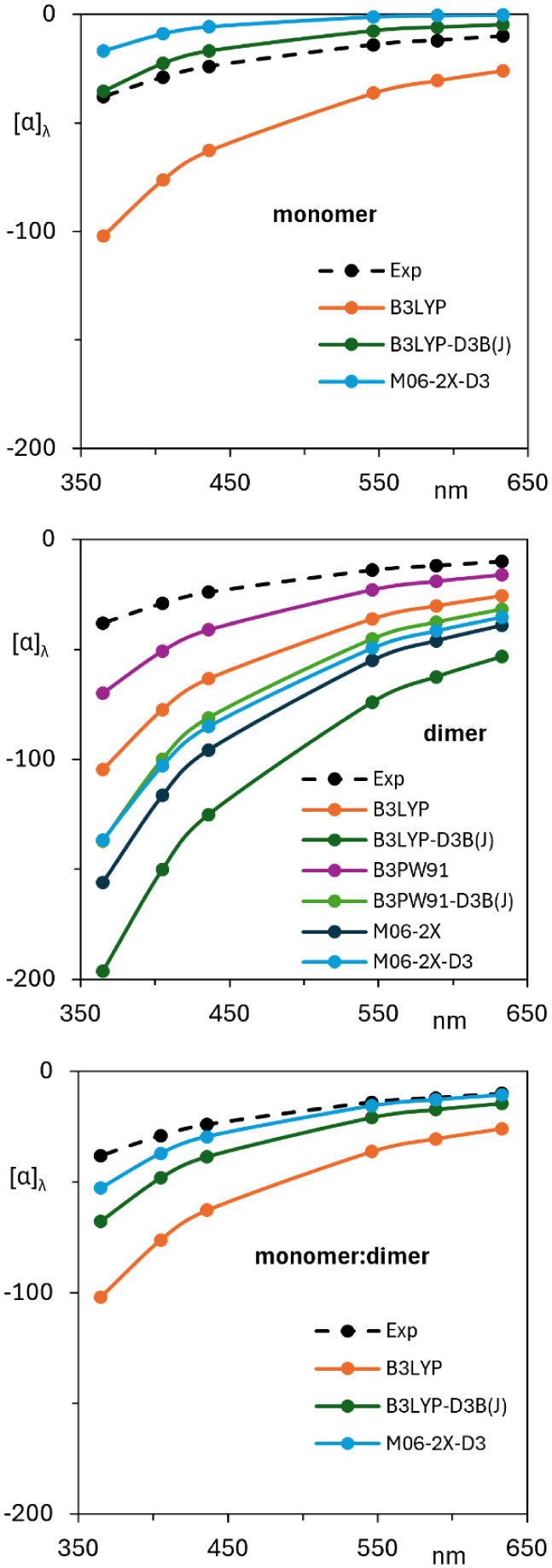 Figure 9
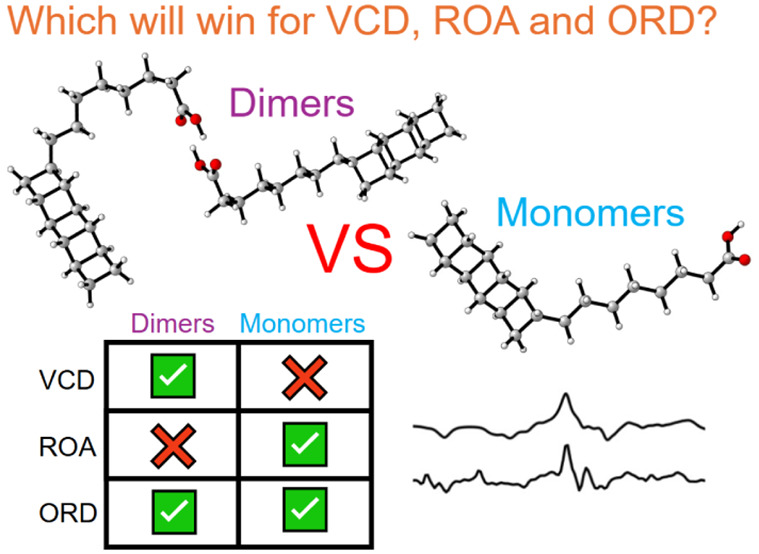 Figure 10
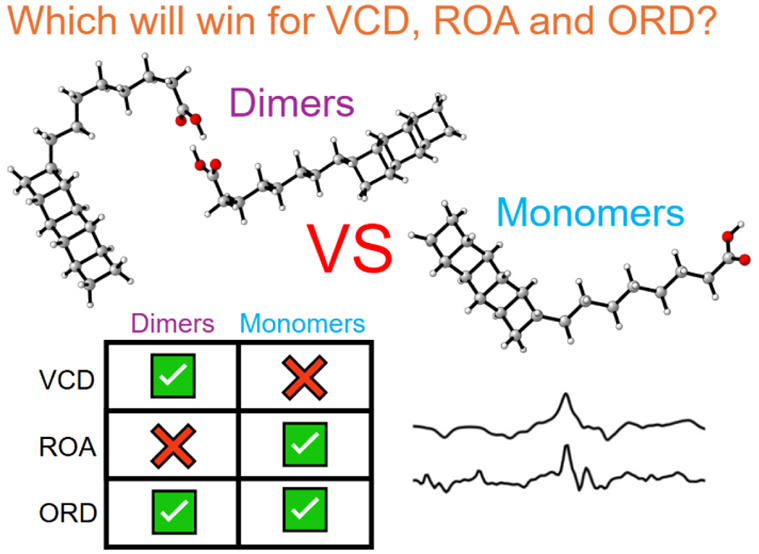 Figure 11
Peer Reviews
No public reviews on file for this paper yet. If you reviewed it on a platform where reviews are public (OpenReview, ICLR, NeurIPS, ICML), you can paste yours below so the community can read it here.
Videos
No videos yet. Explain this paper in a talk, walkthrough, or lecture? Add one.
Taxonomy
TopicsMolecular spectroscopy and chirality · Axial and Atropisomeric Chirality Synthesis · Analytical Chemistry and Chromatography