First-Principles Molecular Dynamics Simulations of Infrared and Raman Vibrational Spectra of H5O2 +, D5O2 +, DH4O2 +, and D4HO2 + from 50 to 300 K
Oluwaseun Omodemi, Martina Kaledin

TL;DR
This paper uses simulations to study the vibrational spectra of water cluster ions at different temperatures, revealing new insights into their structural prevalence.
Contribution
The study provides new temperature-dependent insights into the O···O stretch region and isotopologue prevalence using first-principles simulations.
Findings
DH4O2+ (ext) is at least 90% prevalent between 50–300 K due to low zero-point energy.
D4HO2+ (ext) becomes dominant over D4HO2+ (int) at 84.9 K and higher, contrary to previous assumptions.
Rovibrational thermal averaging helps clarify complex spectra of partially deuterated isotopologues.
Abstract
We report molecular dynamics simulations of infrared (IR) and Raman spectra of H5O2 + and its deuterium-substituted analogs. We use the well-tested HBB potential and dipole surfaces along with a recently fitted polarizability surface of CCSD(T)/aug-cc-pVTZ quality. The focus of the present work is to provide new insights into the O···O stretch region, located in the [500–700] cm–1 spectral range, by means of analyzing the spectra over a broad range of temperatures: from 50 to 300 K. Also, rovibrational thermal averaging was performed to untangle the unusually complex spectra of partially deuterated isotopologues DH4O2 + and D4HO2 + with H and D minority species in both internal (int) and external (ext) positions. Our findings show that DH4O2 + (ext) is at least 90% prevalent at the [50–300] Kelvin temperatures, predominantly due to its low zero-point energy (ZPE). Furthermore, contrary…
Genes, proteins, chemicals, diseases, species, mutations and cell lines named across the full text — each resolved to its canonical identifier and authoritative record.
Click any figure to enlarge with its caption.
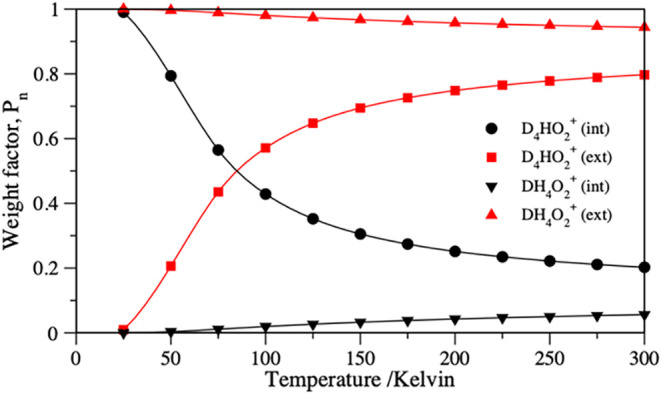 Figure 1
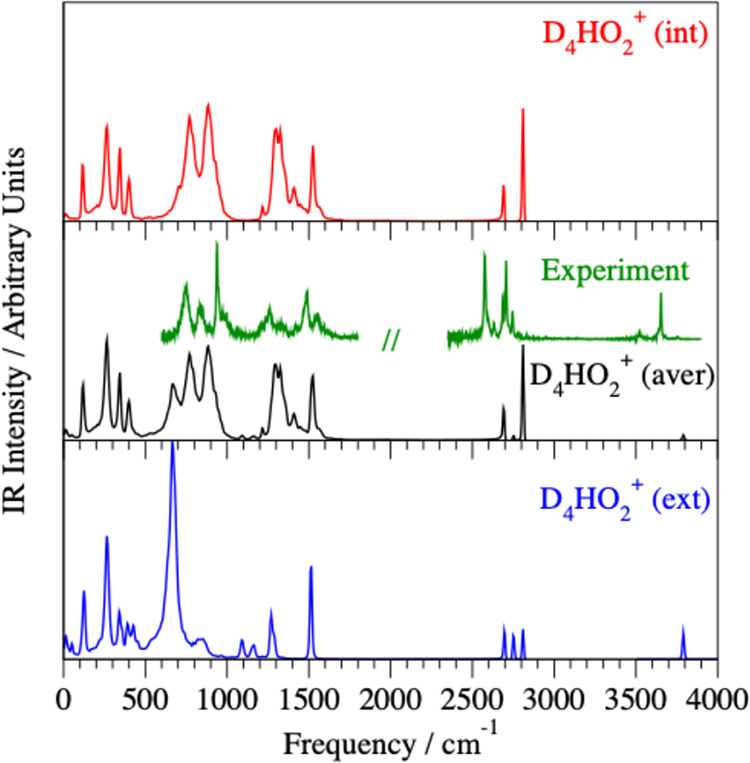 Figure 2
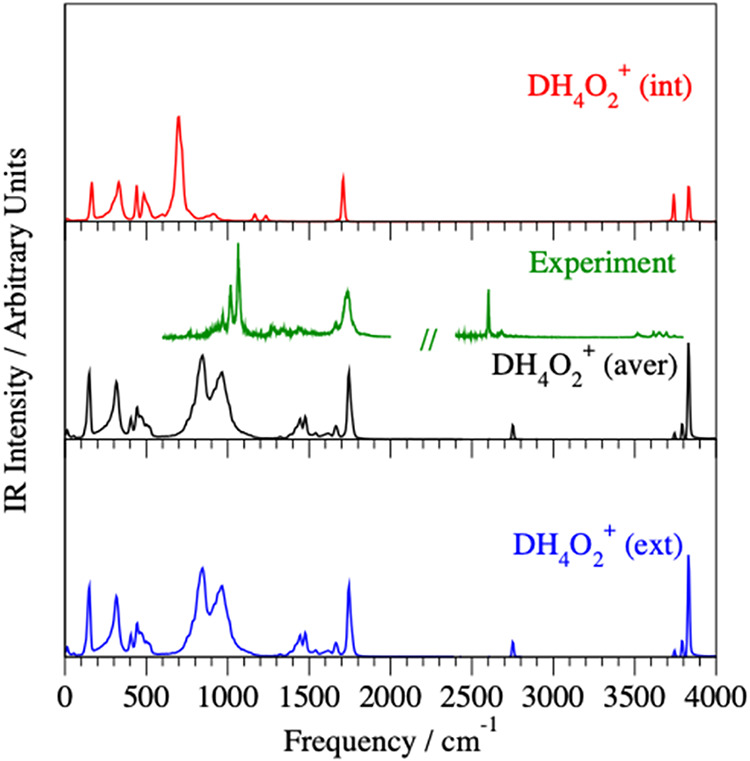 Figure 3
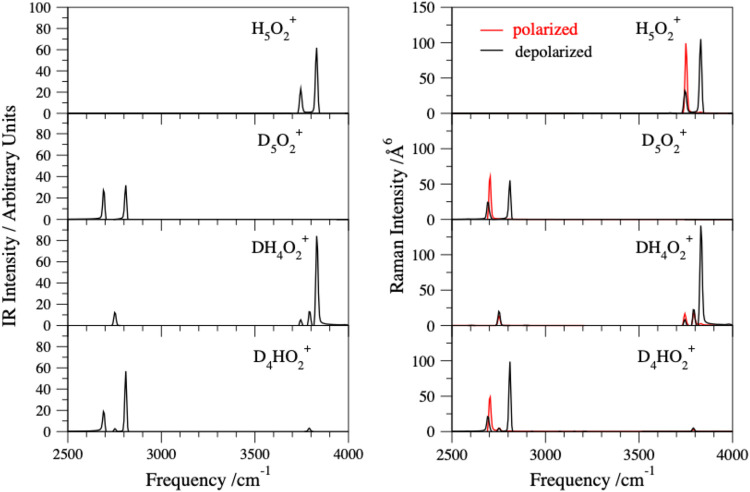 Figure 4
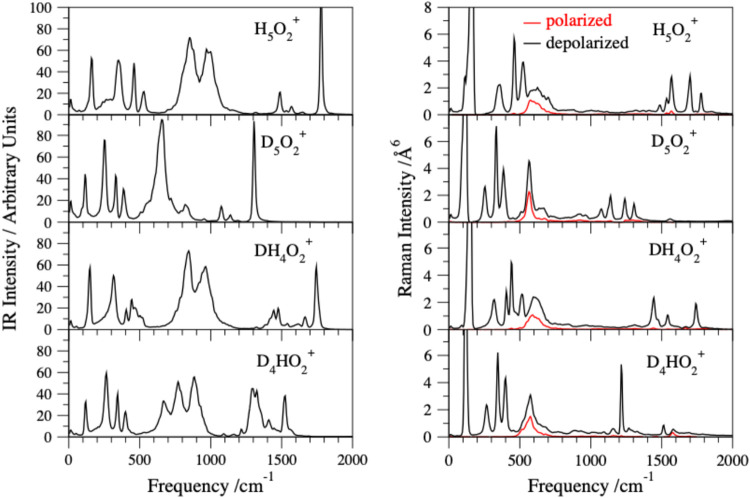 Figure 5
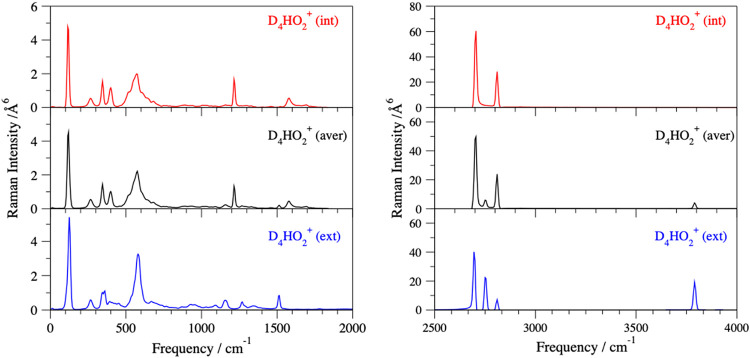 Figure 6
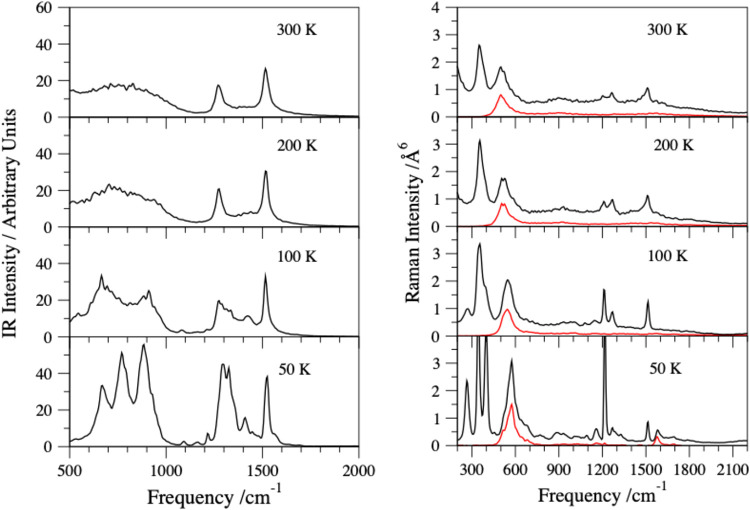 Figure 7
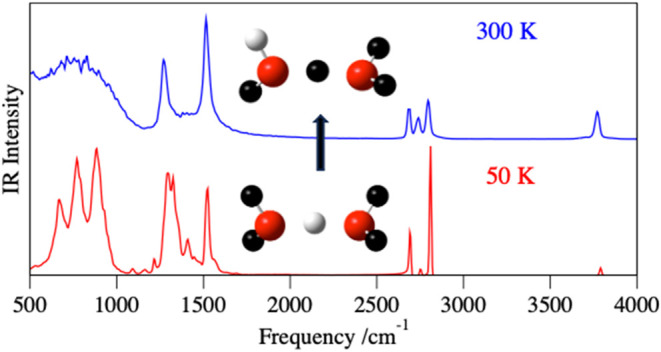 Figure 8
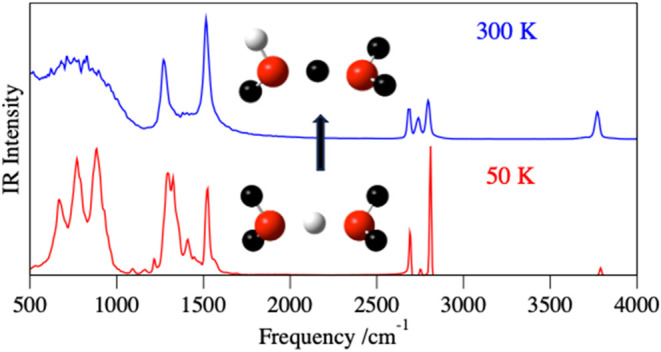 Figure 9
 Figure 10
 Figure 11
 Figure 12
Peer Reviews
No public reviews on file for this paper yet. If you reviewed it on a platform where reviews are public (OpenReview, ICLR, NeurIPS, ICML), you can paste yours below so the community can read it here.
Videos
No videos yet. Explain this paper in a talk, walkthrough, or lecture? Add one.
Taxonomy
TopicsSpectroscopy and Laser Applications · Atmospheric Ozone and Climate · Advanced Chemical Sensor Technologies