Occurrence and Impact of Electric-Field-Induced Discontinuities in Correlation Energies from Localized Pair-Natural-Orbital Methods
Jose P. Madriaga, T. Daniel Crawford

TL;DR
This paper investigates how electric fields cause small but significant errors in energy calculations using a specific quantum chemistry method.
Contribution
The study reveals that electric-field-induced discontinuities in correlation energies can lead to large errors in computed molecular properties.
Findings
Discontinuities in correlation energy under electric fields can cause over 100% discrepancies in hyperpolarizability calculations.
Weak electric fields can magnify errors due to small field-displacement denominators.
Diffuse basis sets and fixed PNO dimensions do not resolve the issue and may worsen the errors.
Abstract
We report an investigation of discontinuities in the correlation energy produced by external static electric fields within the local pair-natural-orbital coupled-cluster singles and doubles (LPNO-CCSD) method. Such discontinuities arise as a result of variations in both the dimensions and character of the pairwise virtual-orbital domains resulting from changes in the strength of the field. Using several small-molecule test cases – water, fluoroethylene, hypofluorous acid and cis-1,3-butadiene we observe that, although the discontinuities in the correlation energy are small (typically 1 μE h ), they can yield substantial errors in higher-order electric-field-dependent properties computed using finite-difference techniques. For the static hyperpolarizability (third derivative of the energy with respect to the field) of water, for example, the discrepancies between LPNO-CCSD and…
Genes, proteins, chemicals, diseases, species, mutations and cell lines named across the full text — each resolved to its canonical identifier and authoritative record.
Click any figure to enlarge with its caption.
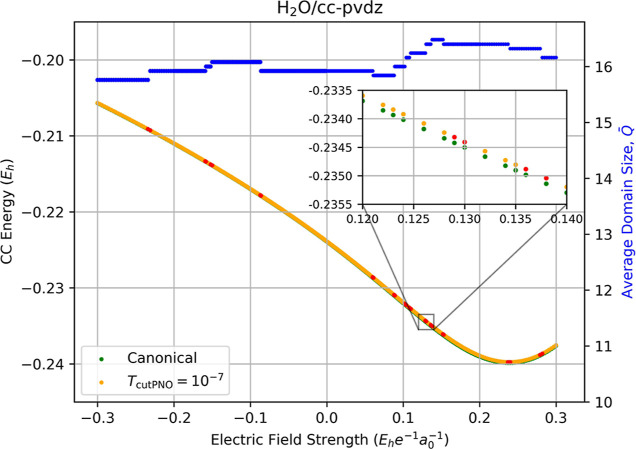 Figure 1
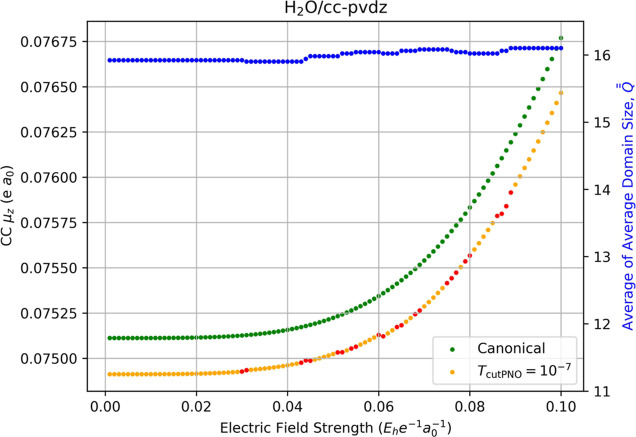 Figure 2
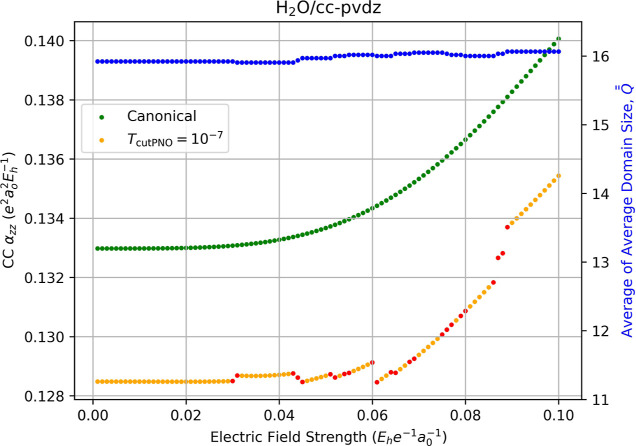 Figure 3
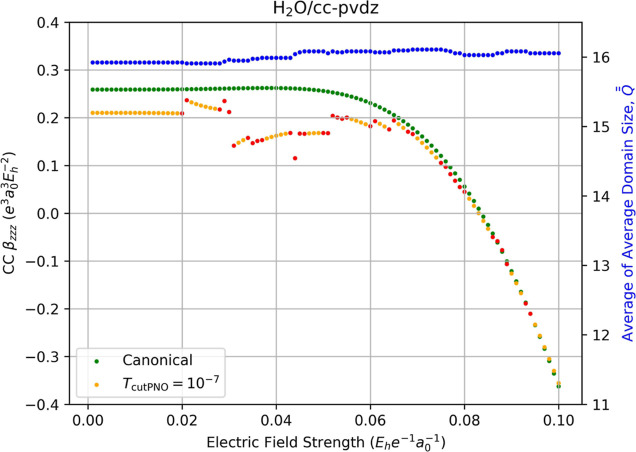 Figure 4
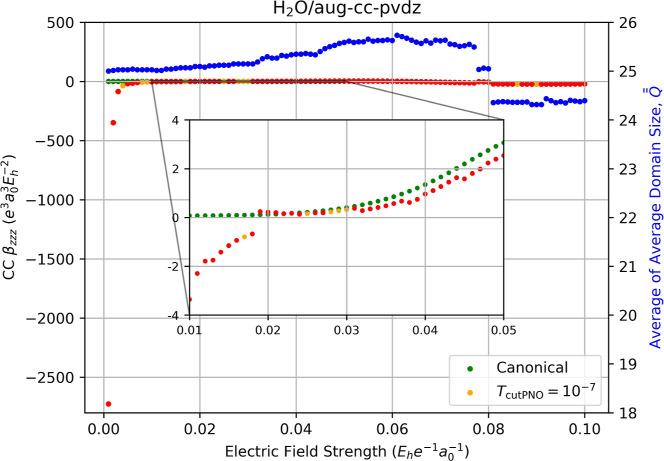 Figure 5
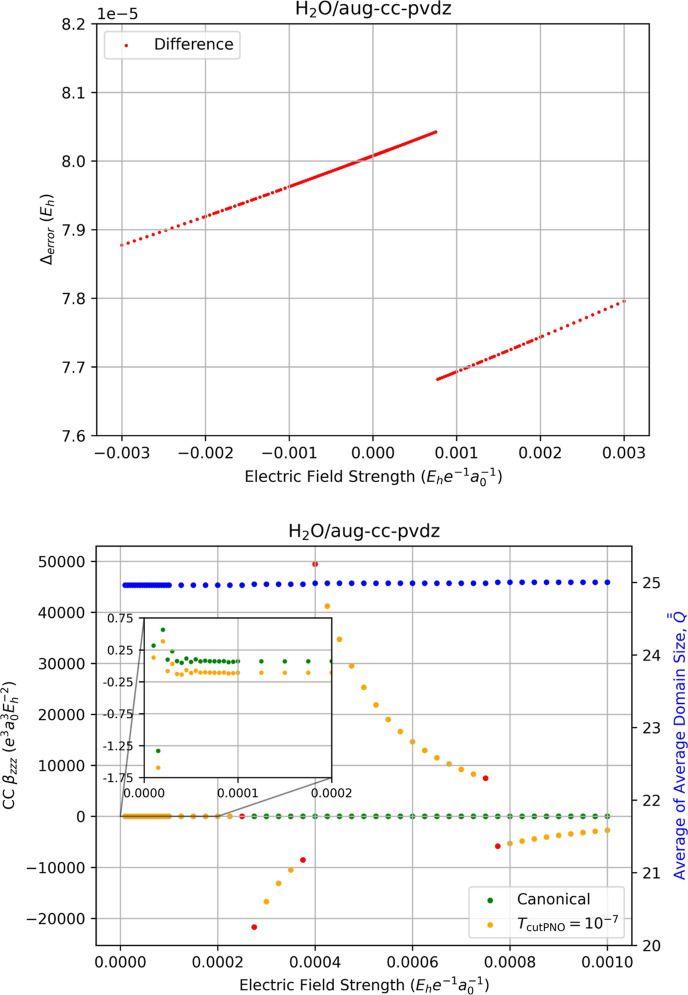 Figure 6
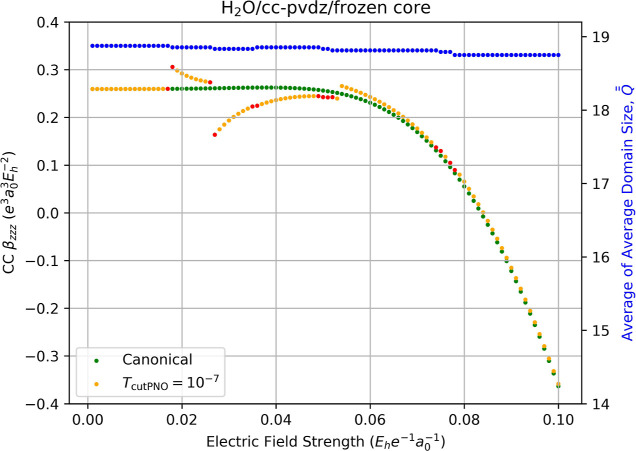 Figure 7
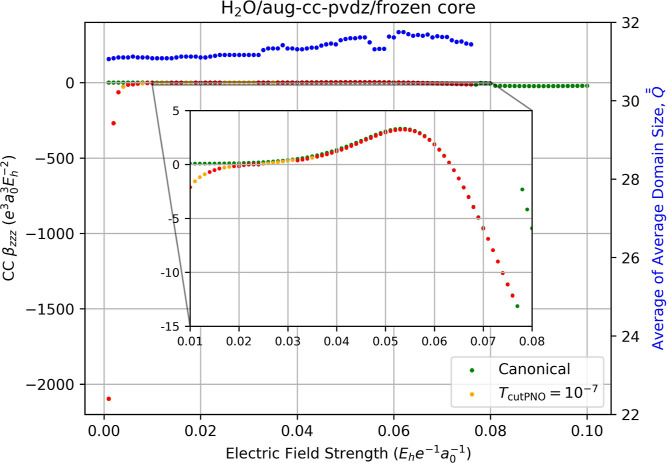 Figure 8
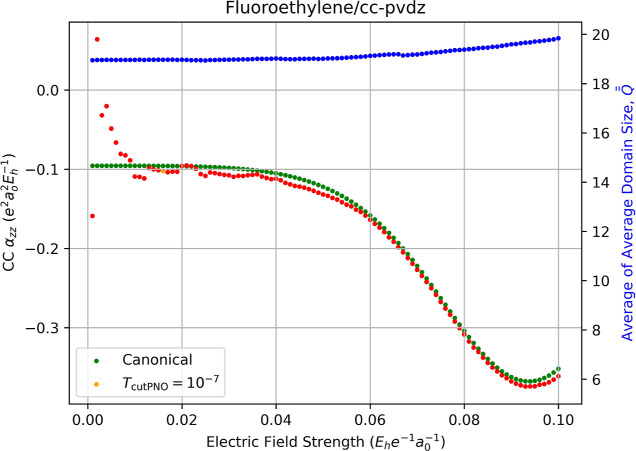 Figure 9
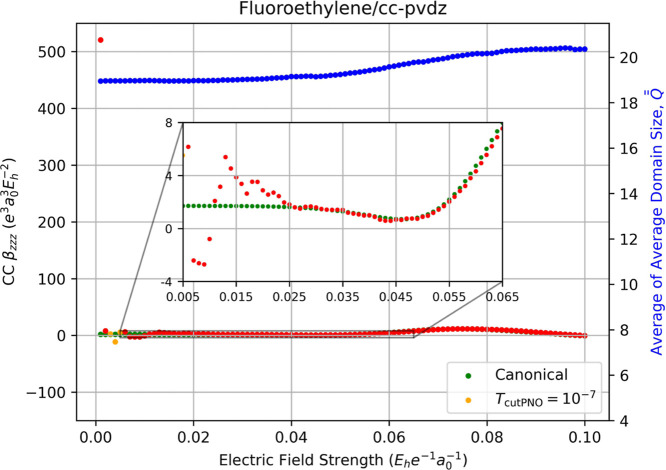 Figure 10
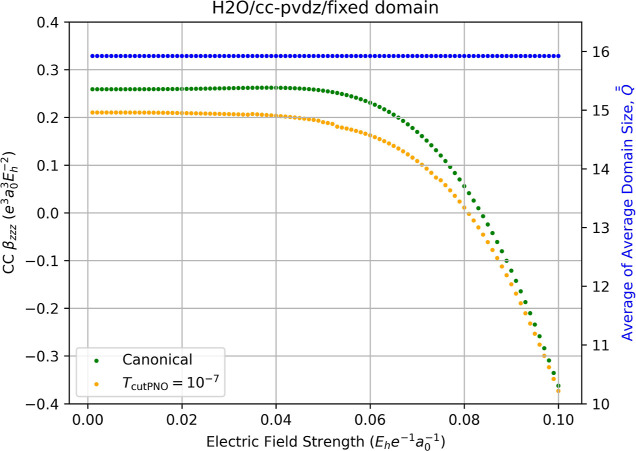 Figure 11
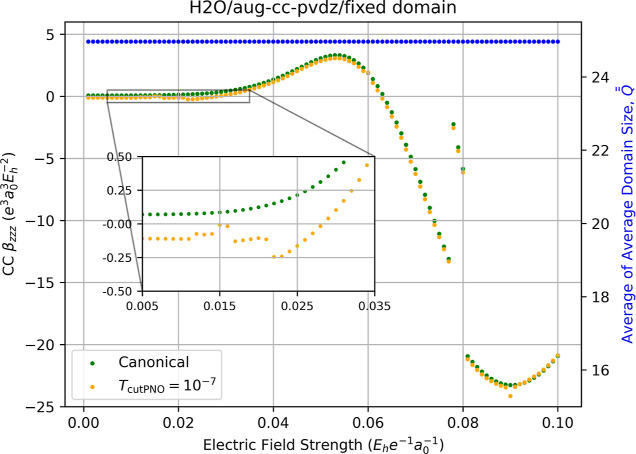 Figure 12
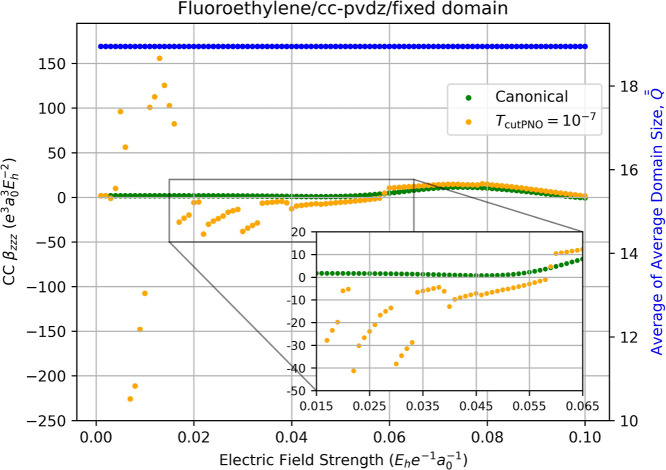 Figure 13
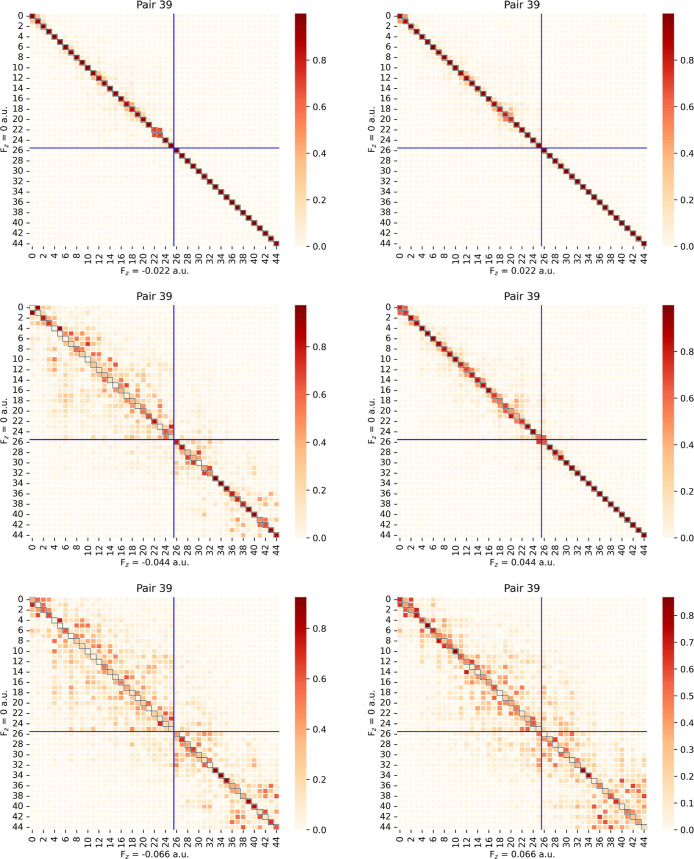 Figure 14
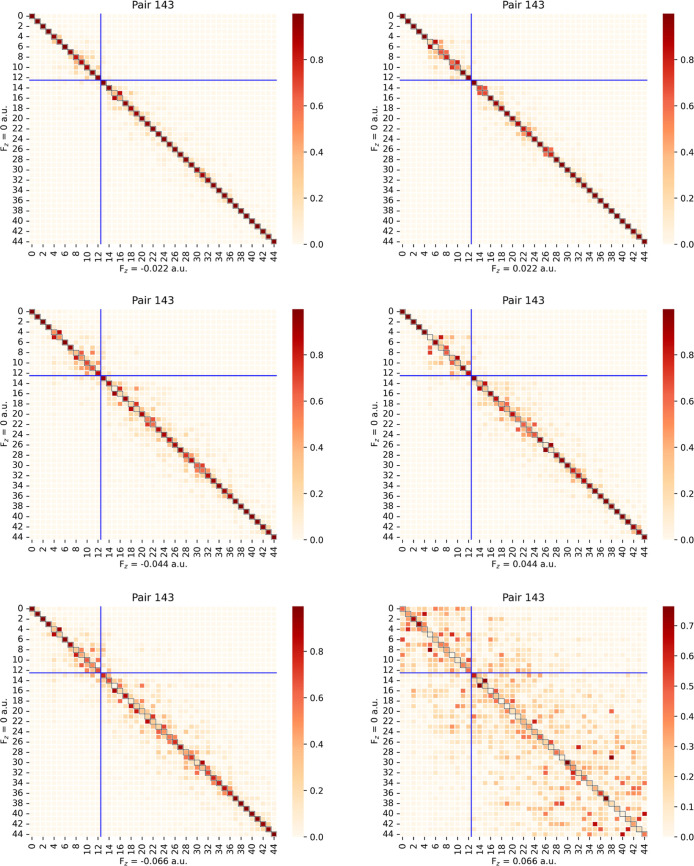 Figure 15
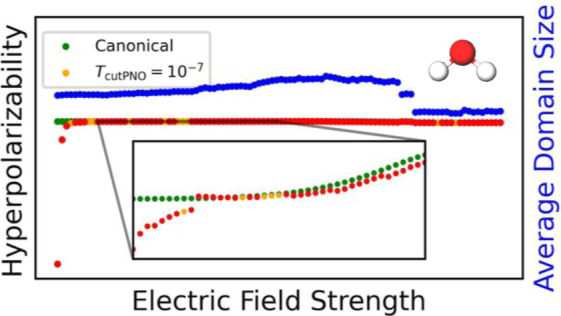 Figure 16
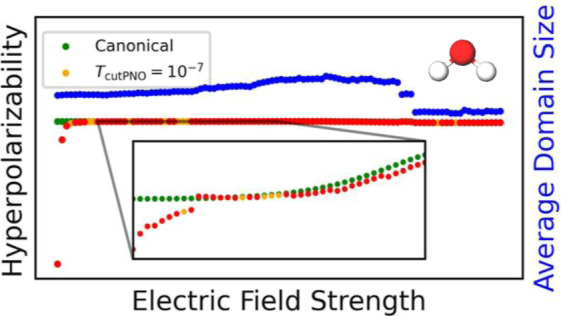 Figure 17
 Figure 18
 Figure 19
 Figure 20
 Figure 21
 Figure 22
 Figure 23
 Figure 24
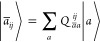 Figure 25
 Figure 26
 Figure 27
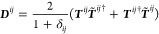 Figure 28
 Figure 29
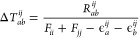 Figure 30
 Figure 31
 Figure 32
 Figure 33
 Figure 34
 Figure 35
 Figure 36
 Figure 37
 Figure 38
 Figure 39
 Figure 40
 Figure 41
 Figure 42
 Figure 43
 Figure 44
 Figure 45
 Figure 46
 Figure 47
 Figure 48
 Figure 49
 Figure 50
Peer Reviews
No public reviews on file for this paper yet. If you reviewed it on a platform where reviews are public (OpenReview, ICLR, NeurIPS, ICML), you can paste yours below so the community can read it here.
Videos
No videos yet. Explain this paper in a talk, walkthrough, or lecture? Add one.
Taxonomy
TopicsSpectroscopy and Quantum Chemical Studies · Electrochemical Analysis and Applications · thermodynamics and calorimetric analyses