Solvent-Driven Modulation of Shuttling Dynamics in an Autonomous Chemically Fueled Information Ratchet
Giuseppe Silvestri, Mattia P. Fossati, Federica Arrigoni, Luca Bertini, Giuseppe Zampella, Luca De Gioia, Jacopo Vertemara

TL;DR
This paper explores how solvents influence the movement of a molecular machine, revealing how different solvent properties affect its performance.
Contribution
The study introduces a framework for understanding solvent effects on molecular shuttling dynamics using a combination of advanced simulation techniques.
Findings
Highly polar solvents lead to symmetric macrocycle distribution between binding sites.
Low-polarity solvents induce conformational collapse favoring single-site occupancy.
Free-energy barriers remain similar, but transition pathways show solvent-dependent asymmetries.
Abstract
The performance of artificial molecular machines relies on the interplay between molecular design and environmental factors, yet how solvation shapes their energy landscapes and kinetics remains poorly understood. Here, we combine well-tempered and infrequent metadynamics to investigate equilibrium shuttling in a minimal [2]rotaxane inspired by Borsley’s fuel-driven molecular motor. By systematically varying solvent polarity and hydrogen-bonding capacity, we uncover distinct thermodynamic and kinetic regimes that govern macrocycle motion. In highly polar, hydrogen-bond-accepting media, the macrocycle adopts a symmetric distribution between binding sites, with enthalpic and entropic forces in direct competition. Conversely, in low-polarity, hydrogen-bond-donating environments, the axle undergoes a conformational collapse that entropically biases occupancy toward a single station in the…
Genes, proteins, chemicals, diseases, species, mutations and cell lines named across the full text — each resolved to its canonical identifier and authoritative record.
Click any figure to enlarge with its caption.
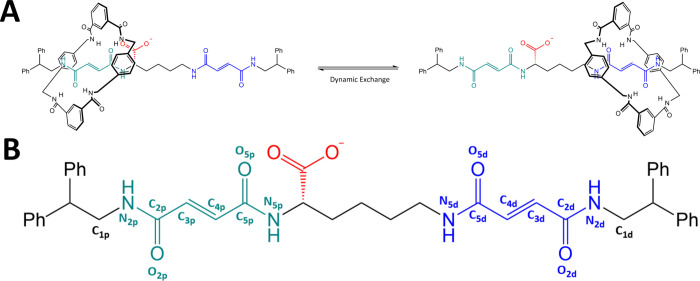 Figure 1
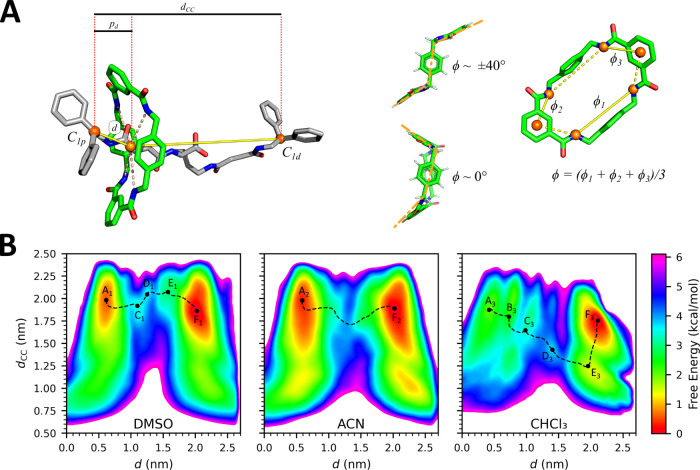 Figure 2
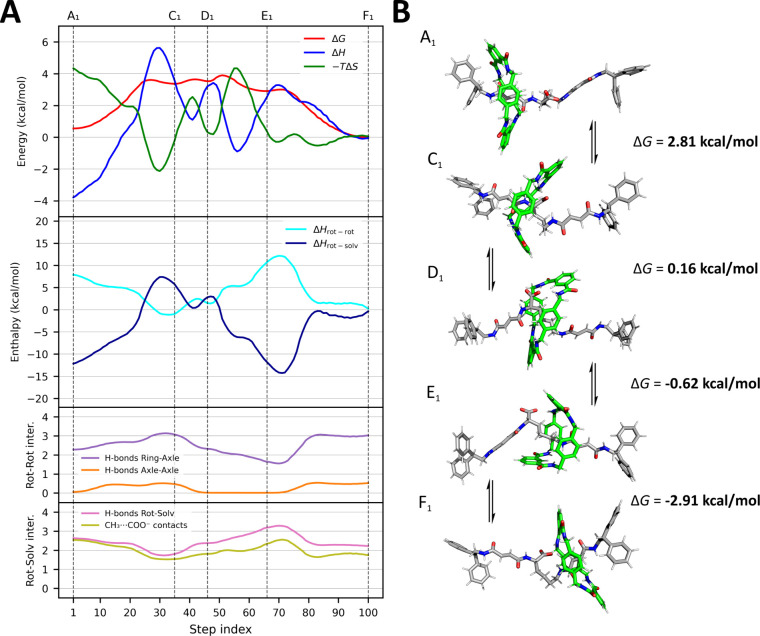 Figure 3
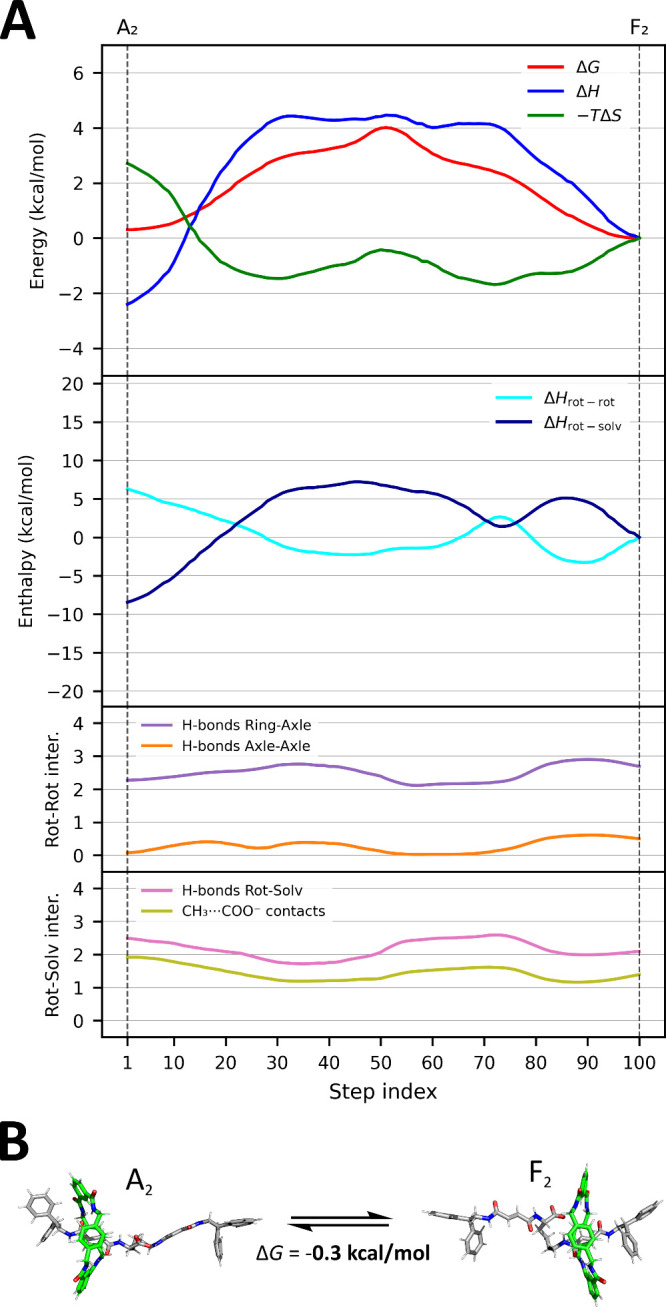 Figure 4
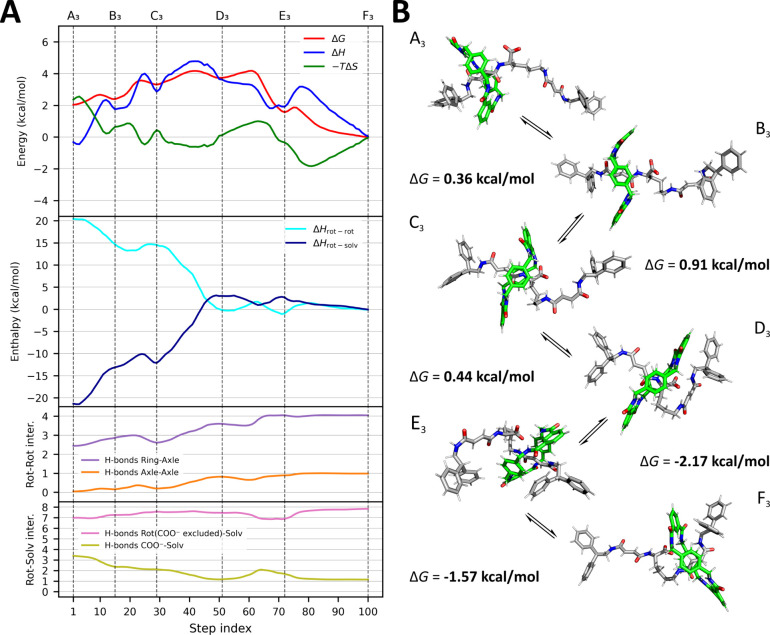 Figure 5
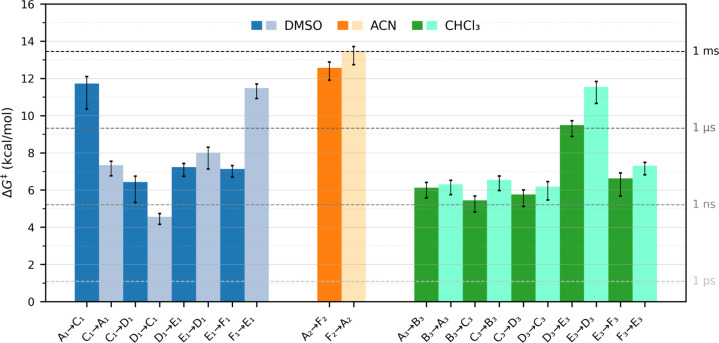 Figure 6
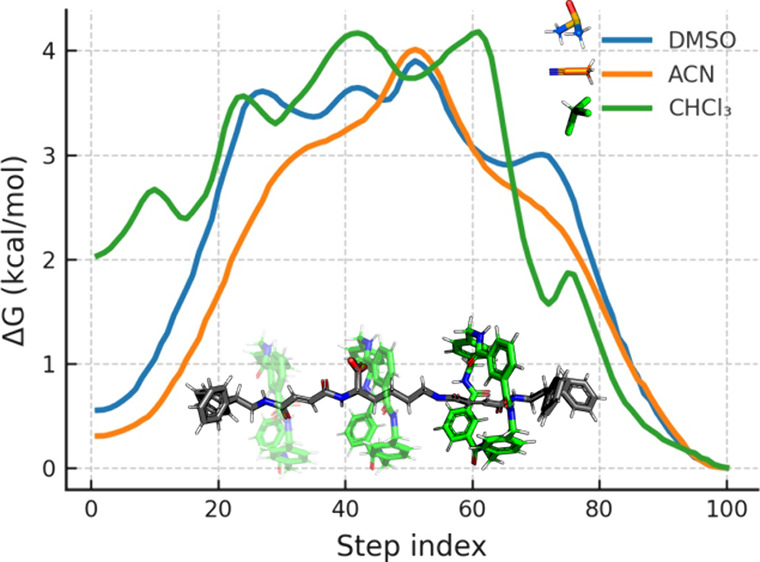 Figure 7
 Figure 8
 Figure 9
Peer Reviews
No public reviews on file for this paper yet. If you reviewed it on a platform where reviews are public (OpenReview, ICLR, NeurIPS, ICML), you can paste yours below so the community can read it here.
Videos
No videos yet. Explain this paper in a talk, walkthrough, or lecture? Add one.
Taxonomy
TopicsSpectroscopy and Quantum Chemical Studies · Photoreceptor and optogenetics research · Quantum chaos and dynamical systems