Multiscale Simulations Elucidate the Mechanism of Polyglutamine Aggregation and the Role of Flanking Domains in Fibril Polymorphism
Avijeet Kulshrestha, Tien Minh Phan, Azamat Rizuan, Priyesh Mohanty, Jeetain Mittal

TL;DR
This study uses simulations to understand how polyglutamine proteins form amyloid fibrils and how flanking domains influence this process in diseases like Huntington’s.
Contribution
The study introduces new insights into polyQ aggregation mechanisms and the role of the N17 domain in controlling fibril polymorphism.
Findings
PolyQ aggregation produces heterogeneous amyloid fibrils with variable-width branched morphologies.
The N17 domain reduces fibril heterogeneity by favoring β-strand conformations.
Early aggregation involves two mechanisms: backbone interactions and side-chain interdigitation.
Abstract
Protein aggregation, which is implicated in aging and neurodegenerative diseases, typically involves a transition from soluble monomers and oligomers to insoluble fibrils. Polyglutamine (polyQ) tracts in proteins can form amyloid fibrils, which are linked to polyQ diseases, including Huntington’s disease (HD), where the length of the polyQ tract inversely correlates with the age of onset. Despite significant research on the mechanisms of Httex1 aggregation, atomistic information regarding the intermediate stages of its fibrillation and the morphological characteristics of the end-state amyloid fibrils remains limited. Recently, molecular dynamics (MD) simulations based on a hybrid multistate structure-based model, Multi-eGO, have shown promise in capturing the kinetics and mechanism of amyloid fibrillation with high computational efficiency while achieving qualitative agreement with…
Genes, proteins, chemicals, diseases, species, mutations and cell lines named across the full text — each resolved to its canonical identifier and authoritative record.
Click any figure to enlarge with its caption.
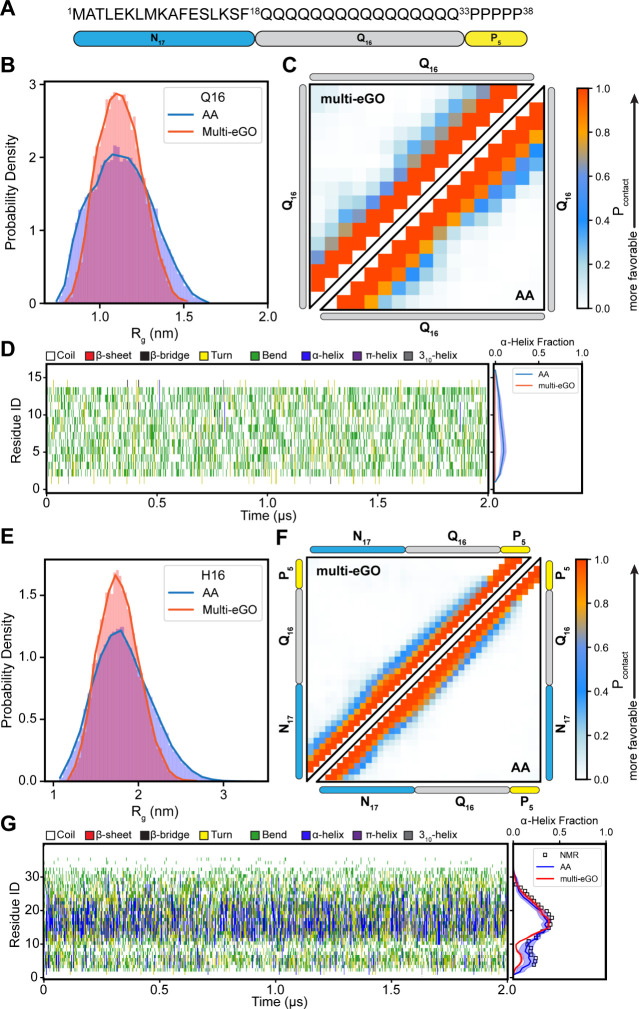 Figure 1
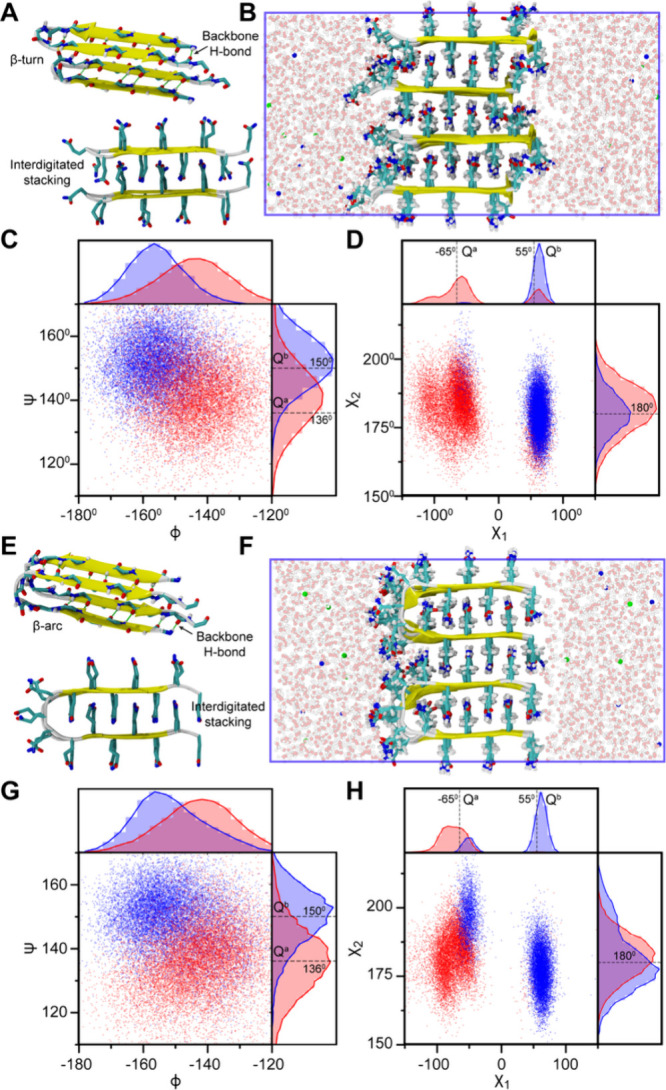 Figure 2
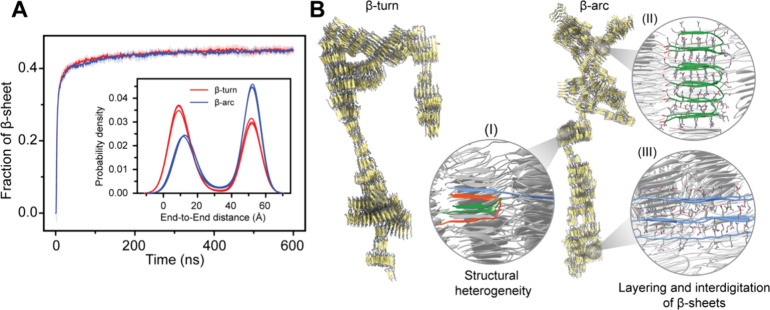 Figure 3
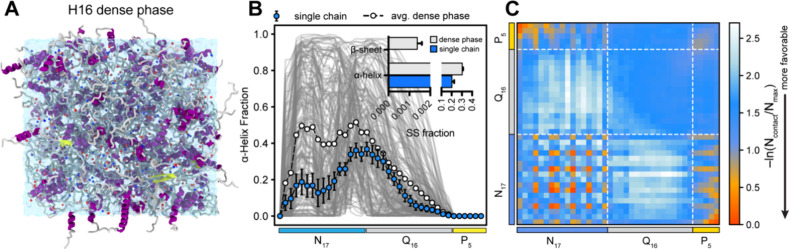 Figure 4
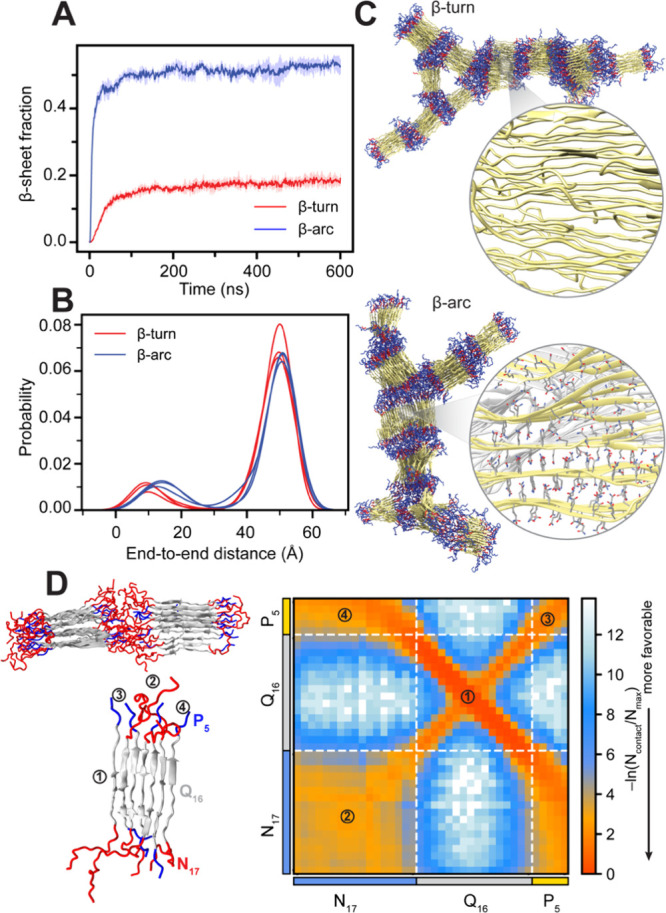 Figure 5
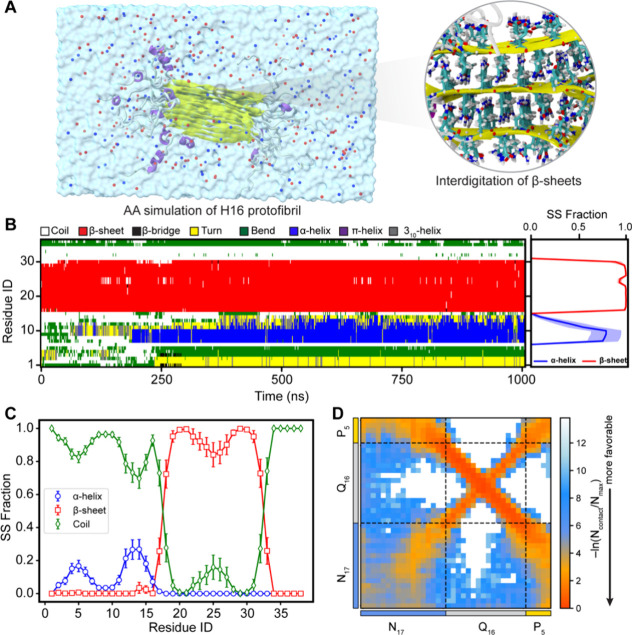 Figure 6
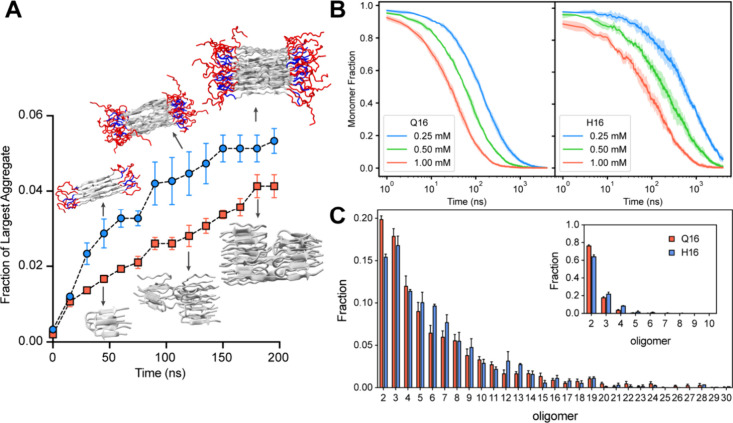 Figure 7
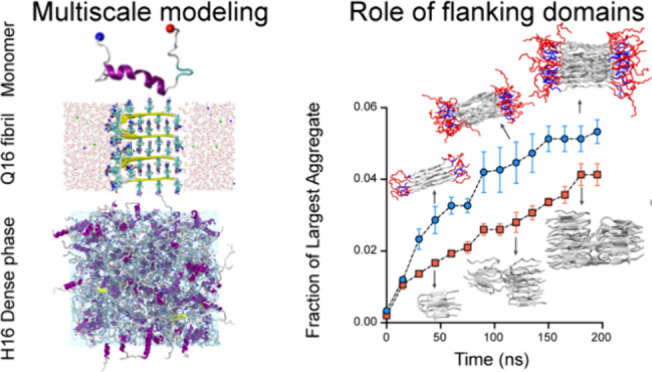 Figure 8
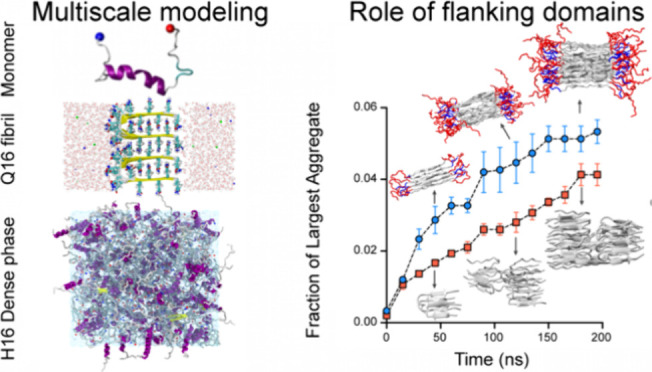 Figure 9
Peer Reviews
No public reviews on file for this paper yet. If you reviewed it on a platform where reviews are public (OpenReview, ICLR, NeurIPS, ICML), you can paste yours below so the community can read it here.
Videos
No videos yet. Explain this paper in a talk, walkthrough, or lecture? Add one.
Taxonomy
TopicsGenetic Neurodegenerative Diseases · Prion Diseases and Protein Misfolding · Alzheimer's disease research and treatments