Atomic Imaging of Phase Transformation and Self-Intercalation of Two-Dimensional CrS2 by In Situ TEM
Pin-Yu Chou, Hsin-Ya Sung, Che-Hung Wang, Chun-Wei Huang, Wen-Wei Wu

TL;DR
Researchers used atomic imaging to observe how 2D CrS2 transforms into a 3D structure when heated, revealing a new way to control magnetic and electronic properties.
Contribution
The study provides the first atomic-scale visualization of thermal-driven self-intercalation and phase transformation in 2D CrS2.
Findings
Heating 1T-CrS2 nanosheets to 500°C triggers irreversible transformation into Cr2S3 with a change in magnetic order.
Thermal depletion of sulfur atoms initiates self-intercalation, forming covalent bonds in van der Waals gaps.
The transformation represents a dimensional crossover from 2D to 3D bonding at the nanoscale.
Abstract
Controlling phase transitions in two-dimensional (2D) materials offers a powerful route for engineering novel electronic and magnetic functionalities. However, atomically resolved visualization of these dynamic processes remains a significant challenge. Herein, we report the synthesis of ultrathin (1.6 nm), single-crystal 1T-CrS2 nanosheets via atmospheric-pressure chemical vapor deposition (APCVD) and uncover their thermal transformation pathway using in situ heating transmission electron microscopy (TEM). Real-time atomic-scale imaging reveals that upon heating to 500 °C, the material undergoes an irreversible structural and magnetic transformation from a layered, antiferromagnetic 1T-CrS2 structure into a nonlayered, ferrimagnetic Cr2S3 structure. The driving mechanism is identified as a unique self-intercalation process initiated by the thermal depletion of S atoms, which promotes…
Genes, proteins, chemicals, diseases, species, mutations and cell lines named across the full text — each resolved to its canonical identifier and authoritative record.
Click any figure to enlarge with its caption.
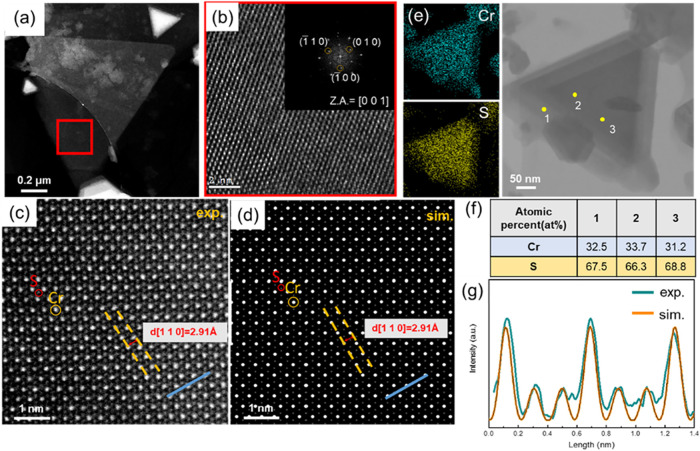 Figure 1
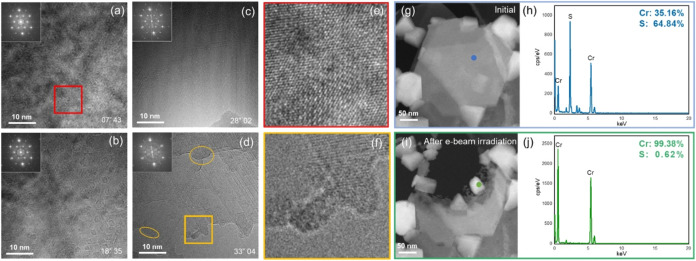 Figure 2
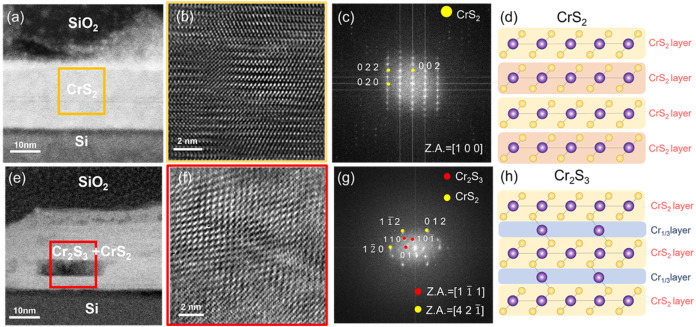 Figure 3
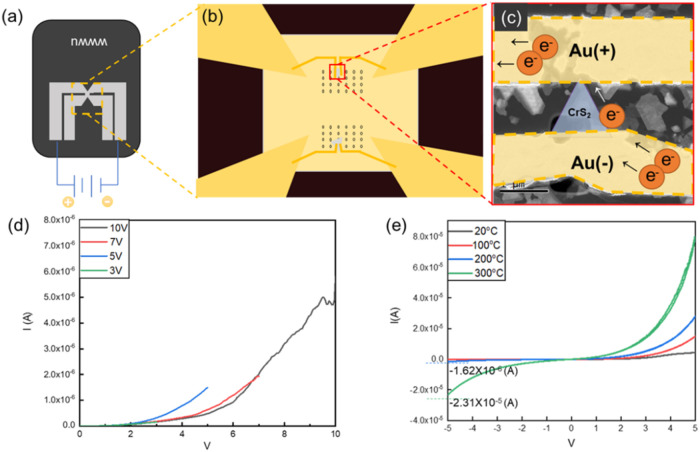 Figure 4
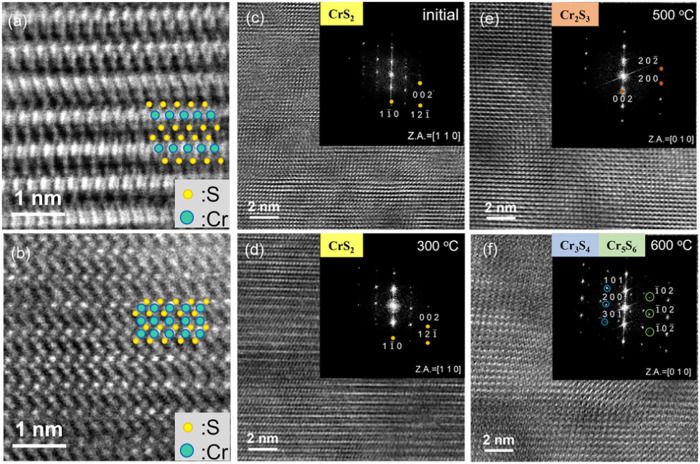 Figure 5
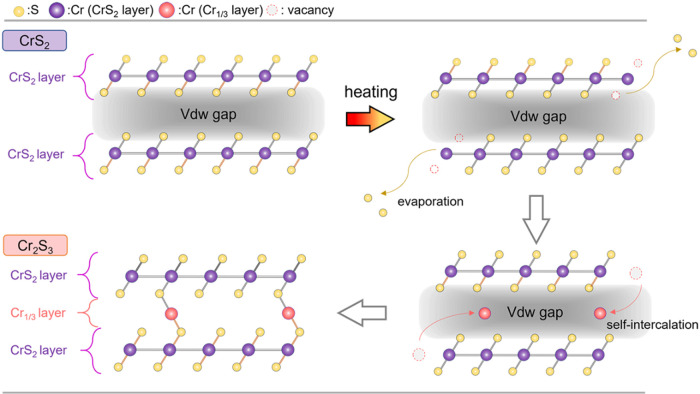 Figure 6
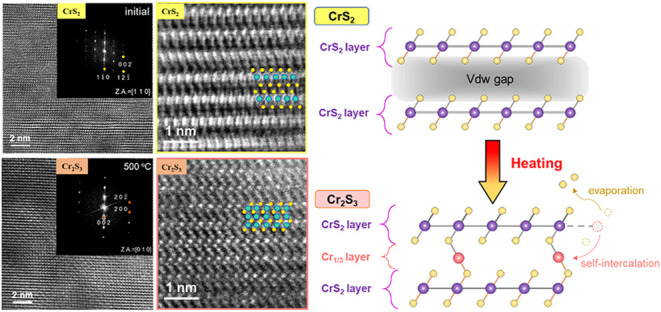 Figure 7
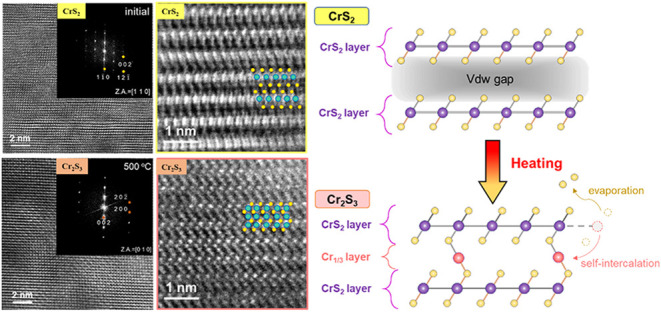 Figure 8
Peer Reviews
No public reviews on file for this paper yet. If you reviewed it on a platform where reviews are public (OpenReview, ICLR, NeurIPS, ICML), you can paste yours below so the community can read it here.
Videos
No videos yet. Explain this paper in a talk, walkthrough, or lecture? Add one.
Taxonomy
Topics2D Materials and Applications · Chalcogenide Semiconductor Thin Films · MXene and MAX Phase Materials