Comparative study of coronary artery disease prediction: conventional QRISK3 versus enhanced machine learning models combined with particle swarm optimisation algorithm
Wigaviola Socha Purnamaasri Harmadha, Dennis Wang, Mohsin Masood

TL;DR
This study compares traditional and machine learning models for predicting coronary artery disease, finding that optimized machine learning performs better.
Contribution
A novel hybrid approach combining machine learning with Particle Swarm Optimization improves CAD prediction over QRISK3.
Findings
The gradient boosting model with Particle Swarm Optimization achieved an AUC of 0.7258, outperforming QRISK3's AUC of 0.6113.
Hybrid models can better identify high-risk CAD patients for personalized prevention strategies.
Optimized machine learning models support more effective policymaking for lifestyle interventions.
Abstract
Coronary artery disease (CAD) is one of the biggest causes of mortality worldwide. Risk stratification for early detection is essential for the primary prevention of CAD. QRISK3 is known to overestimate future CAD risk in some populations, resulting in unnecessary preventive treatment that reduces the cost-effectiveness and safety. Combining machine learning with a metaheuristic optimisation approach using the Particle Swarm Optimization algorithm may outperform QRISK3 in predicting CAD. It may improve performance by selecting the best-performing subset of features related to clinical outcomes. This study uses the UK Biobank dataset consisting of 348 015 participants aged 24–84 years with no prior diagnosis of CAD. The performance of both QRISK3 and machine learning models was evaluated separately using receiver operating characteristic analysis. Several machine learning models were…
Genes, proteins, chemicals, diseases, species, mutations and cell lines named across the full text — each resolved to its canonical identifier and authoritative record.
Click any figure to enlarge with its caption.
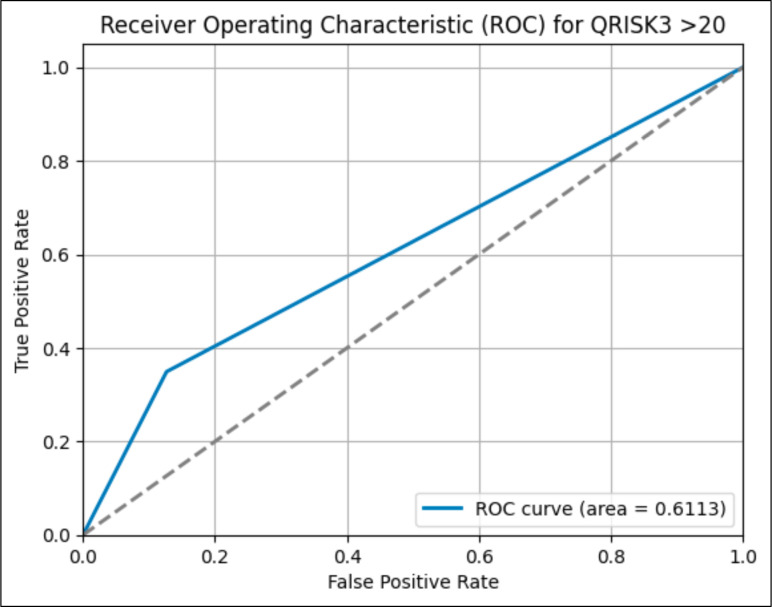 Figure 1
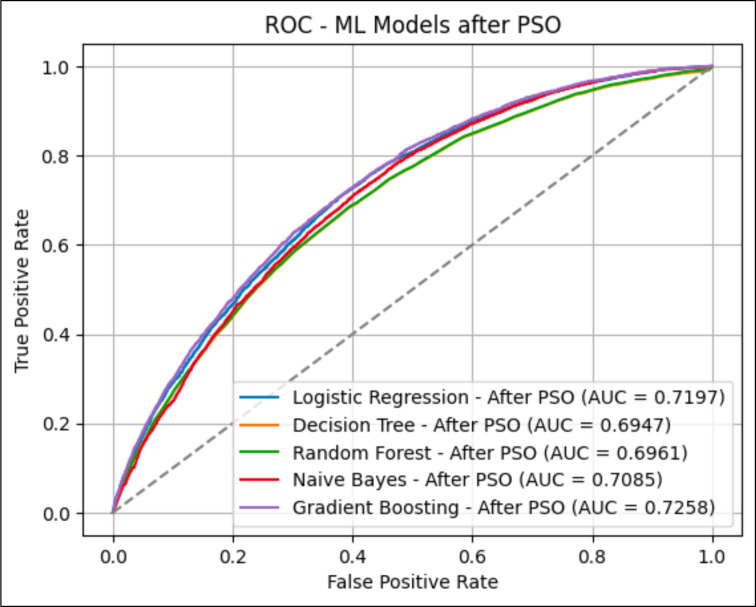 Figure 2
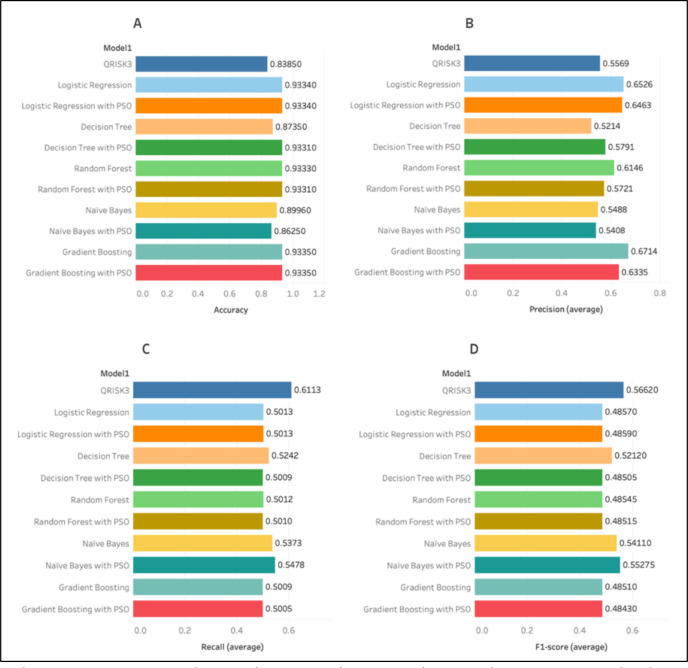 Figure 3
Peer Reviews
No public reviews on file for this paper yet. If you reviewed it on a platform where reviews are public (OpenReview, ICLR, NeurIPS, ICML), you can paste yours below so the community can read it here.
Videos
No videos yet. Explain this paper in a talk, walkthrough, or lecture? Add one.
Taxonomy
TopicsArtificial Intelligence in Healthcare · Cardiovascular Disease and Adiposity · Artificial Intelligence in Healthcare and Education