Targeting the vector of arboviruses Aedes aegypti with nanoemulsions based on essential oils: a review with focus on larvicidal and repellent properties
Laryssa Ferreira do Nascimento Silva, Douglas Dourado, Thayse Silva Medeiros, Mariana Alice Gonzaga Gabú, Maria Cecilia Queiroga dos Santos, Daiane Rodrigues dos Santos, Mylena Lemos dos Santos, Gabriel Bezerra Faierstein, Rosângela Maria Rodrigues Barbosa, Fabio Rocha Formiga

TL;DR
This review explores how nanoemulsions made from essential oils can effectively target Aedes aegypti mosquitoes, offering a safer and eco-friendly alternative to traditional insecticides.
Contribution
The paper highlights the novel use of nanoemulsions to enhance the larvicidal and repellent properties of essential oils against Aedes aegypti.
Findings
Nanoemulsions significantly improve the efficacy of essential oils compared to free essential oils in larvicidal and repellent activities.
Only three studies in the last decade have explored the repellent activity of nanoemulsions with essential oils.
The review discusses the botanical sources, mechanisms, and formulations of nanoemulsions for mosquito control.
Abstract
Mosquitoes of the Aedes genus are responsible for the transmission of arboviruses that seriously affect public health. Given the increasing resistance to traditional insecticides and their negative environmental impacts, the need for safer alternatives arises. In this context, natural produts such as essential oils (EOs) have been studied for their larvicidal and repellent properties against Aedes aegypti, due to the presence of compounds such as terpenoids and phenols. However, the usage of EOs is limited due to some properties such as poor water solubility, high volatility, and intrinsic oxidation sensitivity. Thus, the development of novel formulations to efficiently deliver bioactives represents an innovative approach for Aedes aegypti control. In this context, nanothecnology provides smart formulations with improved drug solubility, controlled release, and protection against…
Genes, proteins, chemicals, diseases, species, mutations and cell lines named across the full text — each resolved to its canonical identifier and authoritative record.
Click any figure to enlarge with its caption.
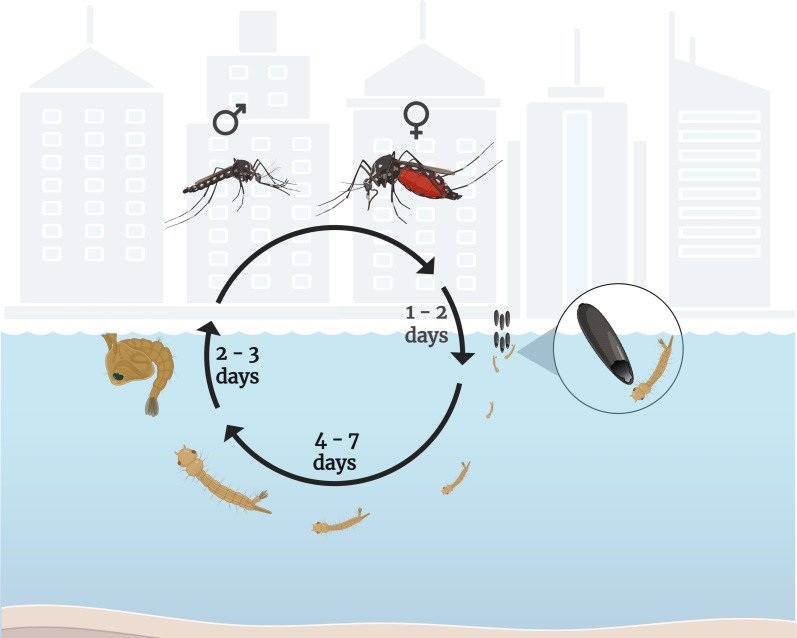 Figure 1
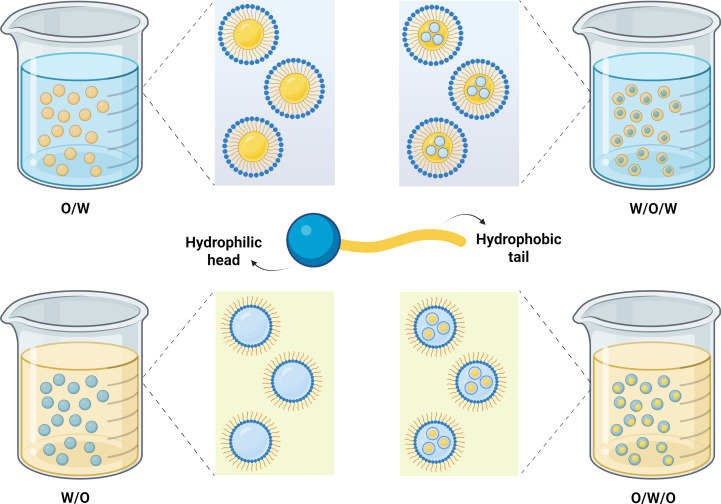 Figure 2
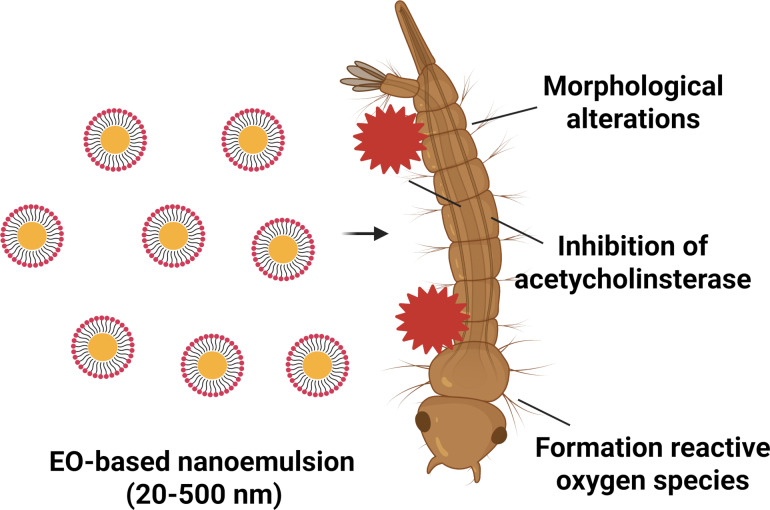 Figure 3
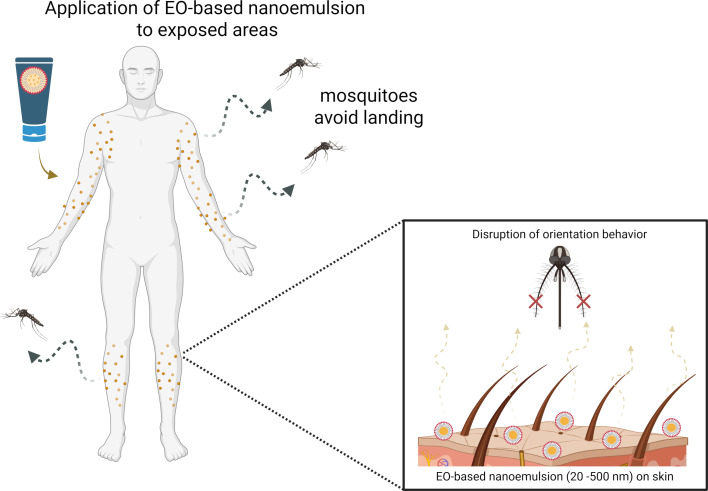 Figure 4
Peer Reviews
No public reviews on file for this paper yet. If you reviewed it on a platform where reviews are public (OpenReview, ICLR, NeurIPS, ICML), you can paste yours below so the community can read it here.
Videos
No videos yet. Explain this paper in a talk, walkthrough, or lecture? Add one.
Taxonomy
TopicsInsect Pest Control Strategies · Phytochemical compounds biological activities · Insect Utilization and Effects