Examining the thermotropic properties of large circularized nanodiscs
Mark J. Arcario, Vikram Dalal, David Fan, Fong-Fu Hsu, Wayland W.L. Cheng

TL;DR
This study investigates how the size of nanodiscs affects the properties of lipid bilayers, finding that larger nanodiscs more closely mimic natural membrane environments.
Contribution
The study demonstrates that larger circularized nanodiscs reduce rim-induced lipid perturbations, improving membrane property accuracy.
Findings
Larger nanodiscs (up to 50 nm) showed lipid properties similar to large unilamellar vesicles.
Soy polar lipid mixtures in nanodiscs exhibited nonhomogeneous lipid distribution.
Lipid packing and melting temperature improved with increasing nanodisc size for single-lipid systems.
Abstract
Nanodiscs, soluble membrane mimetics composed of an amphipathic membrane scaffold protein encircling a lipid bilayer, are widely used in biophysical and structural studies of membrane proteins. Because many membrane proteins are responsive to their membrane environment, through specific protein–lipid interactions and bulk membrane shape and structure, it is important to understand the properties of lipid bilayers contained within nanodiscs in order to interpret studies using this technology. Nanodiscs are known to alter lipid properties, such as membrane thickness and melting temperature, and interactions with the nanodisc rim have been hypothesized to produce local perturbations in lipid structure and dynamics. Larger nanodiscs should compensate for this effect with a larger unperturbed area. To test this hypothesis, we examined the lipid bilayer properties of several lipids (DMPC,…
Genes, proteins, chemicals, diseases, species, mutations and cell lines named across the full text — each resolved to its canonical identifier and authoritative record.
Click any figure to enlarge with its caption.
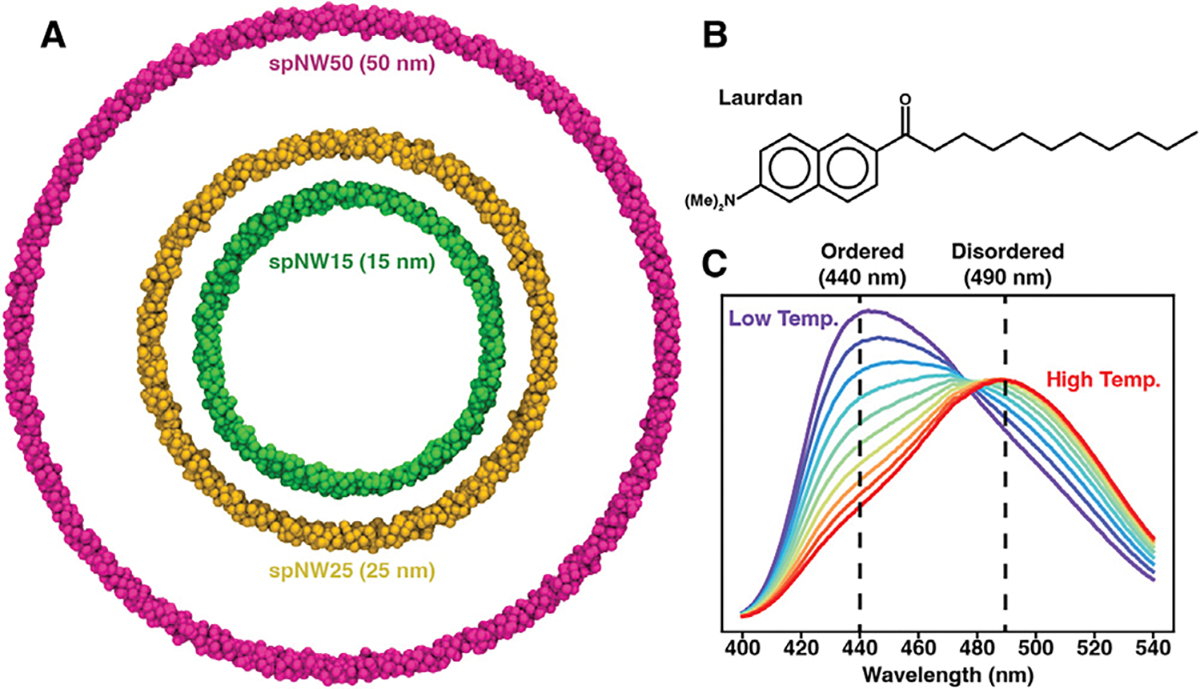 Figure 1
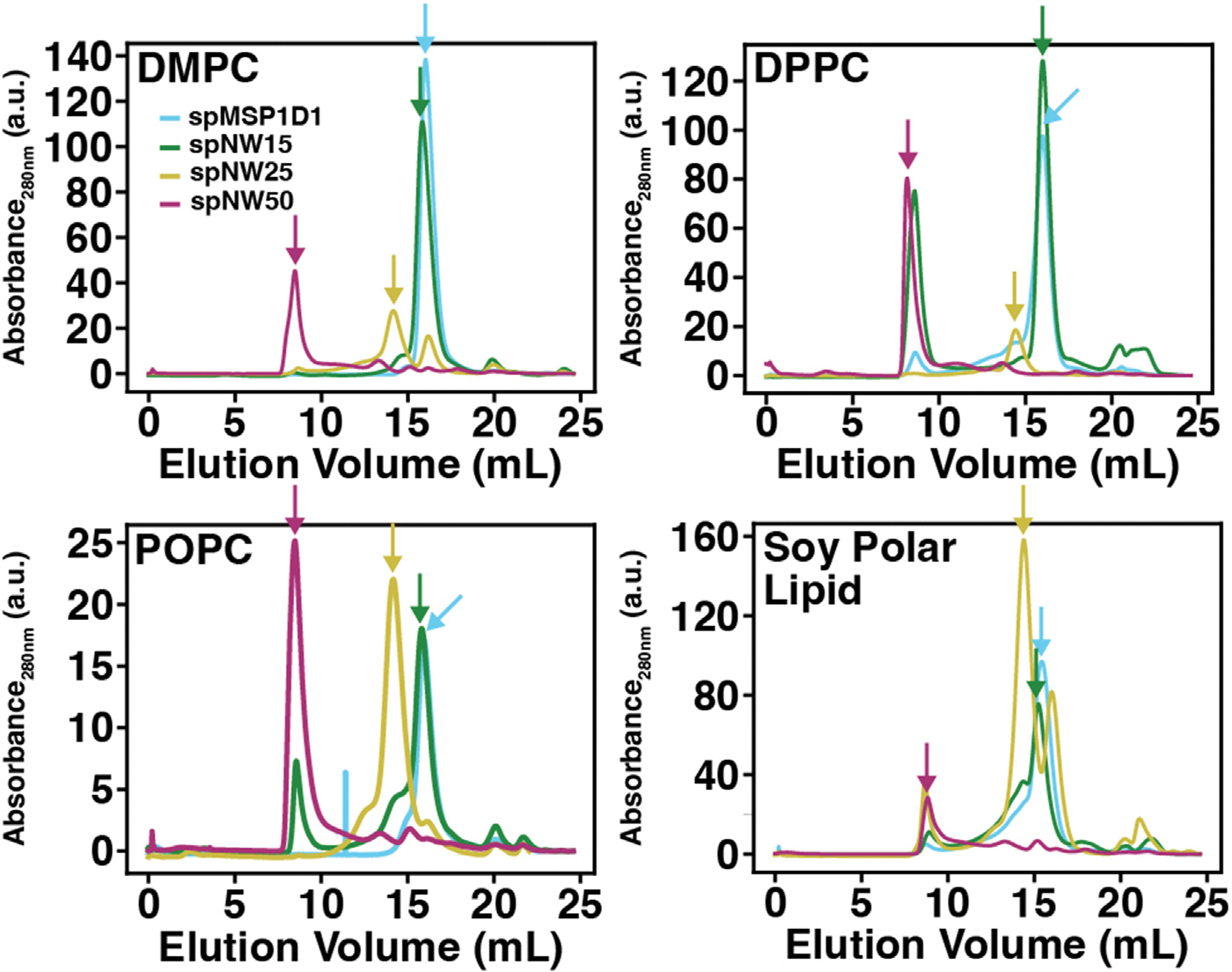 Figure 2
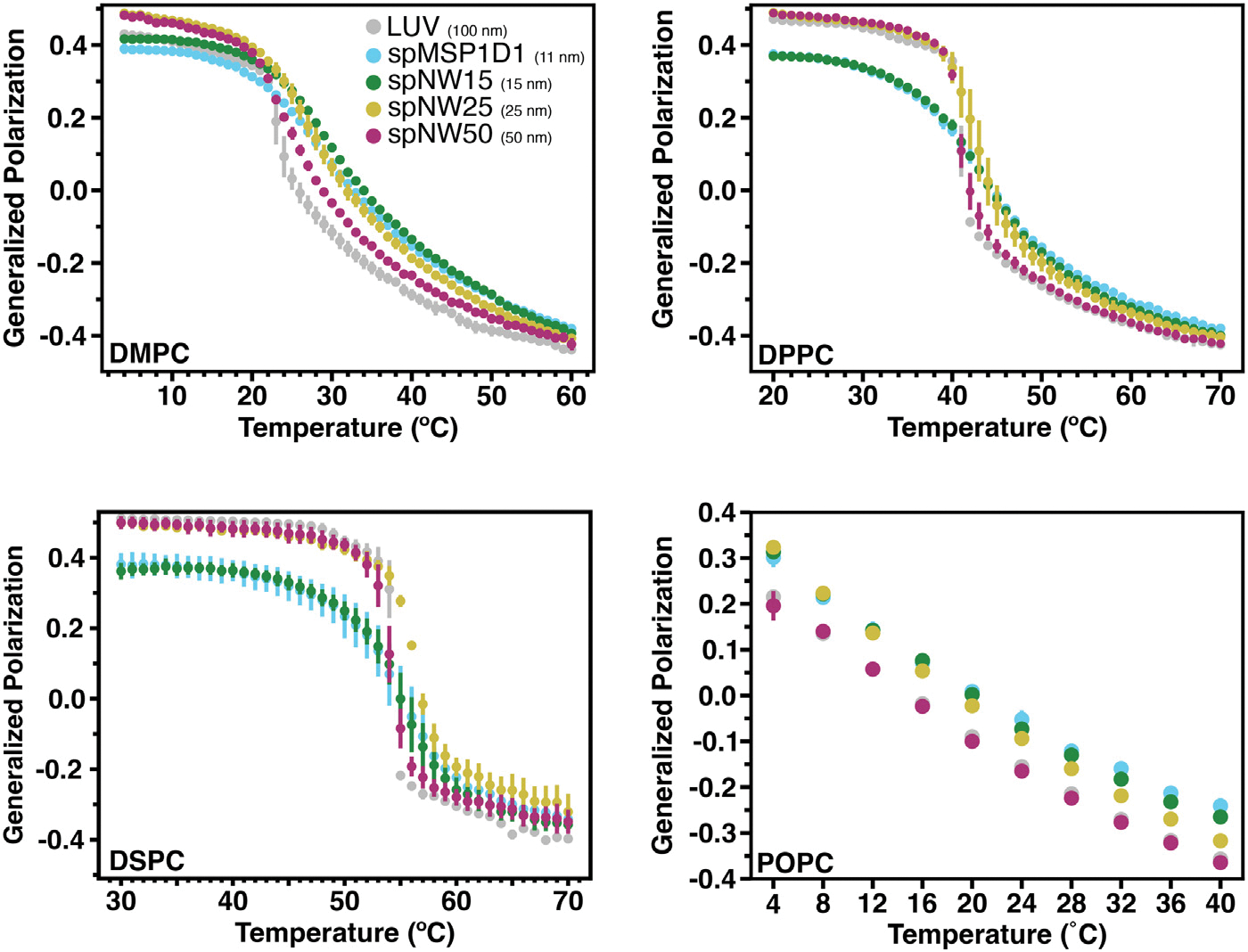 Figure 3
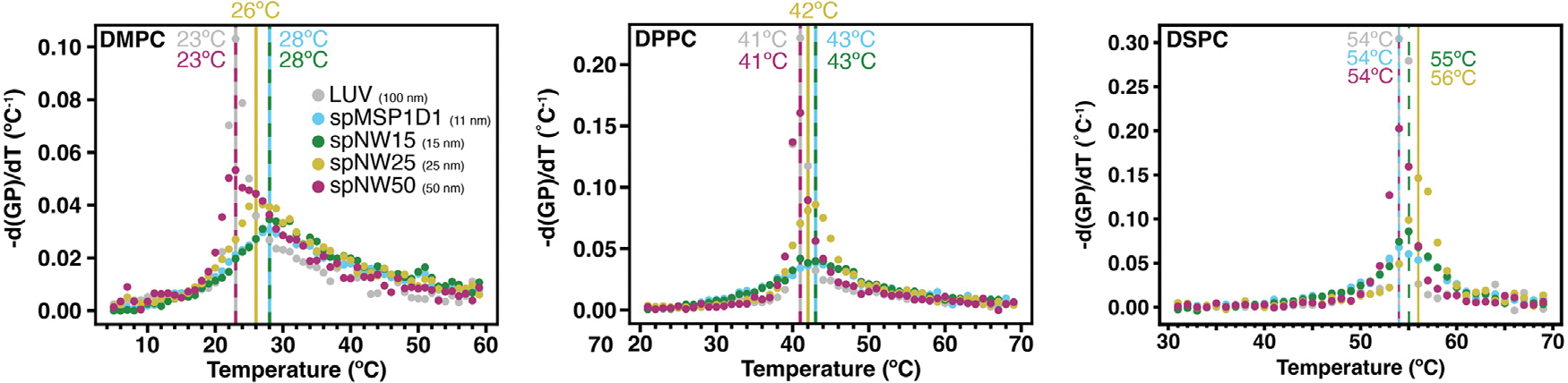 Figure 4
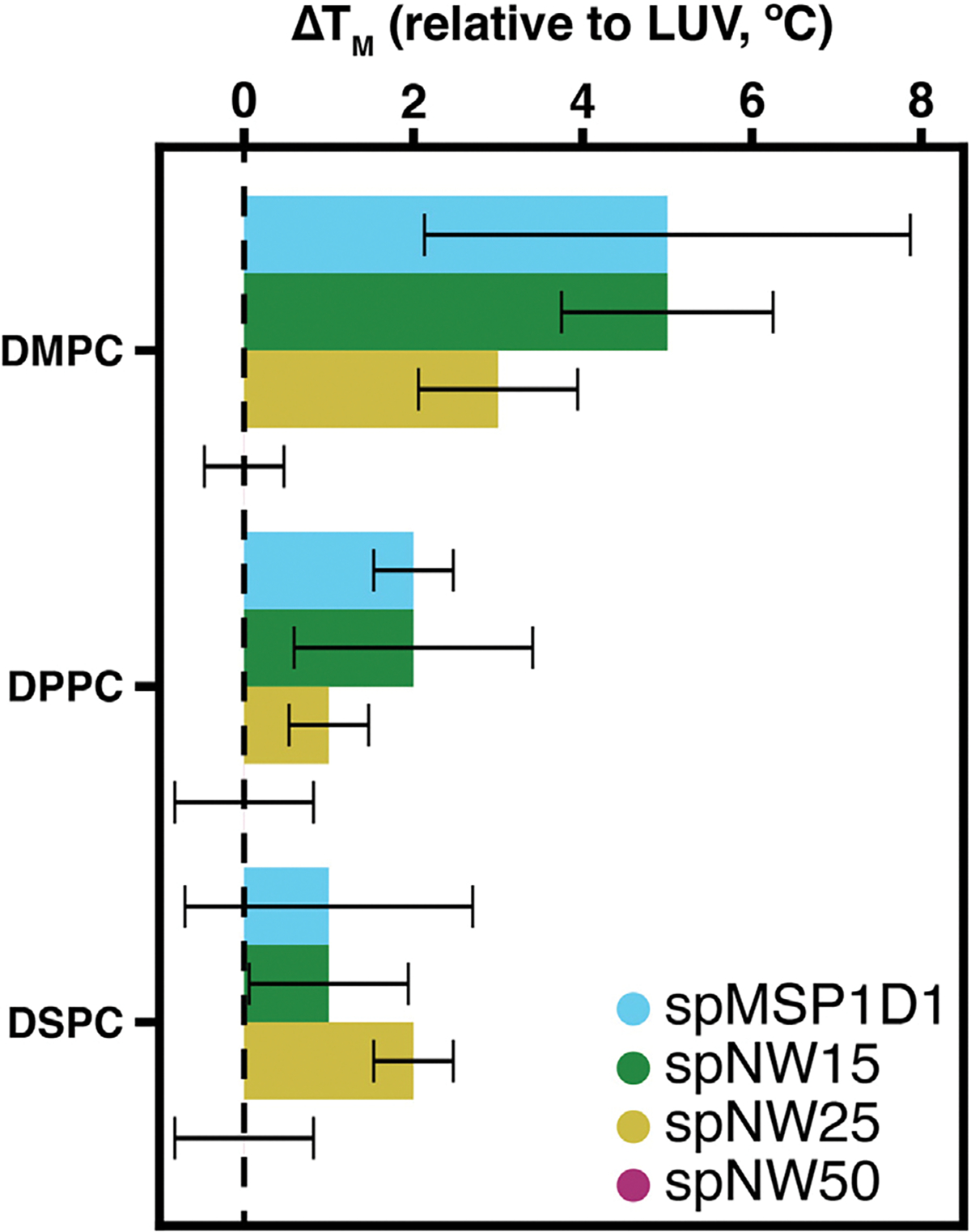 Figure 5
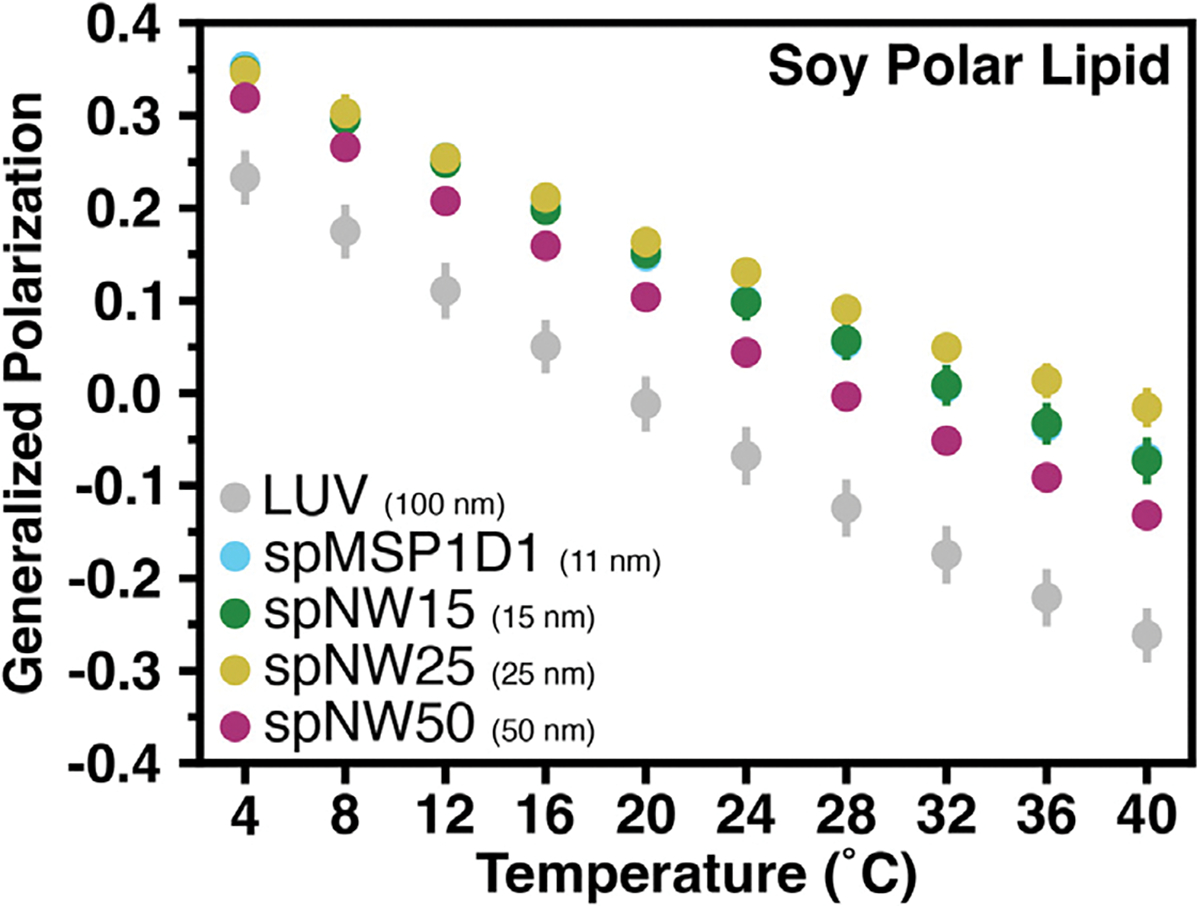 Figure 6
Peer Reviews
No public reviews on file for this paper yet. If you reviewed it on a platform where reviews are public (OpenReview, ICLR, NeurIPS, ICML), you can paste yours below so the community can read it here.
Videos
No videos yet. Explain this paper in a talk, walkthrough, or lecture? Add one.
Taxonomy
Topicsnanoparticles nucleation surface interactions · Carbon Nanotubes in Composites · Advanced Physical and Chemical Molecular Interactions