Investigating the utilization mechanism and kinetics of sialic acid mimetics in mammalian cell lines
Eline A. Visser, Daniël L. A. H. Hornikx, Moritz Rahm, Özden Öztürk, Venetia Psomiadou, Matteo Calzari, Celine Mennen, Sam J. Moons, Martin Jaeger, Dirk J. Lefeber, Christian Büll, Thomas J. Boltje

TL;DR
This paper investigates how sialic acid mimetics are used and processed in mammalian cells, revealing differences in their metabolism and identifying a key bottleneck in their utilization.
Contribution
The study identifies esterase activity as a critical factor limiting the effectiveness of sialic acid mimetics in certain cell lines.
Findings
Differences in SAM metabolism determine their potency in various mammalian cell lines.
A murine macrophage cell line was found to be insensitive to SAMs due to esterase activity.
The study provides insights for improving the design and application of SAMs in mammalian systems.
Abstract
Sialic acid mimetics (SAMs) are chemically modified derivatives of sialic acids that can act as metabolic inhibitors or as sugar donors for sialyltransferases. This makes SAMs highly useful research tools to study and manipulate the biosynthesis of sialic acid-carrying glycans (sialoglycans). Moreover, SAMs that inhibit aberrant sialylation in cancer cells are emerging as potential therapeutics. Despite the wide use of SAMs, many aspects regarding their cellular uptake and metabolic fate are unknown. Here, we investigated the metabolic fate of an inhibitory SAM (P-SiaFNEtoc) and an incorporative SAM (P-SiaNPoc) in various mammalian cell lines. Using kinetic experiments and read-outs based on sialic acid-binding lectins, click chemistry, and nucleotide sugar analysis, we monitored the key steps of cellular SAM utilization. We found differences in the metabolism of SAMs that determine…
Genes, proteins, chemicals, diseases, species, mutations and cell lines named across the full text — each resolved to its canonical identifier and authoritative record.
Click any figure to enlarge with its caption.
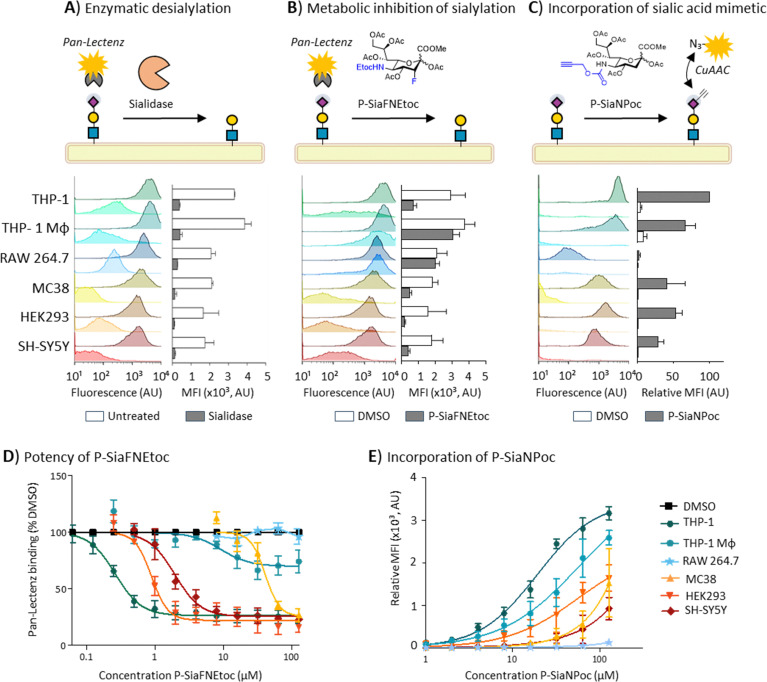 Figure 1
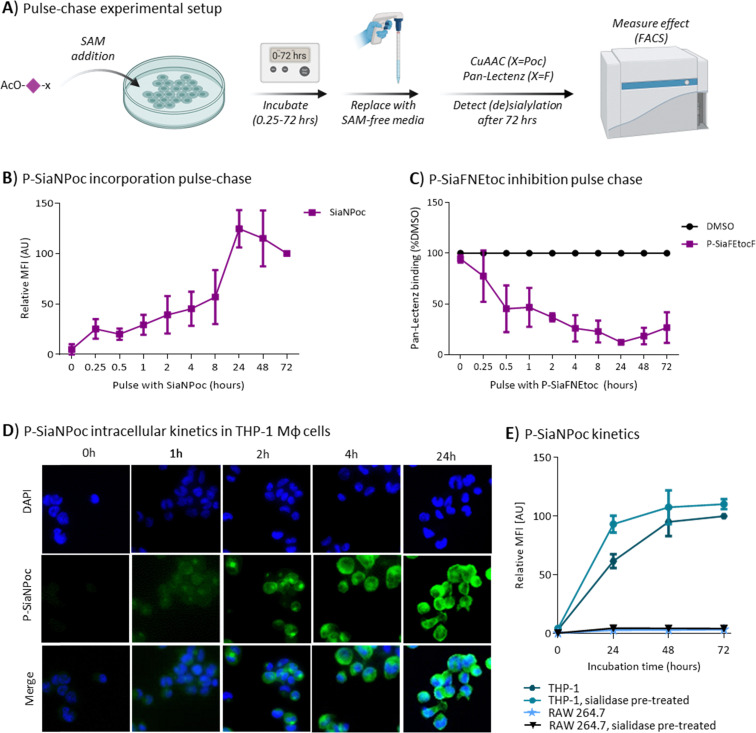 Figure 2
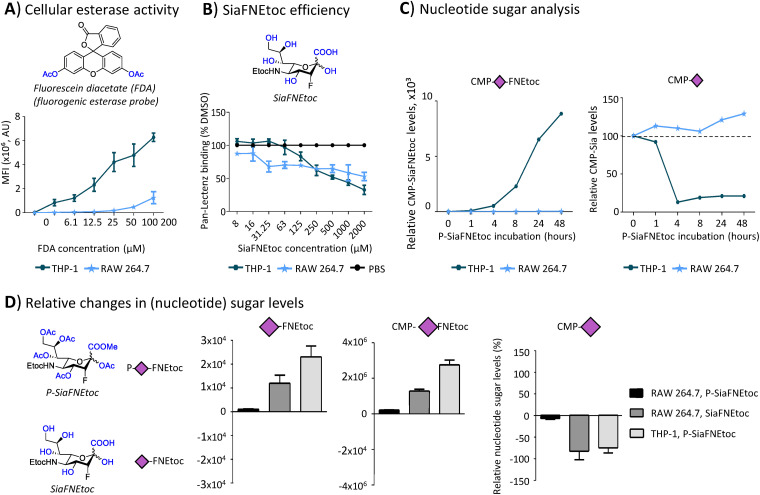 Figure 3
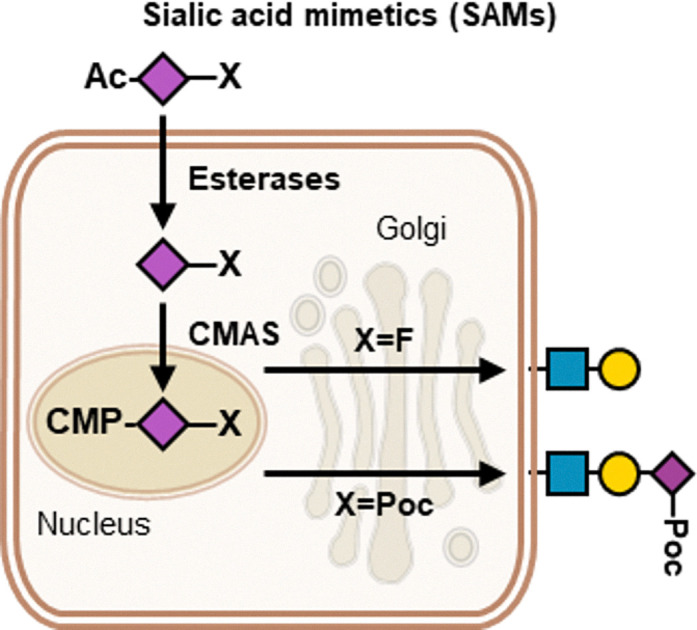 Figure 4
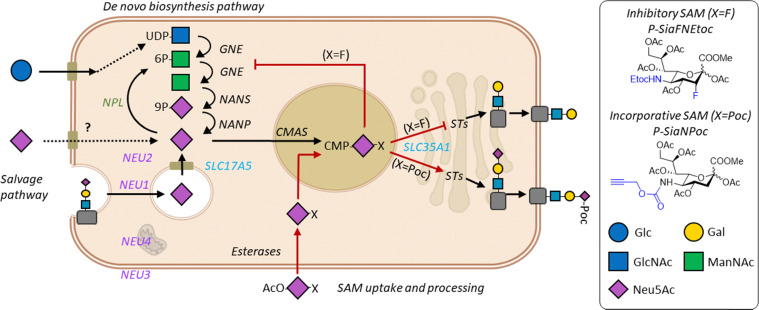 Figure 5
Peer Reviews
No public reviews on file for this paper yet. If you reviewed it on a platform where reviews are public (OpenReview, ICLR, NeurIPS, ICML), you can paste yours below so the community can read it here.
Videos
No videos yet. Explain this paper in a talk, walkthrough, or lecture? Add one.
Taxonomy
TopicsGlycosylation and Glycoproteins Research · Carbohydrate Chemistry and Synthesis · Cancer, Hypoxia, and Metabolism