Prognostic value of the FS-15 frailty score in patients with myelodysplastic syndromes
昕 王, 铁军 秦, 泽锋 徐, 士强 曲, 冰 李, 丽娟 潘, 清妍 高, 蒙 焦, 玥 仲, 彬涵 蒋, 琳琳 刘, 金影 赵, 文君 解, 志坚 肖

TL;DR
The study shows that the FS-15 frailty score can effectively predict survival outcomes in patients with myelodysplastic syndromes.
Contribution
This study validates the FS-15 frailty score as a prognostic tool for newly diagnosed MDS patients in China.
Findings
Non-frail MDS patients had significantly better overall survival than frail patients.
FS-15 scores correlated with established risk systems like IPSS-R and IPSS-M.
Frail patients experienced higher treatment-related adverse events.
Abstract
明确修订后的15项骨髓增生异常综合征衰弱评分(Revised 15-item MDS-specific frailty scale,FS-15)对中国骨髓增生异常综合征(MDS)患者的预后评估价值。 回顾性分析2016年8月至2023年6月就诊于中国医学科学院血液病医院的812例初治MDS患者,应用FS-15进行评分,根据结果将其分为衰弱及非衰弱两组,分析不同组别患者的临床和实验室特征及总生存(OS)情况。 ①患者的中位年龄55(IQR 45~64)岁,中位随访时间22.5(95% CI:20.2~24.9)个月,中位OS时间43.3(95% CI:36.8~49.8)个月。患者FS-15得分中位数为0.42分,截断值为0.44分。男性患者得分相对女性较高(0.42分对0.38分,P=0.006),修订版国际预后评分系统(IPSS-R)(P=0.001)和分子国际预后评分系统(IPSS-M)(P=0.014)分组中,极高风险组患者FS-15得分均显著高于极低风险组。②非衰弱组患者(452例)的中位OS时间为54.7(95% CI:47.5~NA)个月,衰弱组(360例)为31.5(95% CI:22.9~41.0)个月,3年OS率分别为(63.2±3.2)%和(46.4±3.6)%,5年OS率分别为(49.9±4.7)%和(32.0±4.3)%,差异有统计学意义(P<0.001)。③在IPSS-M低危及极高危患者中,非衰弱组患者的3年OS率明显高于衰弱组(均P<0.05);在IPSS-R极低危、低危及高危患者中,非衰弱组患者的3年OS率明显高于衰弱组(均P<0.05)。④在接受去甲基化药物治疗的患者中,非衰弱组总体有效率显著高于衰弱组(86.7%对64.6%,P=0.007);治疗相关不良反应方面,衰弱组粒细胞缺乏伴发热(67.1%对47.4%,P=0.016)及肝功能异常(30.0%对14.5%,P=0.023)的发生率均高于非衰弱组。 应用FS-15对中国初治MDS患者进行衰弱评估具备可行性,并且可作为有效的预后评估工具使用。
Genes, proteins, chemicals, diseases, species, mutations and cell lines named across the full text — each resolved to its canonical identifier and authoritative record.
Click any figure to enlarge with its caption.
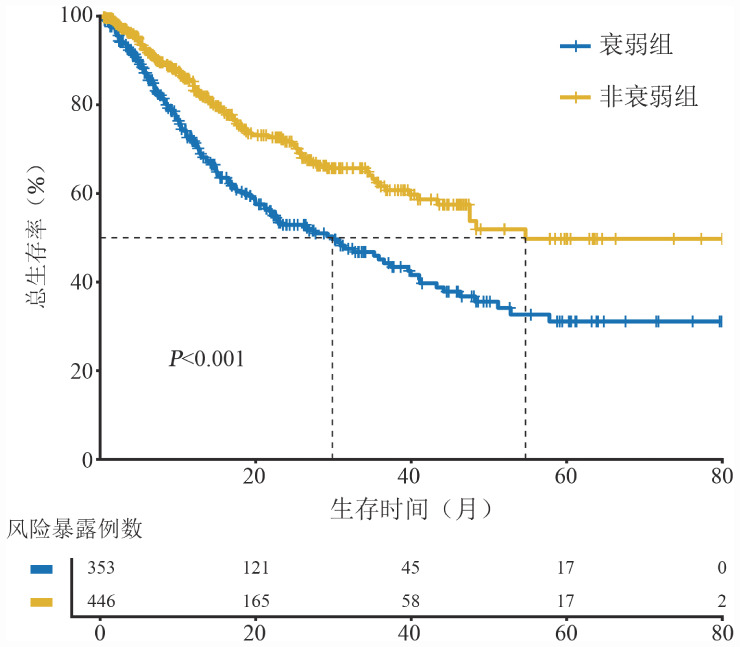 Figure 1
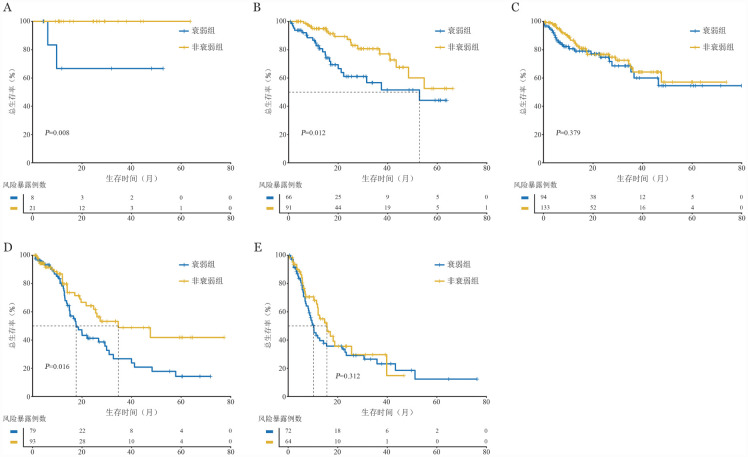 Figure 2
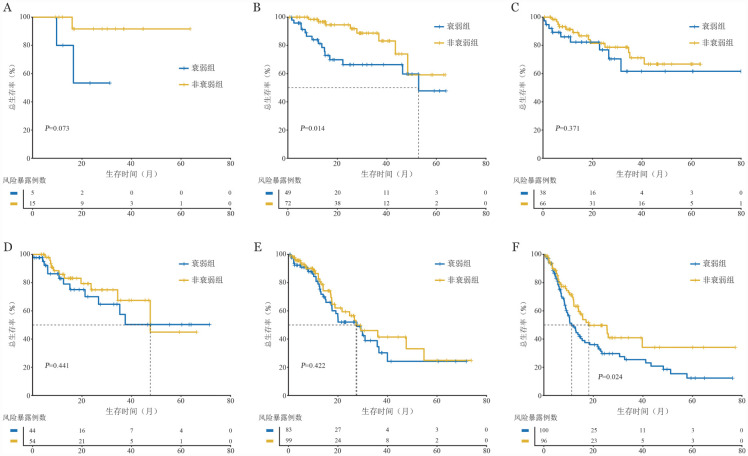 Figure 3
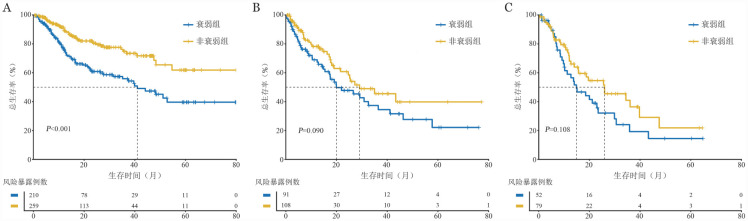 Figure 4
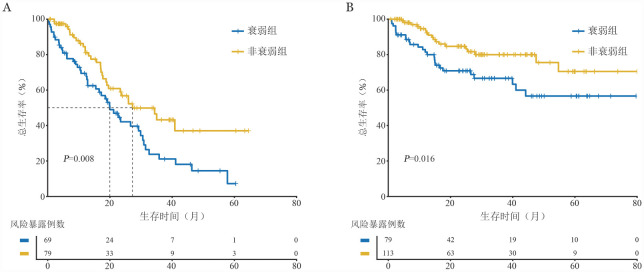 Figure 5
Peer Reviews
No public reviews on file for this paper yet. If you reviewed it on a platform where reviews are public (OpenReview, ICLR, NeurIPS, ICML), you can paste yours below so the community can read it here.
Videos
No videos yet. Explain this paper in a talk, walkthrough, or lecture? Add one.