A decade of health research capacity building in Honduras: institutional transformation, challenges, and lessons learned
Gustavo Fontecha, Ana Sánchez, Gabriela Matamoros, Denis Escobar, Bryan Ortiz

TL;DR
This paper explores how Honduras built health research capacity over a decade through education, international collaboration, and institutional development, despite ongoing financial and structural challenges.
Contribution
The study provides the first longitudinal analysis of health research capacity building in Honduras, emphasizing the role of local leadership and returning scientists.
Findings
Honduras expanded scientific capacity through graduate training and institutional strengthening despite financial constraints.
The Instituto de Investigaciones en Microbiología has produced over 170 publications since 2014, representing 20% of UNAH’s health-related output.
Challenges include chronic underinvestment in R&D, rigid bureaucracy, and brain drain, but international partnerships and local leadership have been key enablers.
Abstract
Honduras has historically faced major barriers to building a sustainable health research system, including minimal R&D investment and limited institutional infrastructure. A Canadian-funded initiative (2007–2012) established the first research-oriented MSc program, a non-clinical ethics board, and modern laboratories at the Universidad Nacional Autónoma de Honduras (UNAH). This article examines how health research capacity evolved between 2013 and 2025, highlighting long-term outcomes, enablers, and barriers, and situating these within a regional Central American comparison. The narrative, largely anecdotal, reflects on the experience and impact of biomedical research at UNAH, particularly through the Instituto de Investigaciones en Microbiología (IIM). Alumni trajectories and institutional transformations are illustrated with concrete examples. Bibliometric analysis contextualizes…
Genes, proteins, chemicals, diseases, species, mutations and cell lines named across the full text — each resolved to its canonical identifier and authoritative record.
Click any figure to enlarge with its caption.
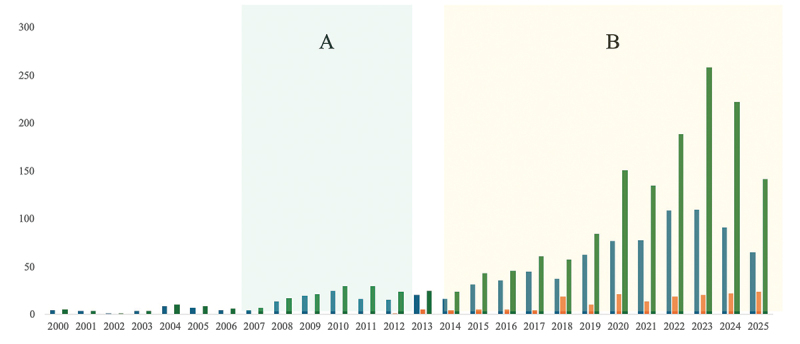 Figure 1
 Figure 2
Peer Reviews
No public reviews on file for this paper yet. If you reviewed it on a platform where reviews are public (OpenReview, ICLR, NeurIPS, ICML), you can paste yours below so the community can read it here.
Videos
No videos yet. Explain this paper in a talk, walkthrough, or lecture? Add one.
Taxonomy
TopicsGlobal Health and Surgery · Health and Medical Research Impacts · Global Public Health Policies and Epidemiology
Background
In 2013, Sánchez and colleagues reported in Global Health Action the initial outcomes of a Canadian-funded initiative to strengthen health research capacity in Honduras between 2007 and 2012 [1]. At the time, the country lacked a national health research system, invested only 0.04% of its GDP in science and technology [2], among the lowest in Latin America, and had virtually no scientific output. The initiative led to the creation and implementation in 2009 of the first Research-oriented MSc program in infectious and zoonotic diseases at the UNAH, along with the establishment of a non-clinical research ethics board, laboratory infrastructure, and a biosafety training center, key steps toward building a sustainable research culture at the university.
The initiative led by Sanchez et al. was driven by the conviction that strengthening health research capacity in low- and lower-middle-income countries is essential – not only to address the heavy disease burden with limited resources, but also to generate locally relevant evidence that can inform more effective and context-sensitive health policies [3,4]. Moreover, the development of a robust research infrastructure enabled active participation in global health dialogues and fostered the production of scientific knowledge with regional significance.
More than a decade after the completion of the Canadian-funded initiative, this article critically examines how research capacity has evolved at UNAH, focusing on institutional outcomes, challenges, and enabling factors that have shaped sustainability. To situate Honduras within the broader regional landscape, a comparison is provided with the leading public universities of the five other Central American countries, based on publication output. The analysis underscores enablers and barriers specific to Honduras and draws lessons that may inform stakeholders seeking to strengthen research capacity in resource-limited settings.
Methods
The primary sources of information were institutional records from UNAH, which provided data on MSc graduates, the creation of auxiliary researcher positions, and research outputs, complemented by annual reports from the IIM. Alumni trajectories were reconstructed through direct communication and institutional follow-up, documenting postgraduate studies abroad, return rates, and current employment.
To situate the Honduran case within a broader regional perspective, a bibliometric analysis was conducted using the Scopus (Elsevier) database [5]. Searches were conducted between July and August 2025, covering 2000–2025. Searches were filtered by the institutional affiliation of the six leading public universities in Central America – Universidad de San Carlos de Guatemala, Universidad de El Salvador, Universidad Nacional Autónoma de Honduras, Universidad Nacional Autónoma de Nicaragua en León, Universidad de Costa Rica, and Universidad de Panamá—and included both English- and Spanish-language outputs. For each university, all indexed publications were tabulated, and health-related outputs were identified using Scopus subject area classifiers: Agricultural and Biological Sciences; Medicine; Biochemistry, Genetics and Molecular Biology; Immunology and Microbiology; Nursing; Neuroscience; Dentistry; and Veterinary.
Finally, contextual indicators such as gross domestic product (GDP) [6], national investment in research and development (R&D) [7], number of researchers in R&D per million inhabitants [8], were retrieved from World Bank sources to provide background context and facilitate regional comparisons of research capacity.
Historical background and the 2007–2012 initiative
In the early 2010s, Honduras faced severe structural constraints that hindered the development of a national health research agenda. More than 60% of the population lived in poverty [9], while the country grappled with political instability, exacerbated by the 2009 coup d’état, and persistent weaknesses in governance [2]. Honduras lacked a research council or agency to coordinate or fund scientific work, and health research was largely absent from policy agendas [10]. The higher education system mirrored these structural limitations. Public universities, including UNAH, operated under a teaching-centered model that consistently deprioritized research. Academic careers offered neither protected time for research nor structured pathways for advancement, with scarce funding opportunities and limited institutional recognition. Early-career faculty were particularly affected, as research was often undervalued and perceived as disconnected from pressing health needs. The absence of internal grant mechanisms, inadequate laboratory infrastructure, and burdensome bureaucracy further discouraged scientific inquiry [11]. These barriers were compounded by the end of Swedish development cooperation (Sida) through the Karolinska Institute Research Training (KIRT) program, which from 1988 to 2012 had trained 11 Honduran microbiologists [12]. The withdrawal of Swedish cooperation left a significant gap in institutional strengthening at UNAH, disrupting scientific collaboration, graduate training, and research infrastructure.
Against this backdrop, Canada’s Global Health Research Initiative (CIHR, IDRC, and other partners) launched a five-year project in 2007 to strengthen research capacity at UNAH. Documented by Sánchez et al. [1,13], it addressed training and systemic barriers. Key components included an MSc in infectious and zoonotic diseases; a state-of-the-art lab; UNAH’s first non-clinical Research Ethics Board; a biosafety training center; and support for regional and global networks. The project adopted a multi-level model targeting human resources, institutions, governance, and partnerships. Crucially, Honduran faculty were trained to lead academic and administrative aspects, ensuring national alignment and sustainability. By 2012, early impacts were visible: the MSc program had graduated its first cohort; the ethics board was operational; and researchers were publishing, securing external funding, and joining regional networks. These marked the emergence of a nascent research ecosystem at UNAH. The following findings explore how these gains evolved over the next 13 years and identified the factors that supported their sustainability.
Capacity building outcomes (2013–2025)
Highly qualified personnel (HQP)
One of the most tangible outcomes of the 2007–2012 initiative has been the steady growth of trained professionals in Honduras’s biomedical research sector. According to UNAH records, the MSc program in infectious and zoonotic diseases has graduated over 30 students across four cohorts. While modest compared to countries with established postgraduate systems, this represents a remarkable achievement in Honduras, where academic postgraduate training previously required studying abroad. In the absence of local doctoral programs in biomedical sciences, several MSc graduates have pursued PhDs overseas, with some returning to strengthen national academic and public health institutions. At UNAH, a few have joined the Faculty of Sciences, reinforcing research and teaching in microbiology, parasitology, and public health, and helping to bridge the gap between teaching and research. MSc graduates and other faculty have also benefited from international exchanges, most notably through the German Academic Exchange Service (DAAD) [14], which continues to provide valuable opportunities for training, collaboration, and global networking. Beyond academia, several MSc graduates have joined public health institutions and diagnostic laboratories. Their work has reinforced disease surveillance, outbreak response, and diagnostics, strengthening the country’s ability to address health threats such as dengue, COVID-19, and antimicrobial resistance.
At the same time, numerous undergraduates have gained access to research facilities, often experiencing the scientific method for the first time. These opportunities have provided hands-on training and, in some cases, milestones such as contributing to publications or mastering advanced techniques, giving students more competitive profiles for graduate studies abroad. In a country with very few researchers per capita, the cumulative impact of these experiences has been significant. To further professionalize research careers, UNAH established in 2015 the position of auxiliary researcher, a full-time post for professionals with a master’s or doctoral degree. Between 2014 and 2022, a total of four positions were created at UNAH. These posts are full-time and formally tenured. These researchers lead original studies, supervise students, and contribute to academic output, while being exempt from undergraduate teaching to dedicate themselves fully to research. However, despite its initial promise, the role has received limited institutional support, its expansion has stalled, and successive administrations have failed to strengthen this successful model.
Institutional strengthening
While increases in HQP have been notable, institutional sustainability remains a key challenge. Nonetheless, one of the most significant structural achievements has been the creation of the IIM at UNAH [15]. This research institute, with formal university recognition and autonomous governance, now includes four research laboratories. The IIM operates under a diversified funding model, combining institutional support, competitive external grants (e.g. Namru-South, Médecins Sans Frontières, CSUCA), and income from diagnostic and technical services. This has enabled advanced resources previously unavailable in Honduran academia. Additionally, four microbiology research groups, composed of UNAH faculty and external collaborators, are affiliated with the IIM [15]. Institutional strengthening has also been supported by the sustained operation of the Research Ethics Board established during the original project. This board now serves multiple faculties and research groups and is recognized nationally for its leadership in biomedical research ethics.
Scientific production and visibility
Although Honduras’ overall scientific output remains modest, there has been clear progress in both quality and visibility, particularly within research groups strengthened through capacity-building initiatives. The IIM, a relatively new unit with only a handful of researchers, has emerged as one of the top contributors to peer-reviewed publications both within UNAH and at the national level. Since 2012, its researchers have co-authored more than 170 articles indexed in Scopus [15]. This output represents 11.7% of the university’s total publications between 2012 and August 2025, and 21.63% of all publications in the health sciences during that period (Figure 1). Figure 1.Annual number of total publications (green) and health-related publications (blue) from UNAH, compared with publications from the IIM (orange). Period A corresponds to the years of the Canadian cooperation project for research capacity building, while period B represents the post-initiative period following the establishment of UNAH’s first research center.
Research engagement and collaborative networks
Between 2012 and 2025, the IIM has expanded its participation in regional and international research projects. These include studies on vector-borne diseases [16–18], malaria surveillance and resistance mapping [19–33], One Health initiatives addressing leishmaniasis [34–41] and geohelminths [42–48], and investigations into emerging fungal pathogens [49–58], among others. Through these projects, Honduran scientists have accessed advanced training, and contributed to regional and global research agendas. Despite ongoing systemic challenges, these achievements highlight the value of long-term capacity-building investments when supported by institutional commitment and regional collaboration.
Regional background comparison: research capacity in Central American national universities
To contextualize UNAH’s recent progress, it is important to situate Honduras within the broader landscape of Central American higher education and research. Comparing scientific output and structural indicators across the region’s leading public universities highlights both shared challenges and significant disparities in research capacity. This perspective is not intended as a ranking exercise, but rather to emphasize structural factors – such as R&D investment, research workforce availability, and institutional environments – that determine the ability of universities to sustain scientific activity. By contrasting UNAH’s trajectory with that of its regional peers, we can better understand the opportunities and constraints shaping research development in Honduras.
Indexed scientific publications in health
Per capita publication output in Central America remains below the global average [59]. Scopus data [5] show that, when comparing total scientific output and health-related publications from the region’s leading public universities, the UCR stands out by a wide margin, with over 11,000 total publications including about 7,000 in health from 2000 to 2025. The UP and UNAH follow at a much smaller scale, each with under 2,000 total, including 1,500 health-related publications. The USAC, UNAN-León, and UES lag further behind, all with fewer than 1,000. Overall, UCR dominates regional research output, underscoring persistent disparities in research capacity (Table 1).Table 1.Comparative indicators of research and higher education capacity in six Central American countries. Data include GDP per capita (USD, 2024), percentage of GDP invested in research and development (R&D), number of researchers in R&D per million people, and bibliometric outputs indexed in Scopus (2000–2025). Publication counts are filtered by institutional affiliation with each country’s leading public university, with a distinction between total indexed publications and those classified as health-related.CountryGDP per capita (USD, 2024) [6]% GDP in R&D (most recent year) [7]Researchers in R&D per million people (most recent year) [8]Total indexed publications (2000–2025) affiliated with the country’s leading public university [5]Health-related publications (2000–2025) affiliated with the country’s leading public university [5]Costa Rica18 5870.34%46211 9236 919Panamá19 1020.16%2531 8221 249Honduras3 4260.06%1881 591892Guatemala6 1500.06%151 004670Nicaragua2 8470.11%71500432El Salvador5 5790.14%58477300
Investment in R&D as a percentage of GDP
Experts often recommend that developing countries aim for at least 1% of GDP in R&D spending to begin building a sustainable innovation ecosystem [60]. Across Central America, investment in R&D as a share of GDP remains critically low. World Bank data indicate that Honduras and Guatemala allocate the least to R&D (0.06%), followed by Nicaragua (0.11%), El Salvador (0.14%), and Panama (0.16%) [61]. Such levels are far below the suggested investment and fall short of what is required [62]. In contrast, Costa Rica stands out as the regional exception, with R&D investment reaching approximately 0.34% [61].
Research workforce and structural disparities
Beyond publication output and financial investment, the availability of human capital dedicated to research further illustrates regional inequities. Costa Rica again leads with 462 researchers per million people, followed by Panama (253) and Honduras (188). In stark contrast, Guatemala, Nicaragua, and El Salvador report fewer than 75 researchers per million, highlighting their limited scientific workforce. These structural gaps help explain the uneven productivity observed in Scopus outputs and reflect broader weaknesses in national research systems. Combined with persistently low R&D spending, such disparities hinder the consolidation of competitive research environments and perpetuate dependence on external collaborations for scientific advancement.
Factors enabling research ecosystems
Research ecosystems and opportunities for young scientists
Central American countries such as Costa Rica and Panama have developed structured research systems. For example, Panama, for instance, is home to the century-old Gorgas Memorial Institute [63] whose new headquarters recently received an investment exceeding 200 million USD [64]. Another key driver of Panama’s progress is the Secretaría Nacional de Ciencia, Tecnología e Innovación (SENACYT) [65], which plays a central role in promoting and strengthening research. In Costa Rica, the UCR stands out as a leading knowledge-generating institution, hosting more than 70 research centers and institutes. Although Honduras and neighboring countries still contend with fragmented systems and weak governance, efforts at UNAH over the past decade have begun to bear fruit, creating research spaces, graduate training opportunities, and new institutional frameworks. These advances show that progress is possible even in resource-constrained environments. Yet, sustained investment and stronger national support remain essential for consolidating these gains and moving closer to the construction of a fertile and enduring scientific ecosystem at UNAH.
Strategic role of international partnerships and the academic diaspora
International collaboration has been central to UNAH’s research capacity development. Beyond financial aid, partnerships with Canadian, U.S., European, and Latin American institutions facilitated knowledge exchange, exposure to global standards, and joint research agendas. These collaborations also provided graduate training, fellowships, and co-publication opportunities. The return of Honduran researchers trained abroad, particularly PhD holders supported through international fellowships, has been critical for consolidating research groups and mentoring new scientists. Returnees often act as institutional bridges, bringing grant-writing skills, scientific rigor, and networks that align local research with global standards. At the same time, some Honduran researchers have migrated to countries with more advanced scientific development, yet this ‘brain gain’ has strengthened local capacity through continued collaboration.
Local leadership and institutional ownership
Progress would not have been possible without committed local leadership. Faculty champions at UNAH played a central role in aligning research with national priorities, securing resources, and embedding scientific activity within institutional frameworks. Initiatives such as the MSc program and the IIM have flourished thanks to the vision and persistence of these leaders, who built a supportive research environment not because of the institution, but despite it. This highlights the critical importance of institutional ownership: locally led initiatives embedded within a university’s strategic plans are far more likely to endure beyond external funding, whereas projects lacking strong internal leadership often fail to achieve long-term sustainability or scale.
Challenges and barriers to sustainability
Despite meaningful gains in health research capacity over the past two decades, long-term sustainability remains limited by persistent and interrelated challenges at the national, institutional, and systemic levels. These barriers reflect broader structural weaknesses in Honduras’s science and technology ecosystem and continue to restrict the full potential of prior capacity-building efforts.
Chronic underinvestment in research and development
National spending on R&D has remained below 0.1% of GDP [66], restricting support for research agendas, early-career recruitment, and infrastructure expansion. At UNAH, limited and unstable internal funds are further weakened by inefficient fiscal oversight and bureaucratic delays. As a result, researchers depend on unpredictable external grants or income from service provision – unsustainable strategies for long-term growth.
Rigid and fragmented university bureaucracy
Procedural rigidity at UNAH continues to hinder research execution. Procurement, recruitment, collaboration, and funding management are slow, and poorly aligned with scientific needs. These inefficiencies raise costs, delay projects, and discourage pursuit of competitive grants, creating institutional inertia and limiting research development.
Absence of a national health research policy
Although Honduras does not have a formal national health research policy, several broader initiatives indirectly influenced the research environment during the study period. In 2010, the government approved the National Science, Technology, and Innovation Policy, which outlined general priorities for scientific development, though its implementation was limited by underfunding and institutional fragmentation. In 2015, the Ministry of Health launched the National Health Model, emphasizing primary care and surveillance; while not explicitly a research policy, it created opportunities for operational and applied research, particularly in epidemiology and infectious diseases. However, in the absence of a coherent policy framework, decision-makers facing emerging health challenges often rely on technical support from international agencies such as PAHO, CDC-CAR [67], SE-COMISCA [68] and CHAI [69], rather than locally generated evidence. Although donor proposals frequently reference ‘applied research,’ funding for evidence generation remains scarce. Weak collaboration between the Ministry of Health and academia, combined with the lack of a national research council or priority-setting mechanisms, has left efforts fragmented and largely donor-driven.
Brain drain and limited career pathways
Stable scientific careers remain scarce. While some MSc and PhD graduates have secured posts at UNAH, private universities, or national laboratories, many face precarious contracts, limited funding, and unclear promotion pathways. This lack of incentives drives highly trained individuals to migrate or leave research altogether [11]. The absence of new academic postgraduate programs at UNAH, combined with a lack of scholarships, further discourages local training. Many candidates opt for fully funded programs abroad rather than pay high tuition costs in Honduras.
Weak linkages with the private sector remain a potential challenge
Interaction between universities and industry remains limited, hindering applied research and innovation. In Honduras and much of the region, business-sector researchers are scarce [59], and systematic evidence on the effects of these weak linkages is lacking. Mechanisms for collaboration in health are underdeveloped, and regulatory barriers, low trust, and the absence of fiscal incentives further discourage private R&D. Policy reforms and intermediary structures – such as innovation hubs and technology transfer offices – could help foster collaboration and innovation-led growth, but these strategies remain exploratory rather than proven solutions.
Discussion and lessons learned
The Honduran experience over the past two decades illustrates the complex, non-linear process of building health research capacity in lower-middle-income countries. Despite persistent structural challenges, several enabling factors have sustained and expanded earlier gains. These lessons are relevant not only to Honduras but also to national actors, international donors, academic institutions, and research networks working in similarly fragile contexts.
A distinctive feature of the Canadian-funded initiative (2007–2012) was its explicit focus on health research capacity, institutional strengthening, and systemic change. This approach contrasted with earlier research capacity strengthening (RCS) models at UNAH – ranging from isolated training opportunities in high-income countries to the ‘sandwich model’ implemented by the KIRT program [70]. While these initiatives were highly beneficial, they often left to chance the research environment that foreign-trained scholars would encounter upon returning, limiting their ability to sustain long-term scientific activity. In contrast, the Canadian project combined individual training with deliberate institutional reforms, supporting the development of a Honduras-based graduate program designed and led by local faculty. This strategy embedded research training within national structures, creating opportunities for students unable to pursue training abroad and laying the groundwork for a more inclusive and sustainable research ecosystem.
The Canadian initiative adopted a multi-level model that combined actions at the individual, institutional, and systemic levels. At the individual level, it supported graduate training through the MSc program, mentoring, and participation in scientific writing, academic exchanges, and grant proposals. Institutionally, it fostered the development of laboratories, established UNAH’s first non-clinical Research Ethics Board, and strengthened faculty development. At the systemic level, it promoted inter-institutional collaboration, facilitated integration into regional networks, and encouraged alignment with international standards. This layered approach recognized that individual training is insufficient without robust institutional structures, and that institutional gains require broader policy alignment to achieve sustainability. A key pillar of the project was local ownership: Honduran faculty played central roles in curriculum design, laboratory management, ethical oversight, and network building, embedding these activities within UNAH’s governance systems and increasing their chances of long-term adoption. Rather than relying on temporary, project-dependent structures, the MSc program and the ethics board were formally incorporated into UNAH’s academic and administrative frameworks, ensuring continuity beyond the funding period. Sustainability was treated not as a byproduct but as a core design principle, supported by early planning, a gradual handover of responsibilities, and the cultivation of regional and national partnerships that reduced dependence on external funding and strengthened long-term viability.
Future directions
UNAH’s experience over the last years highlights both the promise and fragility of research capacity in resource-limited settings. Consolidating and expanding these gains requires strategic actions at the institutional, national, and international levels:
Institutional
Expanding researcher positions and granting administrative autonomy are essential to sustain capacity. At UNAH, limited understanding of research among many decision-makers has led to policies that hinder progress, such as rigid financial controls and lack of protected research time. Strengthening administrators’ skills in budgeting, legal, and research management is therefore critical. Structured dialogue between researchers and leadership has already supported more enabling regulations [71]. Effective fund administration is equally important: external project resources are managed through a centralized Foundation, but excessive oversight has caused delays that discourage competitive grants. Experience from the IIM shows that greater autonomy, paired with accountability, can improve efficiency. Simplifying procurement, authorizing multi-year implementation, and decentralizing hiring are critical reforms that require both regulatory adjustments and cultural shifts toward trust and shared responsibility.
National
Establish a health research system and support early-career scientists. A key priority is the creation of a national health research system, modeled after Costa Rica’s INCIENSA [72] or INDICASAT in Panama [73]. Anchored within the Ministry of Health’s surveillance platform, this system could coordinate multidisciplinary research teams to address high-priority questions. The evidence generated should directly inform national disease control and elimination programs – including malaria elimination [74], the HIV/AIDS response [75], and dengue mortality reduction [76], aligned with global 2030 public health targets. Achieving this vision requires a governance framework that sets priorities secures sustained funding, regulates data, and upholds ethical standards. An autonomous or semi-autonomous body should coordinate academia, public health, and donors; without such leadership, efforts risk remaining fragmented and donor-driven. Supporting early-career scientists is equally important, through protected research time, seed funding, and mentorship [77]. Expanding the researcher model at UNAH, introducing tenure-track roles, and fostering interdisciplinary projects would help consolidate the next generation.
International
The future of health research in Honduras also depends on stronger engagement with the private sector and international community. Collaboration in diagnostics, biotechnology, digital health, and pharmaceuticals remains limited, but with regulatory reforms, fiscal incentives, and innovation hubs, this gap could narrow. International cooperation, including South–South partnerships, is essential to secure funding, scientific platforms, and collaborative opportunities. A critical priority is simplifying importation of scientific supplies. Customs delays often compromise temperature-sensitive reagents; fast-track pathways for certified institutions would reduce waste, lower costs, and enable fuller participation in global science.
Conclusion
Over the past decade, Honduras has shown that health research capacity can advance even amid national instability, scarce funding, and political uncertainty. Graduate programs, research laboratories, ethics boards, and a new generation of researchers mark a departure from the near absence of activity before 2012. Yet these gains are endangered. Chronic underinvestment, rigid administration, weak policies, and limited research careers pathways threaten sustainability. Still, international partnerships, diaspora scientists, institutional leadership, and regional networks have been vital enablers. Honduras illustrates that capacity building is a long-term, political, and iterative process requiring institutional reform, sustained investment, and strategic alliances. Its experience shows research capacity is not just a technical goal, but a strategy for equity, autonomy, and scientific resilience.
The reference list from the paper itself. Each links out to its DOI / PubMed record.
- 1Sanchez AL, Canales M, Enriquez L, et al. A research capacity strengthening project for infectious diseases in Honduras: experience and lessons learned. Glob Health Action. 2013;6:21643. doi: 10.3402/gha.v 6i 0.21643 Epub 20130807; Pub Med PMID: 23930937; Pub Med Central PMCID: PMC 3739968.23930937 PMC 3739968 · doi ↗ · pubmed ↗
- 2RICYT. El estado de la ciencia. Principales indicadores de ciencia y tecnología iberoamericanos/interamericanos 2020. Montevideo: UNESCO, Oficina Regional de Ciencias para América Latina y el Caribe; 2020. [cited 2025 Aug 19]. Available from: https://www.ricyt.org/en/2020/11/1617/
- 3Ong M. A comprehensive framework identifying barriers to global health R&D innovation and access. BMJ Glob Health. 2023;8:e 013076. doi: 10.1136/bmjgh-2023-013076 Epub e 013076; Pub Med PMID: 37751936; Pub Med Central PMCID: PMC 10533694. · doi ↗
- 4Zhao L, Zhao Y, Du J, et al. Mapping the research on health policy and services in the last decade (2009–2018): a bibliometric analysis. Front Public Health. 2022;10:773668. doi: 10.3389/fpubh.2022.773668 Epub 20220427; Pub Med PMID: 35570893; Pub Med Central PMCID: PMC 9092023.35570893 PMC 9092023 · doi ↗ · pubmed ↗
- 5Scopus. Scopus: a comprehensive abstract and citation database for impact makers. Elsevier; 2025. [cited 2025 Aug 23]. Available from: https://www.scopus.com/home.uri
- 6World Bank Group. GDP per capita (current US$). Central America: World Bank; 2025. [cited 2025 Sep 19]. Available from: https://data.worldbank.org/indicator/NY.GDP.PCAP.CD?end=2024&locations=L 6&start=2000&utm_source=chatgpt.com&view=chart
- 7World Bank Group. Research & development expenditure (% of GDP): world Bank. 2025. [2025 Sep 19]. Available from: https://data.worldbank.org/indicator/GB.XPD.RSDV.GD.ZS
- 8World Bank Group. Researchers in R&D (per million people) 2025. [2025 Sep 19]. Available from: https://data.worldbank.org/indicator/SP.POP.SCIE.RD.P 6