Reinventing Chemiluminescence through Redox-Driven Self-Assembly
Dario Alessi, Luca Morgan, Elisa Pelorosso, Mirco Scaccaglia, Piermaria Pinter, Alessandro Aliprandi

TL;DR
A new type of chemiluminescence is discovered, where light is produced through redox reactions that form glowing platinum aggregates.
Contribution
A novel chemiluminescence mechanism is introduced, driven by redox-triggered self-assembly of Pt(II) aggregates.
Findings
Light emission arises from self-assembled Pt(II) aggregates, not from discrete molecular species.
The emissive state is confirmed to be intrinsic to the aggregated Pt(II) architecture.
Emission intensity and persistence depend on the reductant used, ranging from flashes to afterglow.
Abstract
Chemiluminescence (CL) typically derives from harvesting the energy released during the cleavage of covalent bonds, wherein molecular substrates are irreversibly consumed to generate electronically excited states. In contrast, regenerative CL seeks to bypass substrate decomposition by using reversible redox processes to produce emissive states, an approach that is largely limited to polypyridyl complexes of Ru(II) and Cr(III). Here, we report a fundamentally distinct chemiluminescence mechanism in which the exergonic reduction of Pt(IV) complexes powers the spontaneous formation of emissive Pt(II) aggregates. Notably, light emission arises not from discrete molecular species but from the self-assembled state, whose electronic structure features a lowered excited-state energy (E 0,0) conducive to radiative decay. The emission spectrum observed during chemical reduction matches that…
Genes, proteins, chemicals, diseases, species, mutations and cell lines named across the full text — each resolved to its canonical identifier and authoritative record.
Click any figure to enlarge with its caption.
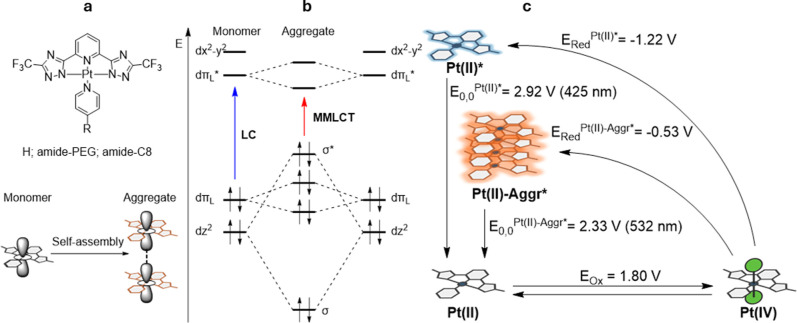 Figure 1
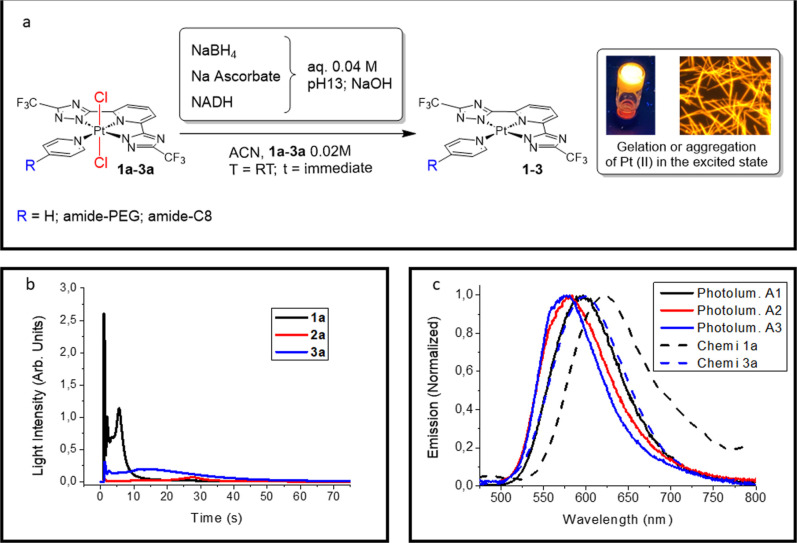 Figure 2
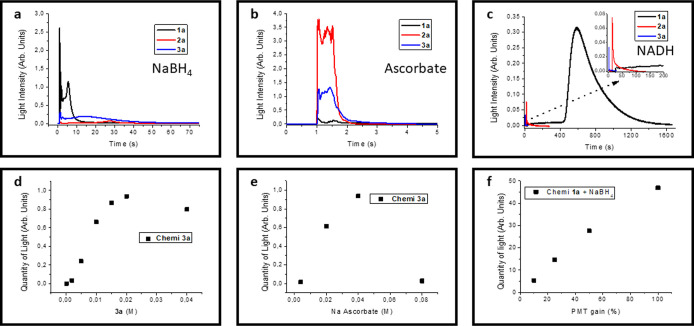 Figure 3
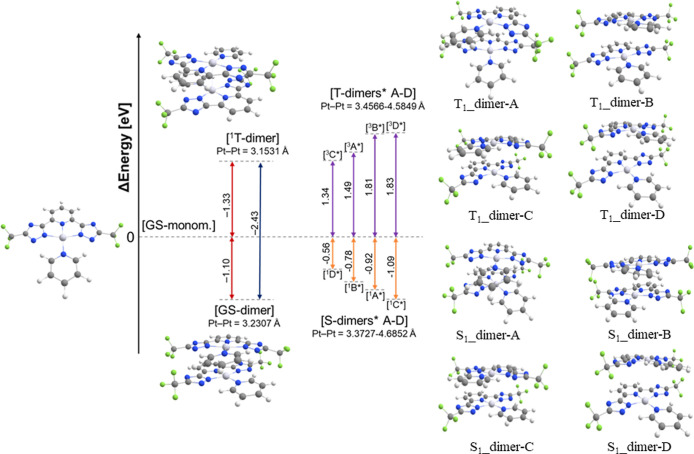 Figure 4
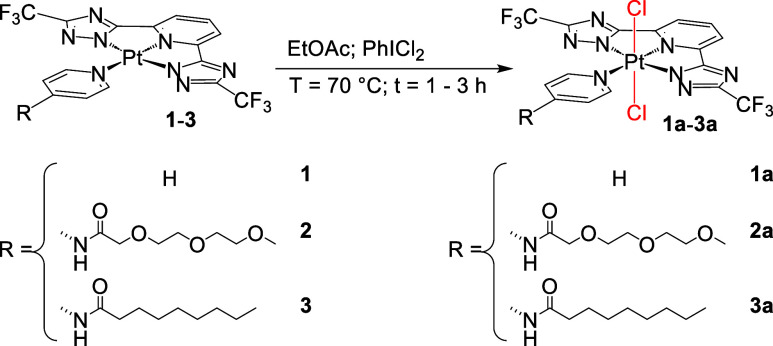 Figure 5
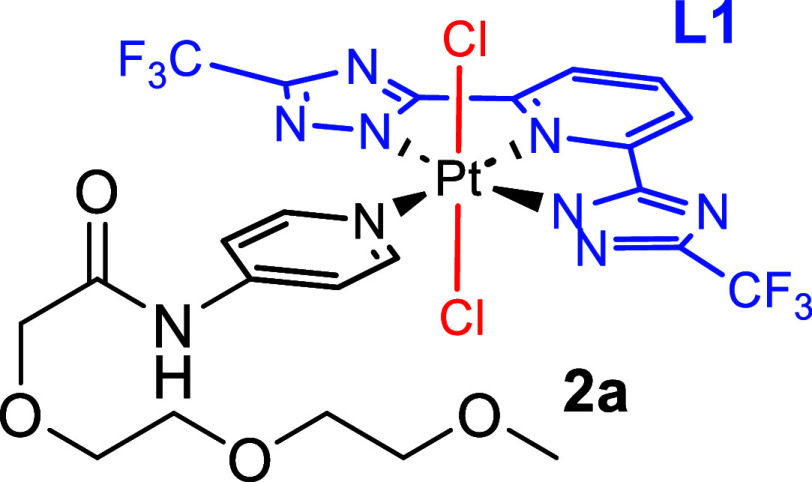 Figure 6
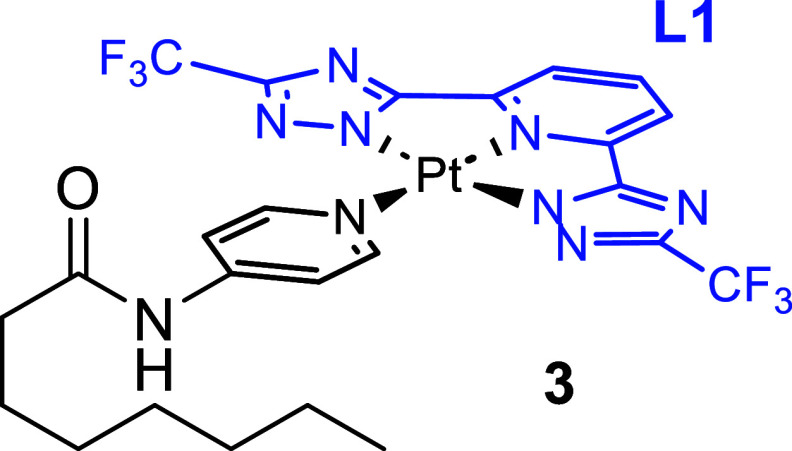 Figure 7
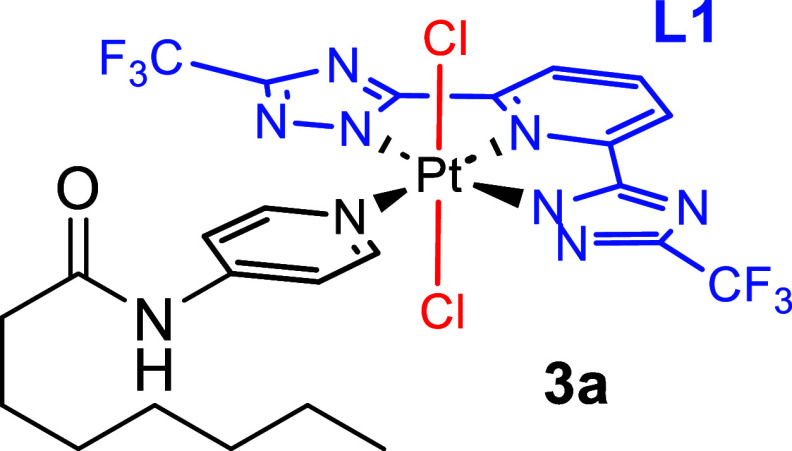 Figure 8
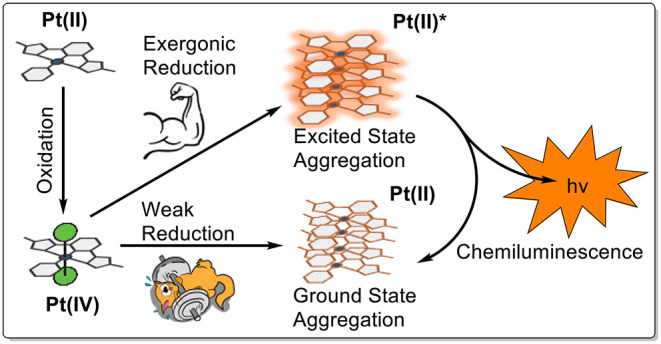 Figure 9
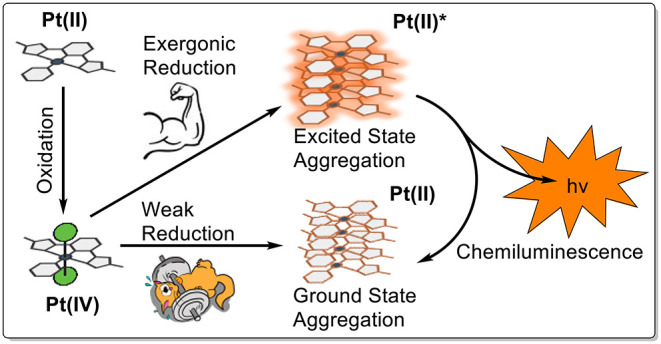 Figure 10
 Figure 11
 Figure 12
 Figure 13
 Figure 14
Peer Reviews
No public reviews on file for this paper yet. If you reviewed it on a platform where reviews are public (OpenReview, ICLR, NeurIPS, ICML), you can paste yours below so the community can read it here.
Videos
No videos yet. Explain this paper in a talk, walkthrough, or lecture? Add one.
Taxonomy
TopicsSupramolecular Self-Assembly in Materials · Luminescence and Fluorescent Materials · Advanced biosensing and bioanalysis techniques