Differential molecular mechanisms of bortezomib sensitization to rhTRAIL in non-small cell lung cancer cell lines
Paweł Kochany, Janet H. Stegehuis, Leonie H.A.M. de Wilt, Gerrit Jansen, Steven de Jong, Godefridus J. Peters, Frank A.E. Kruyt

TL;DR
This study shows how bortezomib enhances the cancer-killing effects of TRAIL in lung cancer cells through different molecular pathways.
Contribution
The study reveals cell-specific mechanisms by which bortezomib sensitizes NSCLC cells to TRAIL-induced apoptosis.
Findings
Bortezomib enhances apoptosis in TRAIL-sensitive and resistant NSCLC cells through distinct pathways.
Caspase-8/Bid amplification and mitochondrial pathways are key in sensitization in H460 and A549 cells.
In SW1573 cells, bortezomib primarily boosts the extrinsic pathway and XIAP inhibition.
Abstract
TNF-related apoptosis-inducing ligand (TRAIL) is a promising targeted anti-cancer agent for several types of cancer, including non-small cell lung cancer (NSCLC). The proteasome inhibitor bortezomib can further potentiate rhTRAIL-induced apoptosis in NSCLC cells. Here, the mechanisms underlying this sensitization were examined in TRAIL-sensitive H460 and TRAIL-resistant A549 and SW1573 NSCLC cells. NSCLC cell lines were treated with rhTRAIL and bortezomib, and apoptosis was assessed through caspase activation assays, western blotting, and gene silencing of key apoptotic regulators, including Bid, XIAP, and cFLIP. Clonogenic assays were performed to evaluate long-term tumor growth suppression. Bortezomib sensitization mechanisms varied across NSCLC cell lines. Combined rhTRAIL/bortezomib treatment enhanced apoptosis across all cell lines. In TRAIL-sensitive H460 cells, rapid caspase…
Genes, proteins, chemicals, diseases, species, mutations and cell lines named across the full text — each resolved to its canonical identifier and authoritative record.
Click any figure to enlarge with its caption.
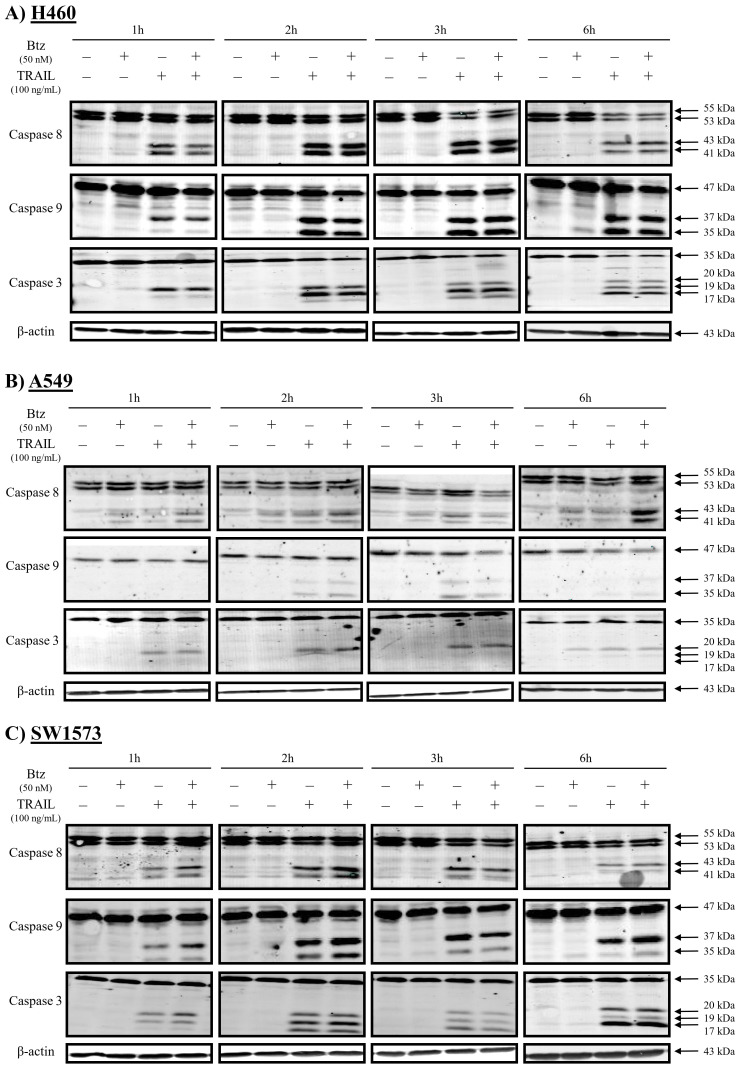 Figure 1
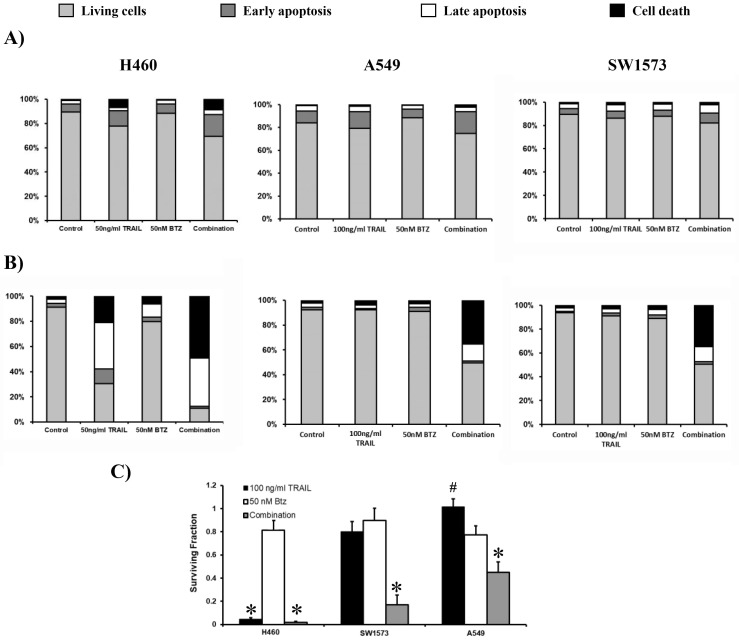 Figure 2
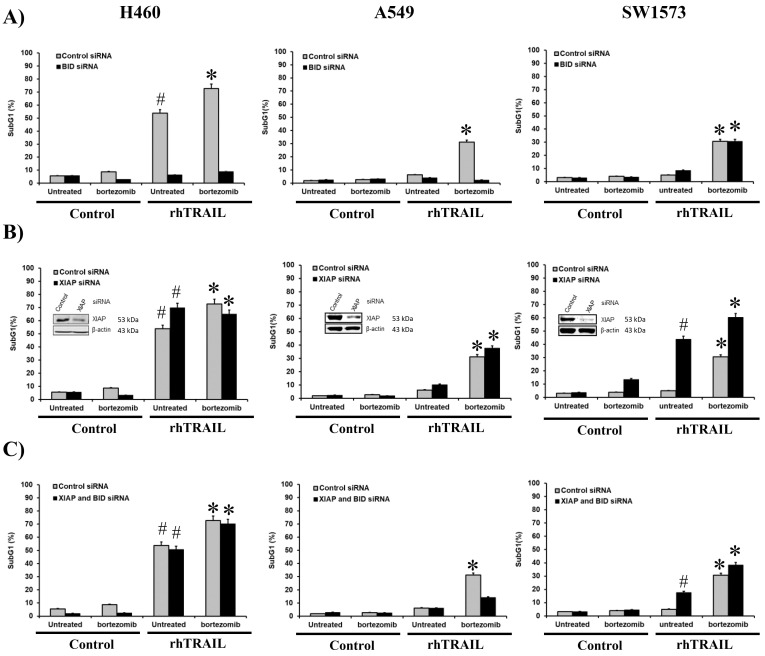 Figure 3
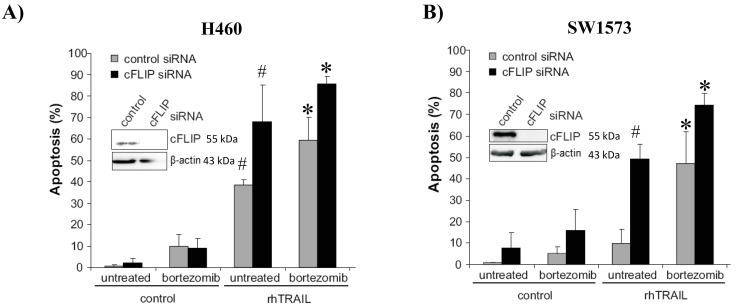 Figure 4
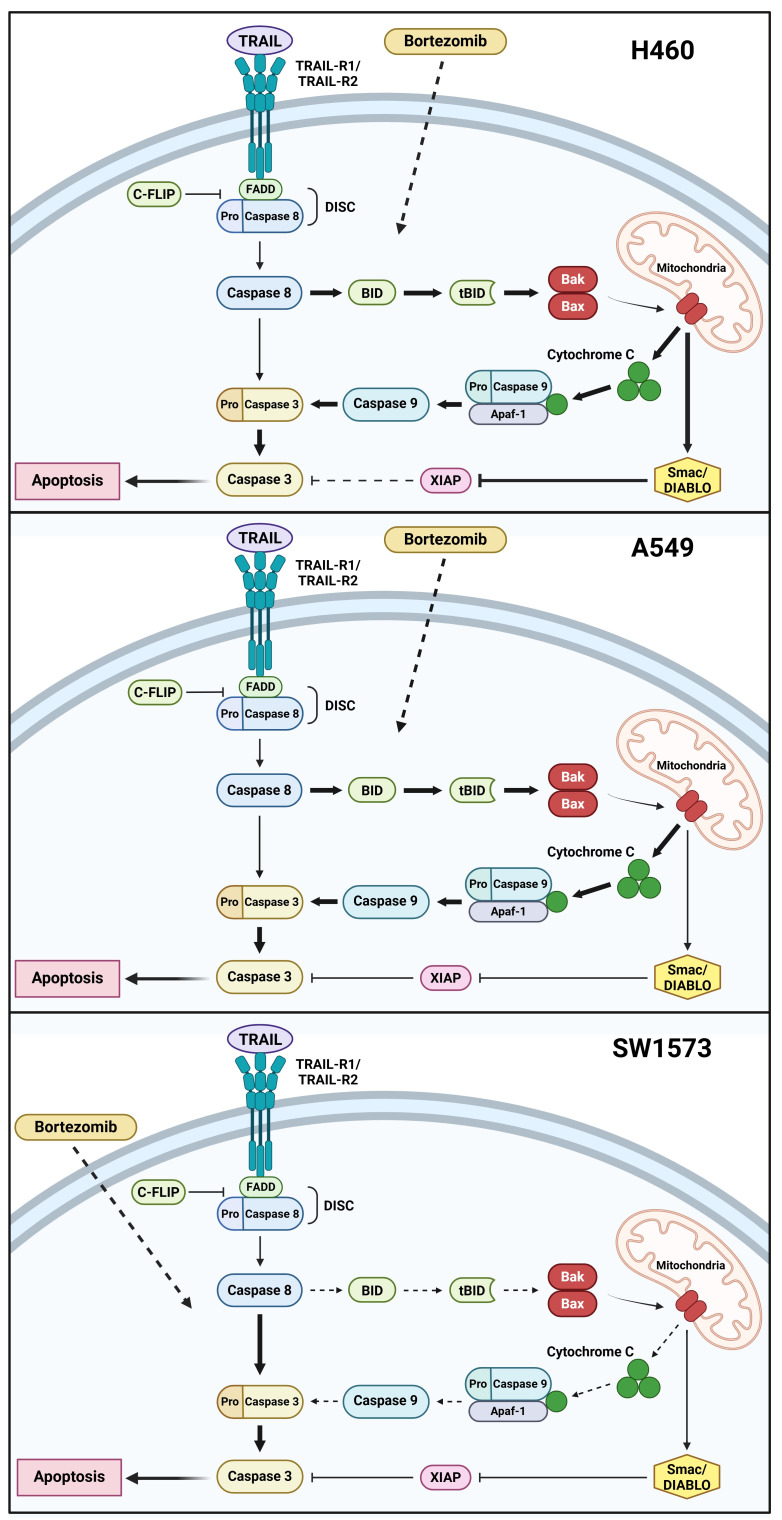 Figure 5
Peer Reviews
No public reviews on file for this paper yet. If you reviewed it on a platform where reviews are public (OpenReview, ICLR, NeurIPS, ICML), you can paste yours below so the community can read it here.
Videos
No videos yet. Explain this paper in a talk, walkthrough, or lecture? Add one.
Taxonomy
TopicsCell death mechanisms and regulation · Protein Kinase Regulation and GTPase Signaling · Ubiquitin and proteasome pathways