Increased varus deformity requires greater personalisation of alignment: A finite element biomechanical study
Arcangelo Russo, Mattia Sisella, Anna Carrara, Nicol Giacoppo, Giuseppe Gianluca Costa, Gianluca Zocco, Bernardo Innocenti

TL;DR
This study shows that personalized knee implant alignment is more effective than standard methods for patients with mild varus deformity.
Contribution
The study demonstrates that alignment strategies significantly affect biomechanics in mildly deformed knees, advocating for personalized approaches.
Findings
In neutral knees, all alignment strategies showed similar biomechanical outcomes.
Kinematic alignment improved contact balance in mild deformity, while mechanical alignment increased medial stress.
Inverse kinematic alignment showed instability signs in mildly deformed knees.
Abstract
This finite element study aims to compare the biomechanical performance of three total knee arthroplasty (TKA) alignment strategies—mechanical alignment, kinematic alignment and inverse kinematic alignment—in knees with different degrees of varus deformity. We hypothesise that alignment choice has limited impact in rather neutral alignment but significant biomechanical effects in mild deformity. Two osteoarthritic patients scheduled for TKA, one with almost neutral alignment (1.5°) and one with mild (10.4°) varus deformity, were selected. For each patient, mechanical alignment, kinematic alignment and inverse kinematic alignment strategies were virtually applied using a posterior‐stabilised fixed‐bearing implant. Patient‐specific knee joint geometries, including bones and ligaments, were modelled from CT scans. Gait simulations were conducted following ISO standard. Outputs analysed…
Genes, proteins, chemicals, diseases, species, mutations and cell lines named across the full text — each resolved to its canonical identifier and authoritative record.
Click any figure to enlarge with its caption.
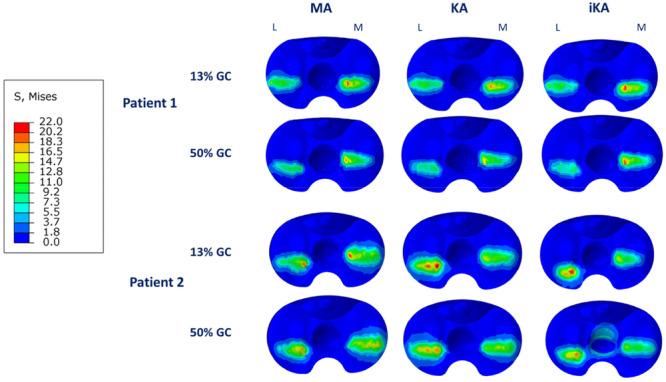 Figure 1
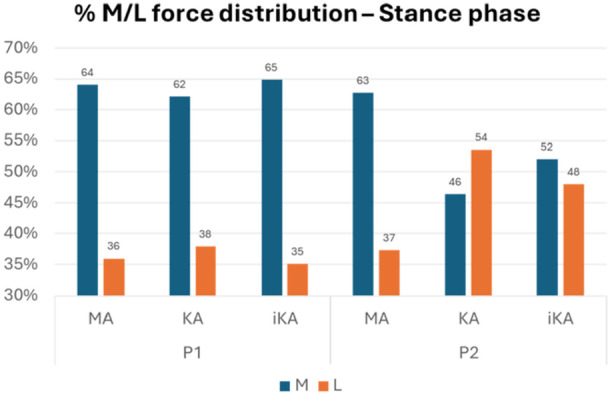 Figure 2
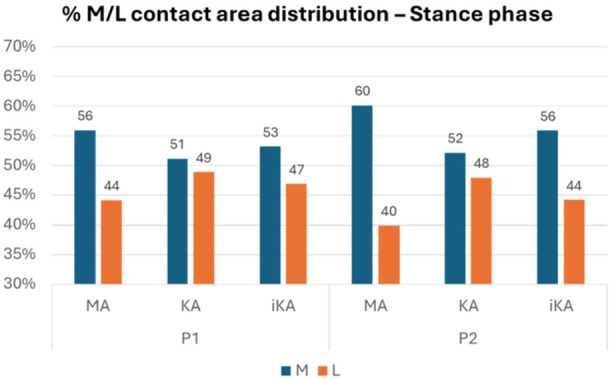 Figure 3
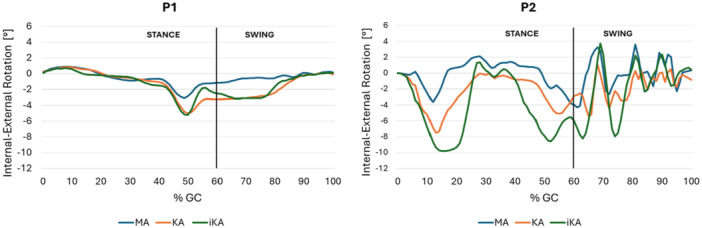 Figure 4
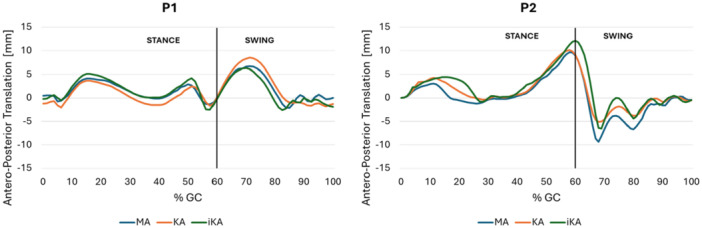 Figure 5
Peer Reviews
No public reviews on file for this paper yet. If you reviewed it on a platform where reviews are public (OpenReview, ICLR, NeurIPS, ICML), you can paste yours below so the community can read it here.
Videos
No videos yet. Explain this paper in a talk, walkthrough, or lecture? Add one.
Taxonomy
TopicsBone fractures and treatments · Congenital limb and hand anomalies · Reconstructive Facial Surgery Techniques