Deep Pyoderma Caused by Serratia marcescens in a Border Collie in China
Ran Wang, Ying Jiao, Yang Liu, Di Zhang

TL;DR
A 4-year-old Border Collie in China was diagnosed with deep pyoderma caused by Serratia marcescens and successfully treated with marbofloxacin.
Contribution
This is the first reported case of Serratia marcescens causing deep pyoderma in a dog in China.
Findings
Serratia marcescens was identified as the causative agent of deep pyoderma in a Border Collie.
The infection was successfully managed with marbofloxacin at a dosage of 2.7 mg/kg once daily.
Abstract
This case report highlights Serratia marcescens as a causative agent of deep pyoderma in a Border Collie which presented with multiple erythematous lesions on the abdomen and back. The diagnosis of deep pyoderma was confirmed through clinical evaluation and bacterial identification. This case is the first reported instance of S. marcescens infection in a dog in China, and it was successfully managed with targeted antibiotic therapy. GRAPHICAL ABSTRACT A 4‐year‐old Border Collie with deep pyoderma caused by Serratia marcescens exhibited erythematous patches over the abdomen and ruptured pustules scattered on the back. The dog was successfully treated with marbofloxacin at 2.7 mg/kg once daily.
Genes, proteins, chemicals, diseases, species, mutations and cell lines named across the full text — each resolved to its canonical identifier and authoritative record.
Click any figure to enlarge with its caption.
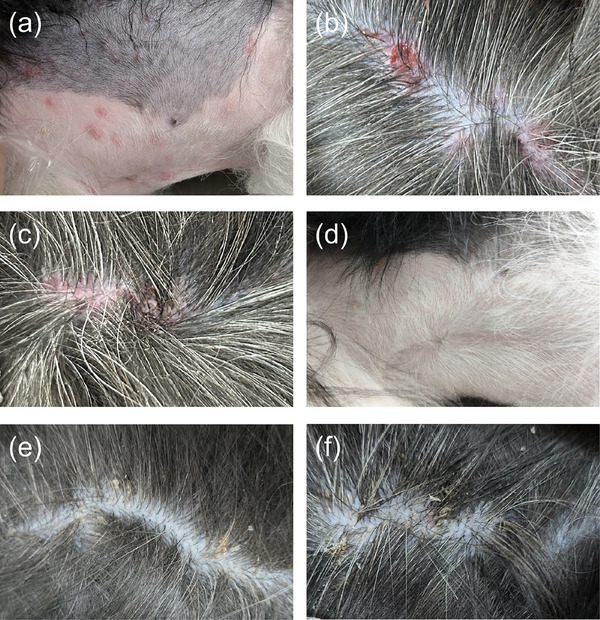 Figure 1
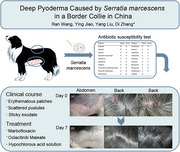 Figure 2
Peer Reviews
No public reviews on file for this paper yet. If you reviewed it on a platform where reviews are public (OpenReview, ICLR, NeurIPS, ICML), you can paste yours below so the community can read it here.
Videos
No videos yet. Explain this paper in a talk, walkthrough, or lecture? Add one.
Taxonomy
TopicsAutoimmune and Inflammatory Disorders · Hidradenitis Suppurativa and Treatments · Antimicrobial Resistance in Staphylococcus