A Phenotypically Normal Homozygous Balanced Reciprocal Translocation Carrier: Report of an Extremely Rare Genetic Occurrence
Mitila Thirupathy, Mitesh Shetty, Priya Prakash

TL;DR
A woman with a rare genetic condition involving balanced chromosomal translocations is reported, showing no health issues despite the genetic abnormality.
Contribution
The paper presents an extremely rare case of a phenotypically normal individual homozygous for a balanced reciprocal translocation.
Findings
The individual is homozygous for t(11;22)(q23.3;q11.2) and shows no developmental or health issues.
This case challenges assumptions about the effects of homozygous translocations and suggests breakpoints may be non-disruptive.
The report emphasizes the need for further research into the genetic mechanisms of such translocations.
Abstract
Balanced reciprocal translocations (BRT) are relatively common structural chromosomal abnormalities and are typically observed in the heterozygous state. Homozygosity for reciprocal translocations is exceedingly rare, with most documented cases presenting with severe congenital anomalies or developmental delays. To the best of our knowledge, this is the second reported case of a phenotypically normal homozygous BRT carrier born from a natural conception. A 31-year-old female with primary infertility was found to be homozygous for the balanced reciprocal translocation t(11;22)(q23.3;q11.2) during assessment after a failed cycle of in vitro fertilization. Although homozygosity for such translocations can theoretically lead to meiotic errors, gene disruption, or recessive disorders, the proband exhibited a normal phenotype, likely owing to the completely balanced nature of the…
Genes, proteins, chemicals, diseases, species, mutations and cell lines named across the full text — each resolved to its canonical identifier and authoritative record.
Click any figure to enlarge with its caption.
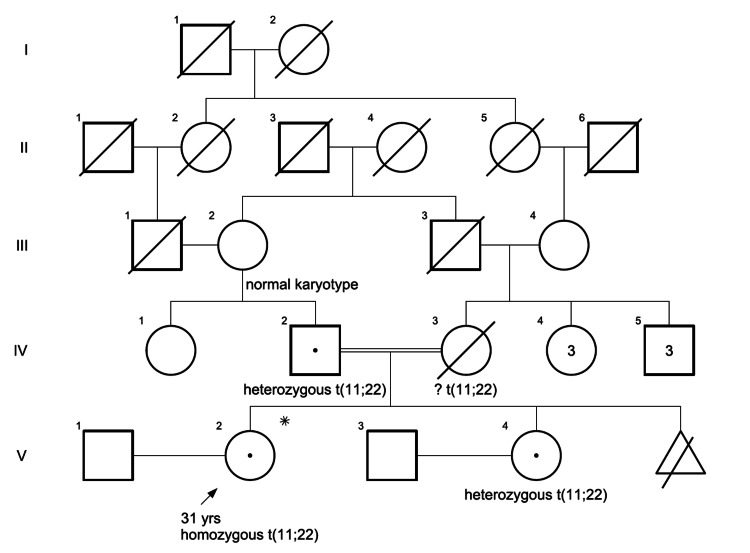 Figure 1
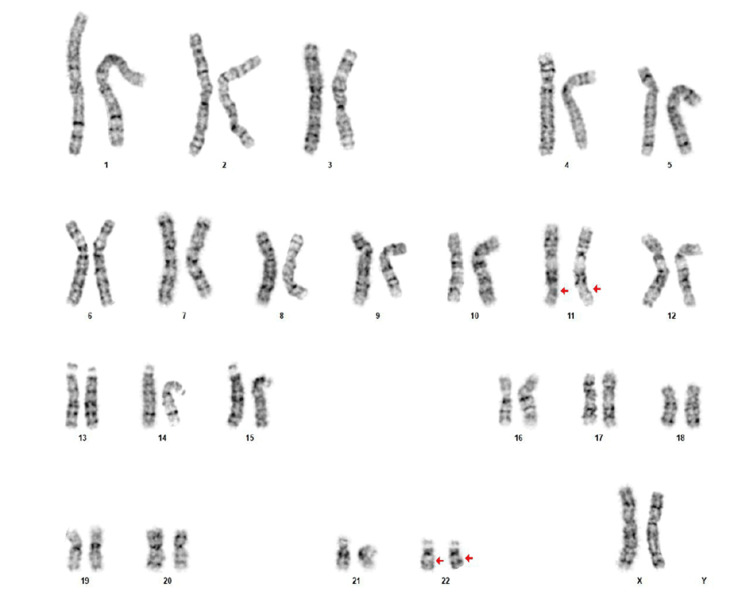 Figure 2
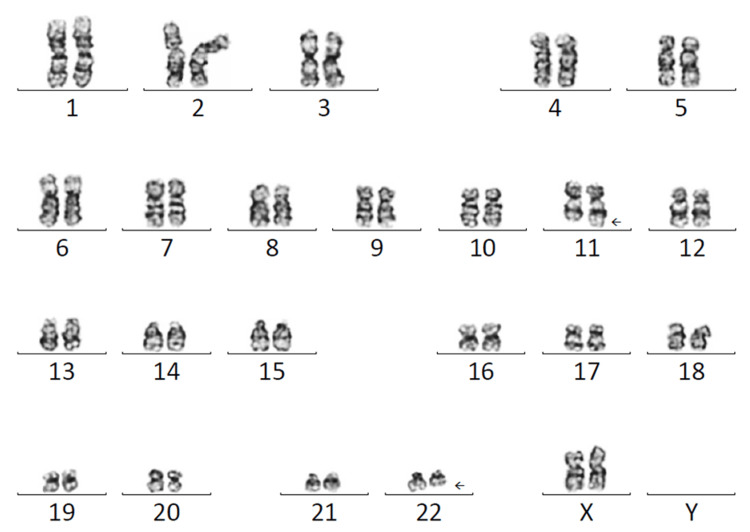 Figure 3
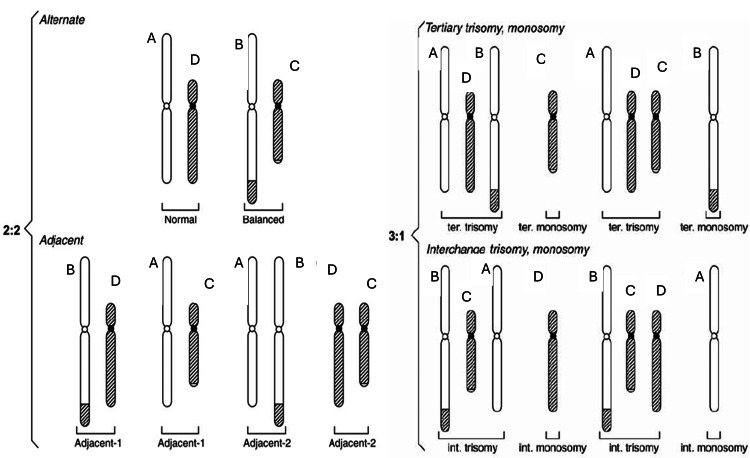 Figure 4
Peer Reviews
No public reviews on file for this paper yet. If you reviewed it on a platform where reviews are public (OpenReview, ICLR, NeurIPS, ICML), you can paste yours below so the community can read it here.
Videos
No videos yet. Explain this paper in a talk, walkthrough, or lecture? Add one.
Taxonomy
TopicsGynecological conditions and treatments · Renal and related cancers · Reproductive System and Pregnancy