Brawn and Brainpower: Acute Resistance Exercise Improves Behavioral and Neuroelectric Measures of Executive Function
Nicholas W. Baumgartner, Michael D. Belbis, Kyoungmin Noh, Daniel M. Hirai, Steve Amireault, Shih‐Chun Kao

TL;DR
This study shows that a single session of resistance exercise can improve brain functions related to attention and decision-making, possibly through increased blood pressure.
Contribution
The study reveals that acute resistance exercise enhances executive function and identifies systolic blood pressure as a potential mediating mechanism.
Findings
Acute resistance exercise improved processing speed during inhibitory control and working memory tasks.
Systolic blood pressure was found to mediate the effect of resistance exercise on cognitive performance.
Neuroelectric changes indicated improved efficiency in inhibitory control but not in working memory.
Abstract
Acute resistance exercise (RE) is emerging as a promising strategy to improve executive function, yet the underlying mechanisms remain unclear. In this study, 121 participants (aged 18–50) were randomly assigned to either a moderate‐intensity RE or rest intervention using a between‐subjects design. We examined the effects of acute RE on behavioral and neuroelectric measures of executive function during a modified Flanker task and an N‐back task, and collected lactate and blood pressure to explore possible physiological mechanisms. Results showed that following acute RE, blood lactate (d = 2.06) and systolic blood pressure (d = 0.99) significantly increased. Improvements in executive function were similarly observed following acute RE, including faster processing speed during inhibitory control (d = 0.37) and working memory (d = 0.46), and decreased P3 latency during inhibitory control…
Genes, proteins, chemicals, diseases, species, mutations and cell lines named across the full text — each resolved to its canonical identifier and authoritative record.
Click any figure to enlarge with its caption.
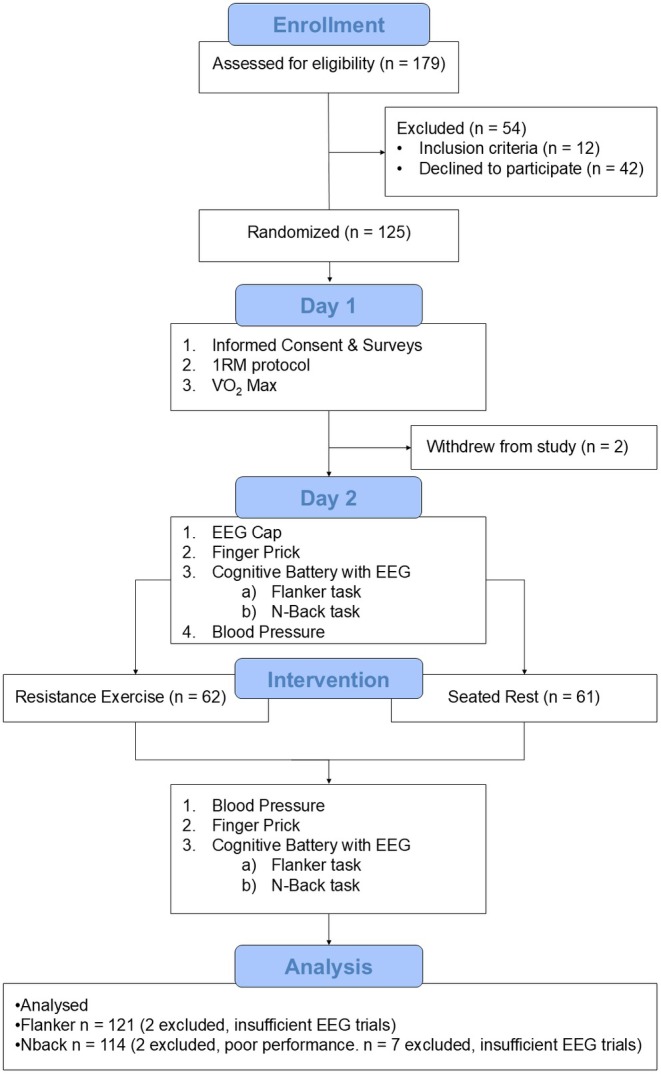 Figure 1
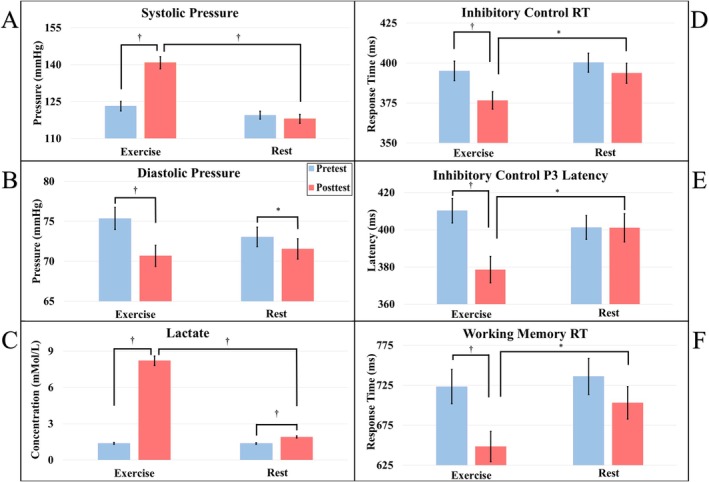 Figure 2
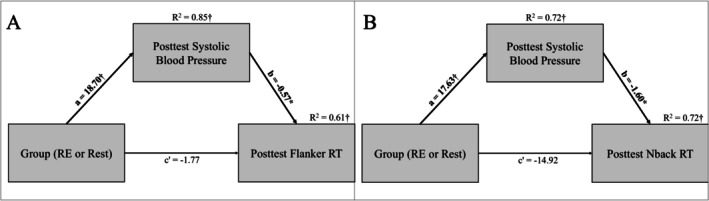 Figure 3
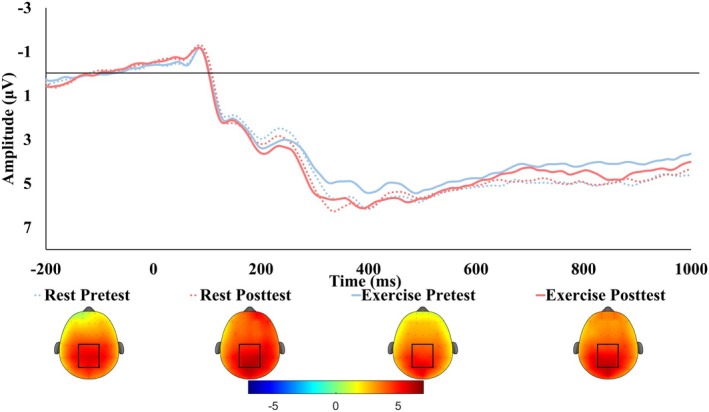 Figure 4
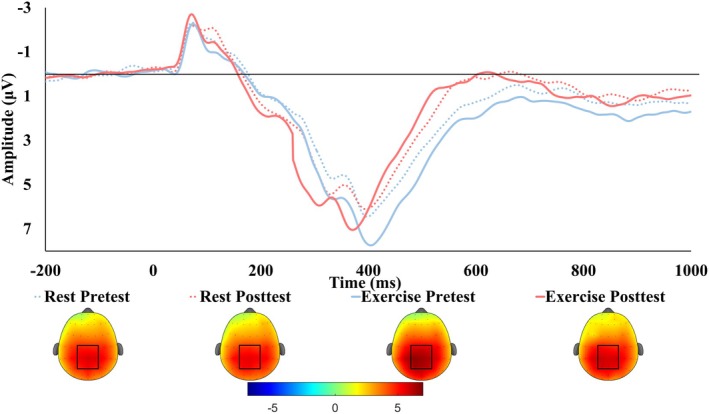 Figure 5
Peer Reviews
No public reviews on file for this paper yet. If you reviewed it on a platform where reviews are public (OpenReview, ICLR, NeurIPS, ICML), you can paste yours below so the community can read it here.
Videos
No videos yet. Explain this paper in a talk, walkthrough, or lecture? Add one.
Taxonomy
TopicsNeural and Behavioral Psychology Studies · Transcranial Magnetic Stimulation Studies · Cognitive Abilities and Testing