Differential effects of human density, environmental health, and group size on urban coyote detection, boldness, and exploration
Cesar O. Estien, Lauren A. Stanton, Christopher J. Schell

TL;DR
Urban coyotes show different behaviors based on human density and pollution, with higher boldness and exploration in areas with more people.
Contribution
This study reveals how urban coyote behavior varies with human density and group size, offering new insights into urban wildlife adaptation.
Findings
Coyote detections decrease in areas with high human density and pollution.
Boldness and exploration increase with human density and group size.
Pollution does not significantly affect coyote risk-taking behavior.
Abstract
Comparative studies show that urban coyotes behave differently from rural counterparts. However, these studies often homogenize cities. Cities feature diverse pressures for wildlife, such as variation in human densities and environmental health, two factors known to increase risk-taking. This heterogeneity creates a landscape of risk, which may drive locally adapted behavioral strategies within cities. Yet, the influence of these pressures on coyote behavior remains unclear. To investigate this, we conducted novel object testing at 24 sites across gradients of human density and pollution. We recorded coyote detections, group size, and behavioral responses to the novel object, focusing on time spent alert, time spent close, and total exploration. We found that coyote detections varied with human density and pollution, with markedly lower detections in areas with high human density and…
Genes, proteins, chemicals, diseases, species, mutations and cell lines named across the full text — each resolved to its canonical identifier and authoritative record.
Click any figure to enlarge with its caption.
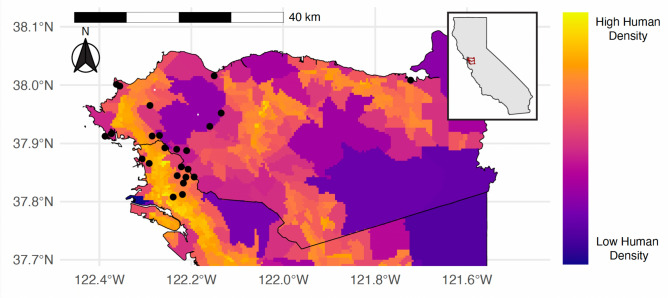 Figure 1
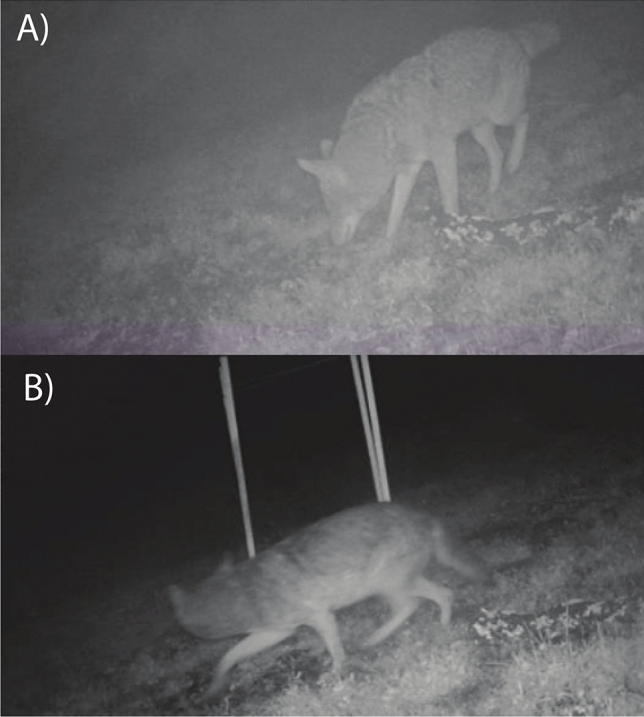 Figure 2
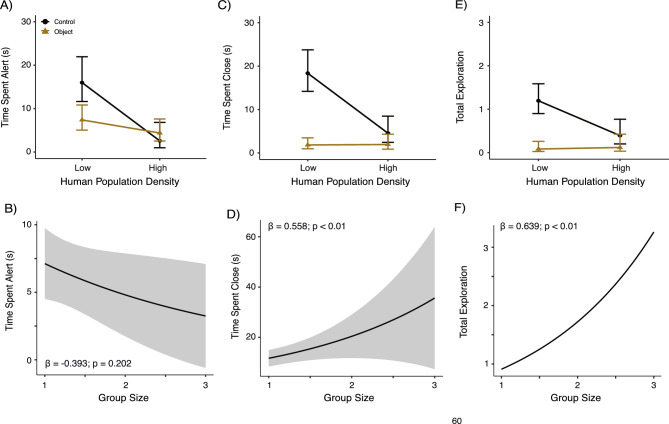 Figure 3
Peer Reviews
No public reviews on file for this paper yet. If you reviewed it on a platform where reviews are public (OpenReview, ICLR, NeurIPS, ICML), you can paste yours below so the community can read it here.
Videos
No videos yet. Explain this paper in a talk, walkthrough, or lecture? Add one.
Taxonomy
TopicsWildlife Ecology and Conservation · Primate Behavior and Ecology · Animal Ecology and Behavior Studies