Rat superficial masseter operates at long lengths during biting
Nicolai Konow, Brandon Reder, Daniel Bartlett, Devin Jenness, Trushti Patel, Jeffrey R. Moore, Robert J. Brocklehurst

TL;DR
This study shows that rat jaw muscles operate at long lengths during biting, challenging the belief that they work best at short lengths.
Contribution
The study reveals that rat jaw muscles operate at long lengths during high-force biting, challenging previous assumptions about muscle function.
Findings
Rat superficial masseter muscles operate at lengths up to 27% beyond optimal during high-force biting.
Bite forces reached up to 10.6 N/cm², influenced by muscle activation and food hardness.
Findings suggest jaw muscles may function unstably at long lengths, impacting craniofacial evolution and muscle mechanics.
Abstract
The operating length ranges of mammalian jaw muscles have been estimated using twitch contractions or force measurements at the bite point, prompting a consensus that jaw muscles operate at short lengths on their force-length (FL) curve. However, since activation intensity truncates muscle optimal length (LO), we hypothesized that LO of rat superficial masseter (SM) would decrease with activation intensity, with high-force biting involving muscle shortening from long lengths on the FL curve. We measured muscle activation, strain, and force in vivo during biting on food with varying hardness and mapped the in vivo data from each muscle (N = 6) onto its FL relationship, measured in situ. Submaximal LO was approx. 12% shorter than twitch LO, and SM bite forces averaged 4.1 ± 3.9 N/cm2 (mean ± S.D.) and reached 10.6 N/cm2, corresponding to muscle activation and food hardness. Length…
Genes, proteins, chemicals, diseases, species, mutations and cell lines named across the full text — each resolved to its canonical identifier and authoritative record.
Click any figure to enlarge with its caption.
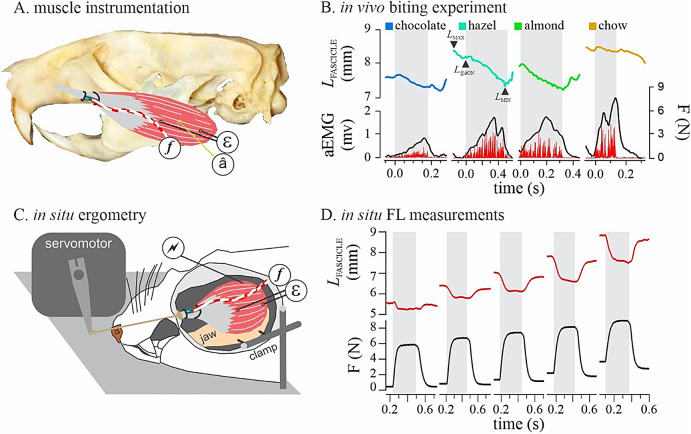 Figure 1
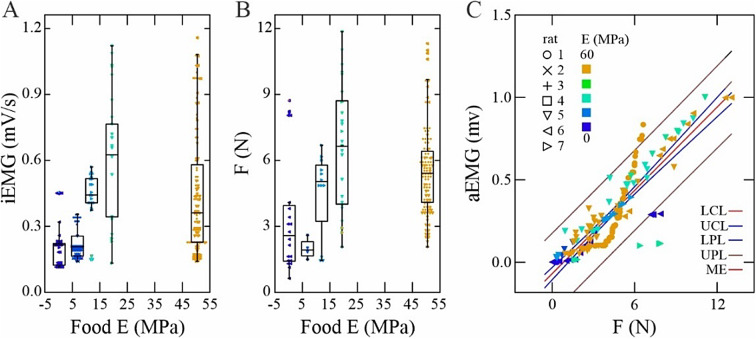 Figure 2
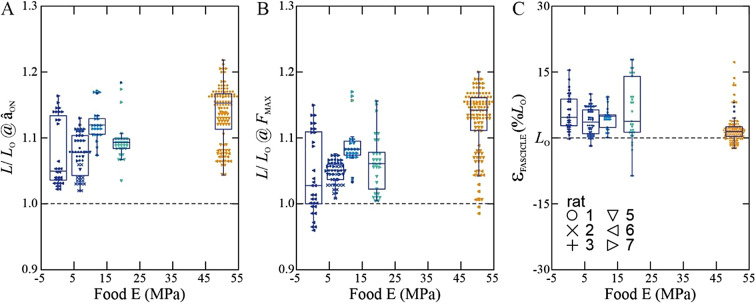 Figure 3
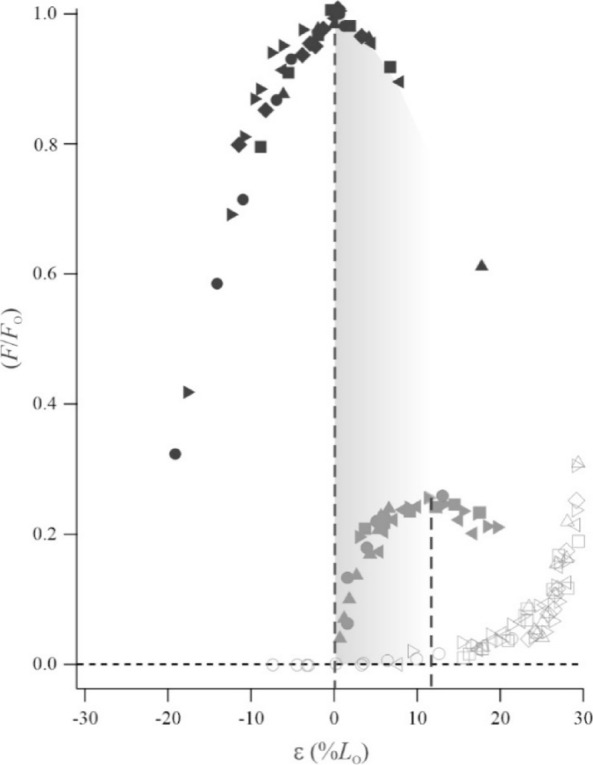 Figure 4
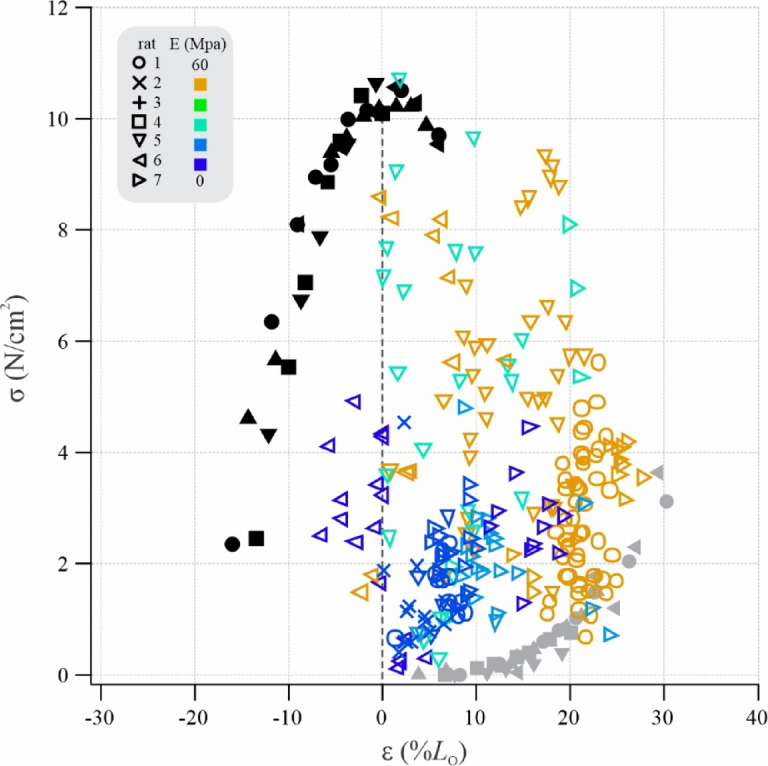 Figure 5
Peer Reviews
No public reviews on file for this paper yet. If you reviewed it on a platform where reviews are public (OpenReview, ICLR, NeurIPS, ICML), you can paste yours below so the community can read it here.
Videos
No videos yet. Explain this paper in a talk, walkthrough, or lecture? Add one.
Taxonomy
TopicsTemporomandibular Joint Disorders · Orthodontics and Dentofacial Orthopedics · Craniofacial Disorders and Treatments