Cost-effective method for semi-quantitative analysis of soluble endoglin in biological samples after anti-endoglin monoclonal antibody treatment
Samira Eissazadeh, Jana Urbankova Rathouska, Ivana Nemeckova, Petra Fikrova, Katarina Tripska, Martina Vasinova, Martina Kolackova, Petr Nachtigal

TL;DR
A cost-effective method is developed to measure soluble endoglin in biological samples after anti-endoglin antibody treatment, avoiding interference from therapeutic antibodies.
Contribution
A modified Western blot-based method is introduced for semi-quantitative sENG analysis in preclinical models.
Findings
The method avoids interference from therapeutic monoclonal antibodies.
It provides reliable and reproducible results for sENG detection in mouse plasma.
The approach is versatile for various soluble protein biomarkers.
Abstract
Soluble endoglin (sENG) is an important biomarker of several cardiometabolic and vascular disorders. The accurate measurement of biomarkers that are simultaneously targeted by therapeutic monoclonal antibodies (mAbs) in preclinical models is a significant challenge. Traditional enzyme-linked immunosorbent assays (ELISAs) often fail due to epitope blocking, while advanced techniques like mass spectrometry are more expensive and require specialized expertise. To address these limitations, we developed a cost-effective, specific Western blot-based method for evaluating sENG in mouse plasma in a metabolic dysfunction-associated steatohepatitis (MASH) rescue model. Thus, from a methodological perspective, we significantly modified and extended the sENG detection method introduced in our previous work, focusing on developing a cost-effective approach for semi-quantitative analysis. For these…
Genes, proteins, chemicals, diseases, species, mutations and cell lines named across the full text — each resolved to its canonical identifier and authoritative record.
Click any figure to enlarge with its caption.
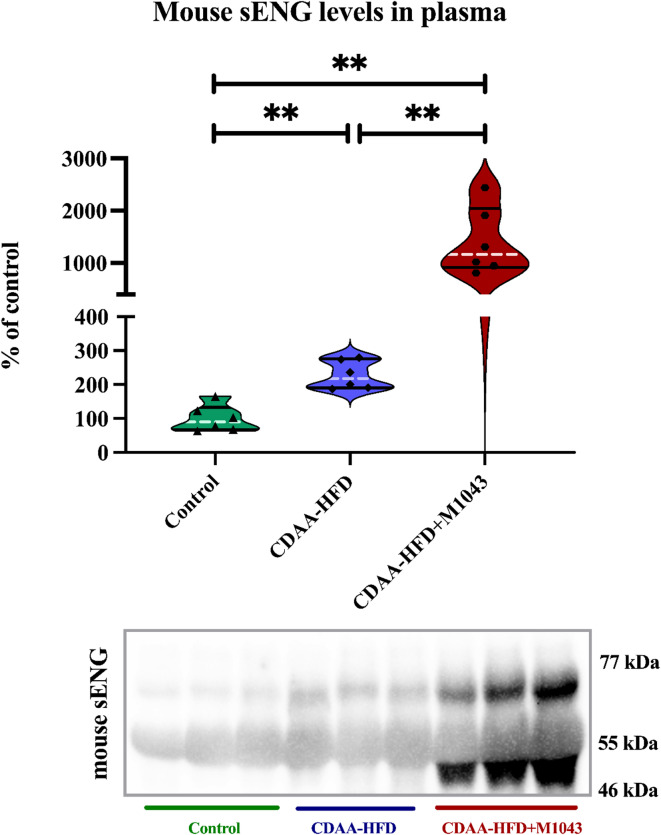 Figure 1
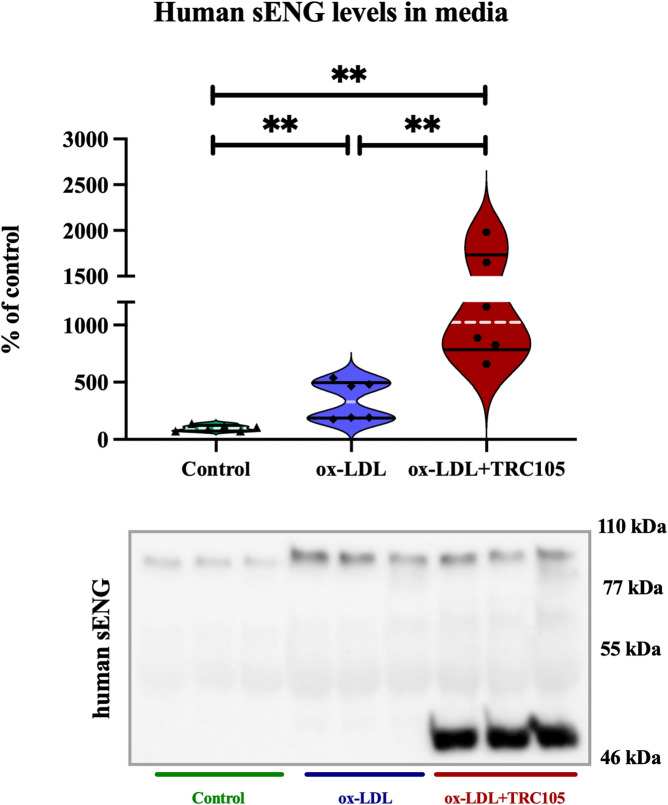 Figure 2
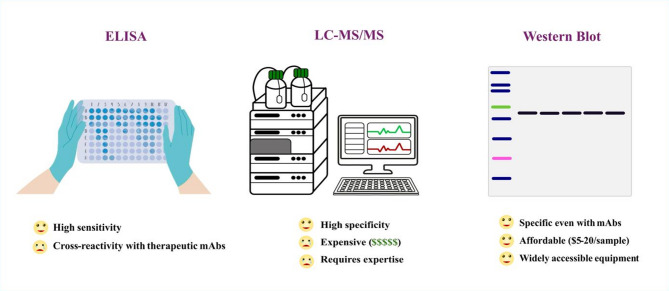 Figure 3
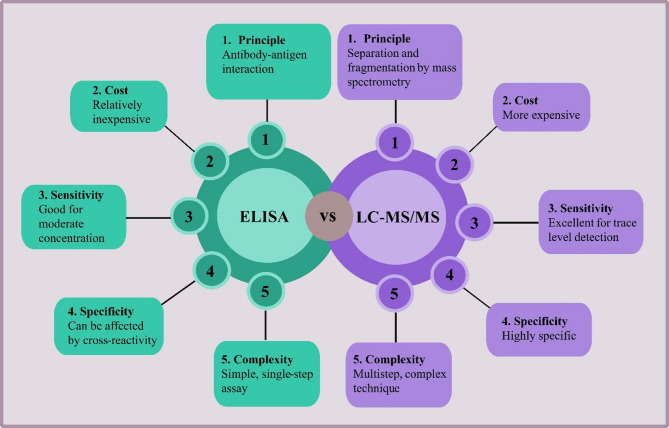 Figure 4
Peer Reviews
No public reviews on file for this paper yet. If you reviewed it on a platform where reviews are public (OpenReview, ICLR, NeurIPS, ICML), you can paste yours below so the community can read it here.
Videos
No videos yet. Explain this paper in a talk, walkthrough, or lecture? Add one.
Taxonomy
TopicsAtherosclerosis and Cardiovascular Diseases · HER2/EGFR in Cancer Research · Advanced Proteomics Techniques and Applications