Production system establishment and in vitro study of CD19/CD3ε bite antibody secreted from Pichia pastoris
Boram Kim, Kyu Tae Byun, Seung Hyeon Lee, So Yeong Cheon, Chan Gil Kim

TL;DR
Researchers developed a new way to produce a cancer drug using yeast, which may be more efficient than traditional methods.
Contribution
A novel production system using Pichia pastoris to produce a CD19/CD3ε bispecific antibody with higher yield and affinity compared to CHO cells.
Findings
Pichia pastoris produced 1.2 mg/L of p-blinatumomab, 2.4 times higher than CHO cells.
p-blinatumomab showed higher antigen binding affinity for CD19 and CD3ε compared to commercial blinatumomab.
Flow cytometry confirmed p-blinatumomab's binding affinity to CD19- and CD3ε-overexpressing cells was similar to commercial blinatumomab.
Abstract
Blinatumomab is an anti-cancer Bispecific T-cell Engager (BiTE) antibody drug approved by the Food and Drug Administration (FDA) for treating acute lymphoblastic leukemia (ALL). It targets CD3ε, which is expressed on T cells and concomitantly targets CD19, an antigen specifically expressed in B-cell leukemia. Blinatumomab-bound T cells are activated to secrete perforin and granzyme, which induce cell death in B-cell leukemia. Blinatumomab is produced in the Chinese hamster ovary (CHO) cell expression system in consideration of post-translational modification (PTM) and immunogenicity. Although the characteristics of CHO cells are similar to those of other mammalian cells, it has low yield and high production cost. In this study, we developed the yeast species Pichia pastoris-produced BiTE antibody targeting CD19 and CD3ε, herein called P. pastoris (p)-blinatumomab, which is in-house…
Genes, proteins, chemicals, diseases, species, mutations and cell lines named across the full text — each resolved to its canonical identifier and authoritative record.
Click any figure to enlarge with its caption.
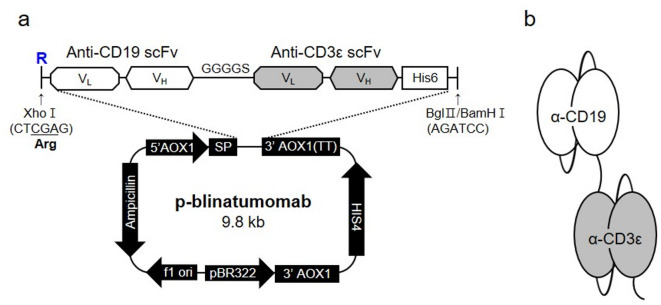 Figure 1
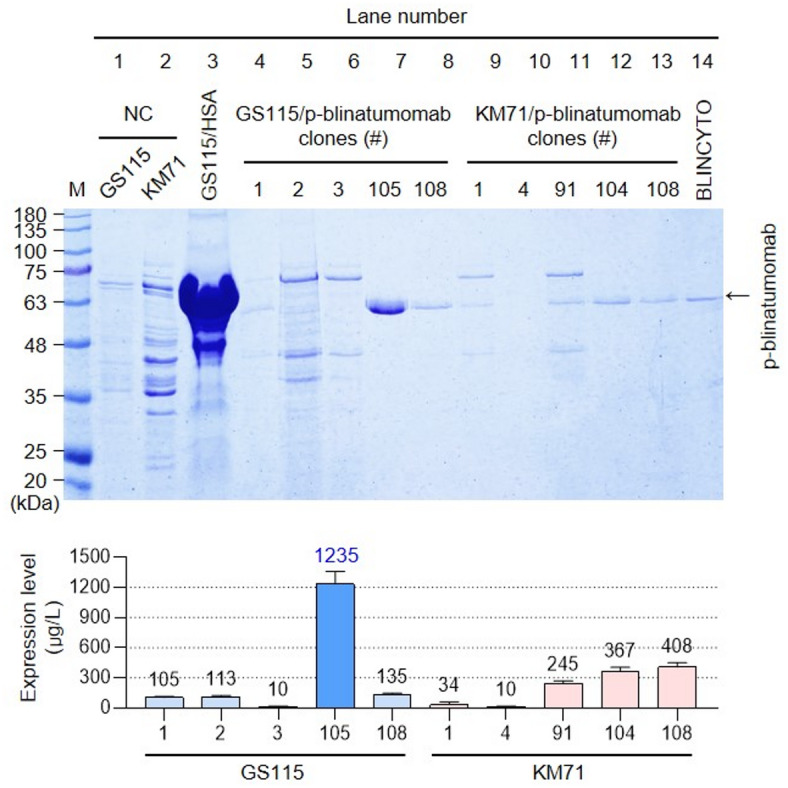 Figure 2
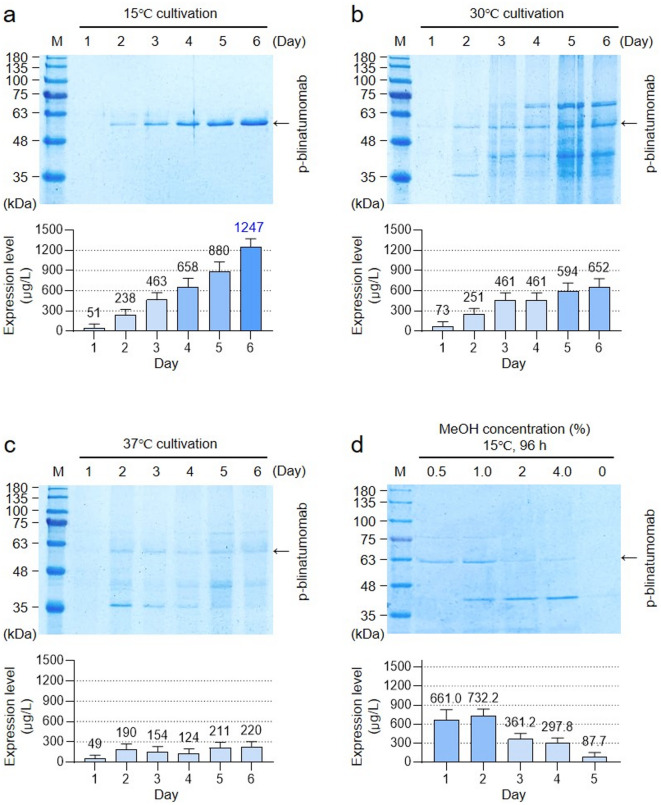 Figure 3
 Figure 4
 Figure 5
 Figure 6
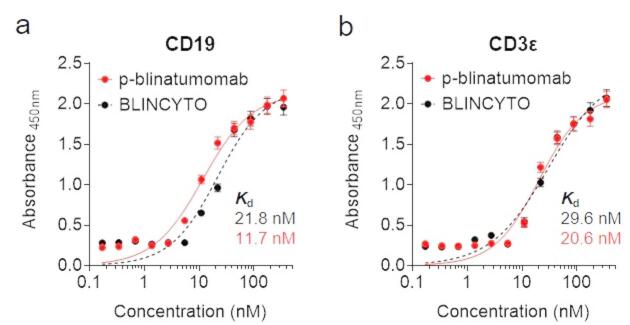 Figure 7
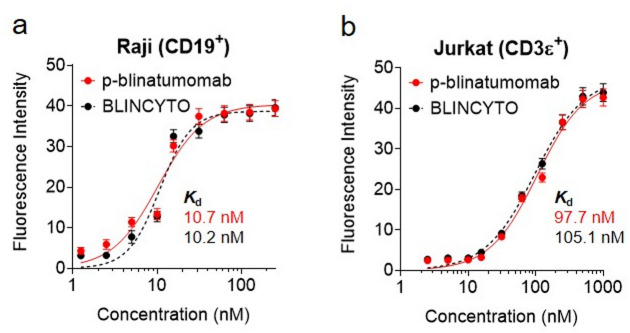 Figure 8
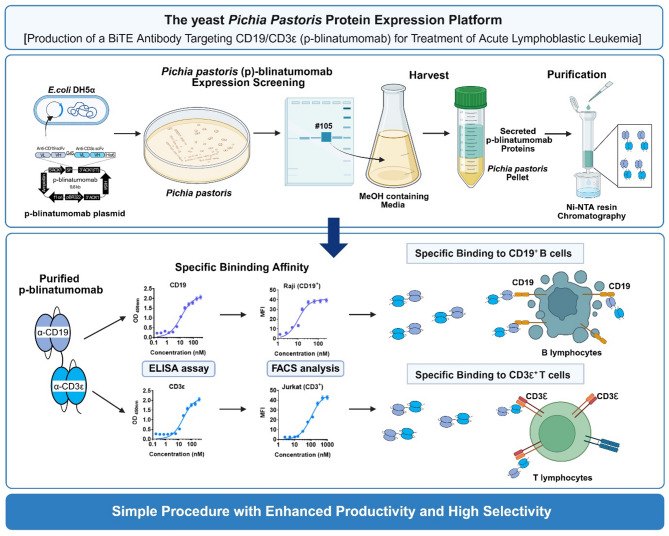 Figure 9
Peer Reviews
No public reviews on file for this paper yet. If you reviewed it on a platform where reviews are public (OpenReview, ICLR, NeurIPS, ICML), you can paste yours below so the community can read it here.
Videos
No videos yet. Explain this paper in a talk, walkthrough, or lecture? Add one.
Taxonomy
TopicsViral Infectious Diseases and Gene Expression in Insects · CAR-T cell therapy research · Monoclonal and Polyclonal Antibodies Research