Continuous and Autonomous Monitoring of Changes in Left Ventricular dP/dtmax Using an Epicardial Accelerometer
Vetle Christoffer Frostelid, Ali Wajdan, Manuel Villegas-Martinez, Lars-Egil R. Hammersboen, Andreas Espinoza, Ole-Johannes H. N. Grymyr, Per Steinar Halvorsen, Ole Jakob Elle, Espen W. Remme

TL;DR
This study introduces a new method to continuously monitor heart function using an accelerometer attached to the heart, which could enable long-term and remote cardiac monitoring.
Contribution
A novel Lagrangian-based surrogate indicator of contractility, σAcc, is introduced for continuous cardiac monitoring.
Findings
σAcc correlates strongly with changes in left ventricular pressure across various haemodynamic conditions.
The method enables continuous and autonomous monitoring of cardiac contractility using an epicardial accelerometer.
The approach represents a proof-of-principle for long-term monitoring of heart function.
Abstract
Assessment of the contractile function of the heart typically requires resource demanding techniques, such as invasive left ventricular catheterisation or intermittent medical imaging, and is therefore not readily available for continuous clinical or remote monitoring. Measurement of heart wall motion by use of an epicardially attached three-axis accelerometer has emerged as a promising tool for monitoring cardiac function; however, previous methods have often underutilised the spatial and temporal information contained in the measured signals, potentially limiting its clinical reliability. This work reconstructs the position of an epicardial accelerometer in 3D space in order to enable extraction of indices of cardiac function in a Lagrangian frame of reference. The standard deviation of Lagrangian acceleration throughout a heartbeat, \documentclass[12pt]{minimal}…
Genes, proteins, chemicals, diseases, species, mutations and cell lines named across the full text — each resolved to its canonical identifier and authoritative record.
Click any figure to enlarge with its caption.
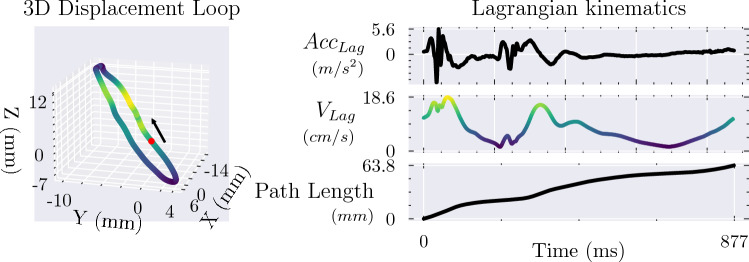 Figure 1
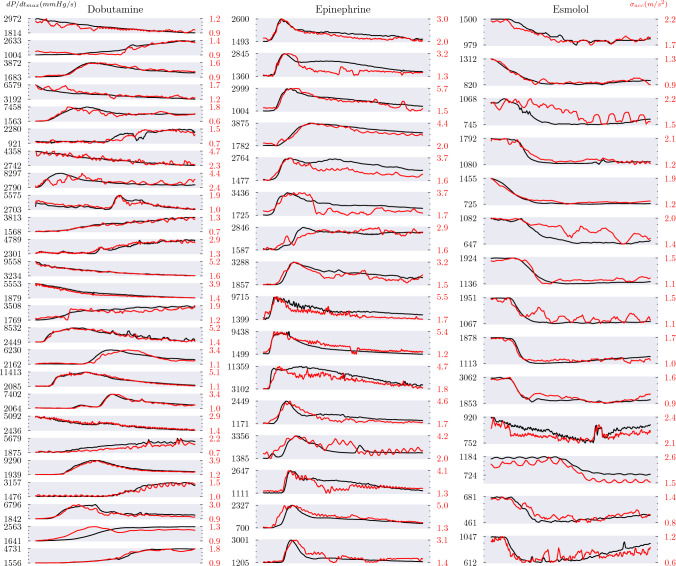 Figure 2
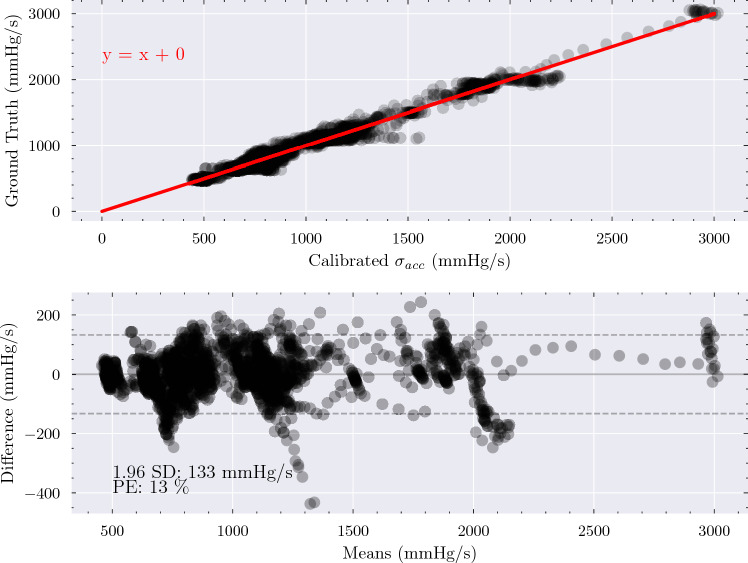 Figure 3
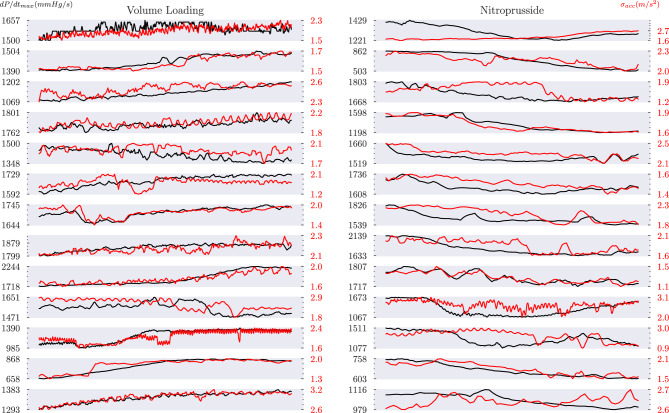 Figure 4
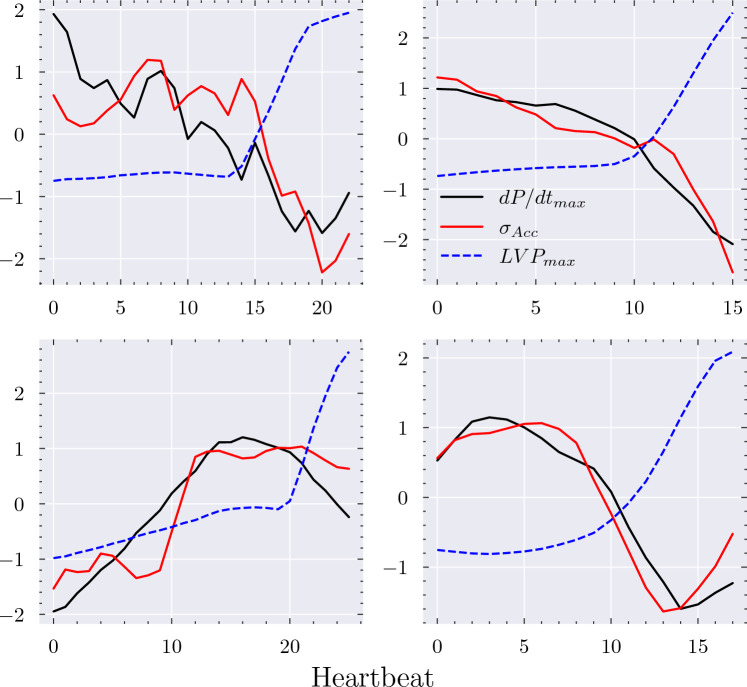 Figure 5
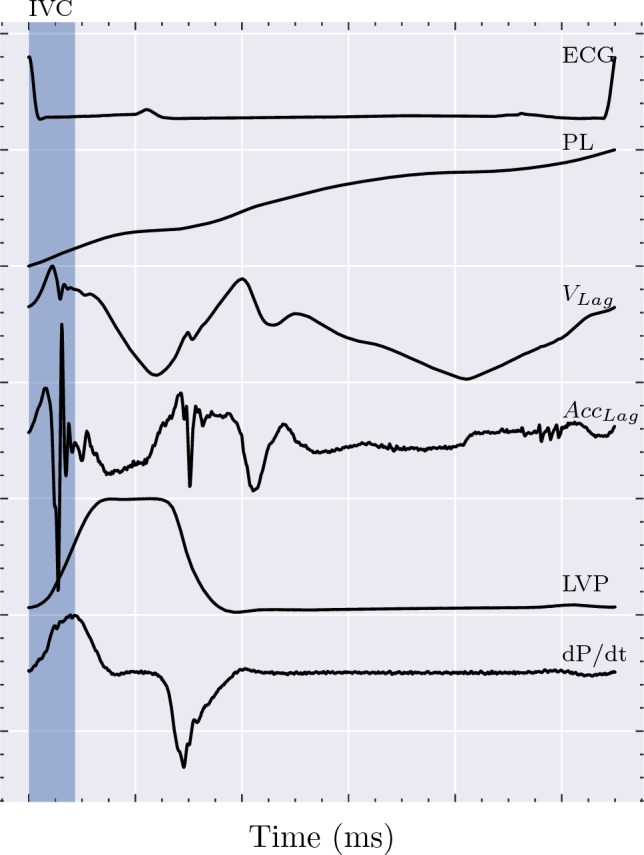 Figure 6
Peer Reviews
No public reviews on file for this paper yet. If you reviewed it on a platform where reviews are public (OpenReview, ICLR, NeurIPS, ICML), you can paste yours below so the community can read it here.
Videos
No videos yet. Explain this paper in a talk, walkthrough, or lecture? Add one.
Taxonomy
TopicsCardiovascular Function and Risk Factors · Cardiac Imaging and Diagnostics · Cardiovascular Health and Disease Prevention