Co-morbid monogenic disorders at chromosome region 1q2: LMNA- and FLG-related disorders in a patient referred for assessment of joint hypermobility
Mayowa A. Osundiji, Adedamola O. Bello, Jennifer L. Hand

TL;DR
A patient with multiple health issues was found to have genetic mutations in two neighboring genes on chromosome 1q2, highlighting the usefulness of exome sequencing in diagnosing complex genetic conditions.
Contribution
Demonstrates the co-occurrence of LMNA and FLG pathogenic variants in a patient with overlapping connective tissue symptoms using exome sequencing.
Findings
Exome sequencing identified likely pathogenic LMNA and pathogenic FLG variants in a patient with joint hypermobility and multiple comorbidities.
The patient's genetic findings suggest co-morbid monogenic disorders at the 1q2 chromosomal region.
The study emphasizes the role of exome sequencing in diagnosing complex, overlapping genetic conditions.
Abstract
The phenotypic similarities and genetic heterogeneity occurring in diverse forms of Ehlers Danlos Syndrome (EDS) subtypes and many heritable connective tissue disorders can pose a diagnostic challenge. In the wake of the growing applications of next‐generation sequencing technologies including exome and genome sequencing, opportunities for achieving definitive genetic diagnosis are increasingly arising. We present a 46-year-old man with joint laxity, recurrent joint subluxations, pelvic floor dysfunction, and postural orthostatic tachycardia syndrome (POTS), who was referred for EDS assessment. His medical history included morbid obesity requiring gastric bypass surgery, hearing loss, asthma, retinopathy, myopia, atrial septal defect, narcolepsy with cataplexy, polyneuropathy, folliculitis, lichen simplex chronicus, atopic dermatitis, and hypogonadism. His family history was significant…
Genes, proteins, chemicals, diseases, species, mutations and cell lines named across the full text — each resolved to its canonical identifier and authoritative record.
Click any figure to enlarge with its caption.
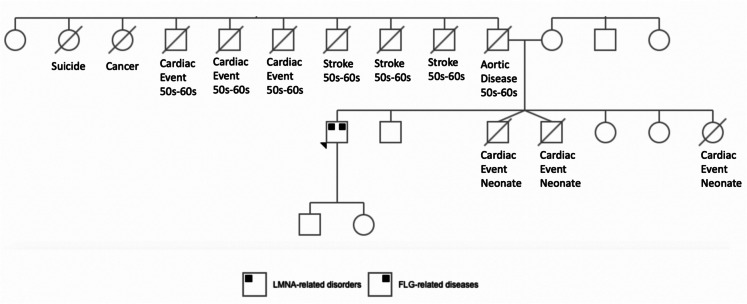 Figure 1
Peer Reviews
No public reviews on file for this paper yet. If you reviewed it on a platform where reviews are public (OpenReview, ICLR, NeurIPS, ICML), you can paste yours below so the community can read it here.
Videos
No videos yet. Explain this paper in a talk, walkthrough, or lecture? Add one.
Taxonomy
TopicsConnective tissue disorders research · Dermatological and Skeletal Disorders · Pectus Deformity Diagnosis and Treatment