Mapping Incidence and Prevalence Peak Data for SIR Modeling Applications
Alexander C. Murph, G. Casey Gibson, Lauren J. Beesley, Nishant Panda, Lauren A. Castro, Sara Y. Del Valle, Carrie A. Manore, Dave A. Osthus

TL;DR
This paper introduces a method to improve SIR model accuracy by incorporating peak hospital incidence data, enhancing epidemic forecasting.
Contribution
A new method is proposed to integrate peak incidence data into SIR models using a system of equations for better parameter estimation.
Findings
Using peak hospital incidence data stabilizes SIR model fits and improves forecasting accuracy.
Misspecifying prevalence data as incidence leads to noticeable loss in model accuracy.
The updated Dirichlet-Beta State Space framework shows practical improvements in accuracy and computation speed.
Abstract
Infectious disease modeling and forecasting have played a key role in helping assess and respond to epidemics and pandemics. Recent work has leveraged data on disease peak infection and peak hospital incidence to fit compartmental models for the purpose of forecasting and describing the dynamics of a disease outbreak. Incorporating these data can greatly stabilize a compartmental model fit on early observations, where slight perturbations in the data may lead to model fits that forecast wildly unrealistic peak infection. We introduce a new method for incorporating historic data on the value and time of peak incidence of hospitalization into the fit for a Susceptible-Infectious-Recovered (SIR) model by formulating the relationship between an SIR model’s starting parameters and peak incidence as a system of two equations that can be solved computationally. We demonstrate how to calculate…
Genes, proteins, chemicals, diseases, species, mutations and cell lines named across the full text — each resolved to its canonical identifier and authoritative record.
Click any figure to enlarge with its caption.
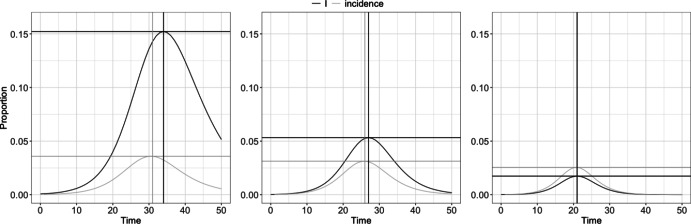 Figure 1
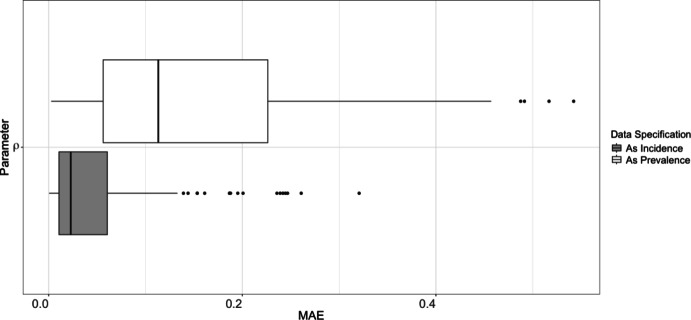 Figure 2
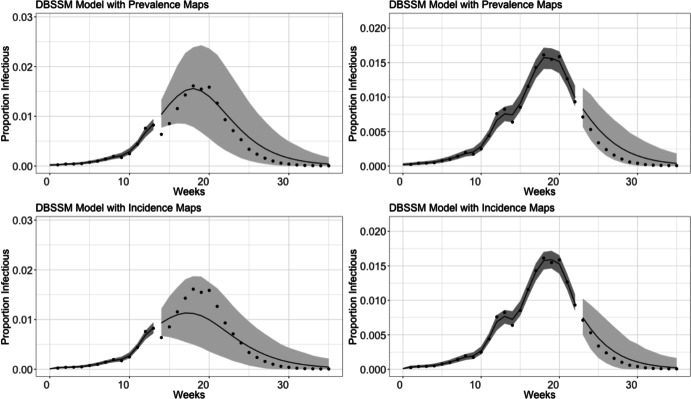 Figure 3
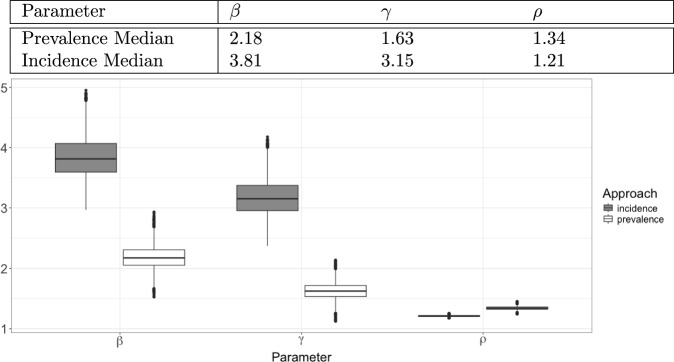 Figure 4
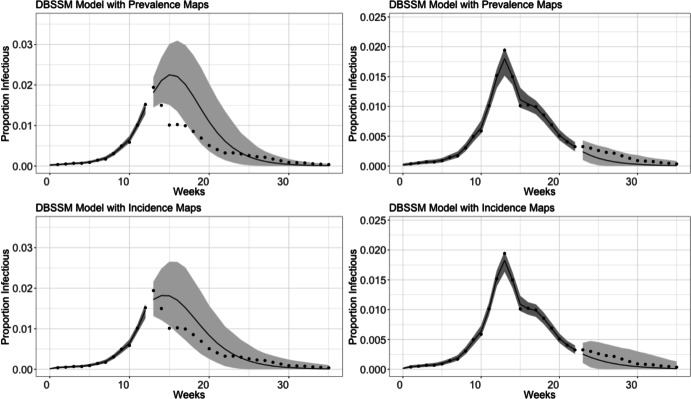 Figure 5
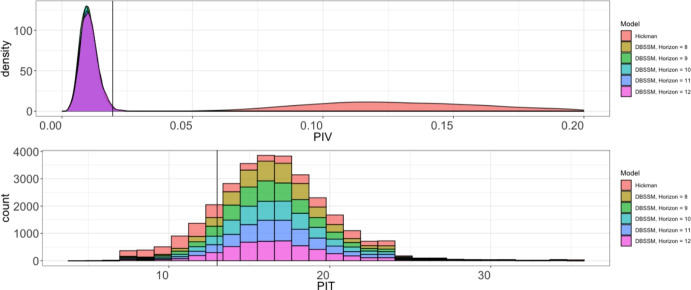 Figure 6
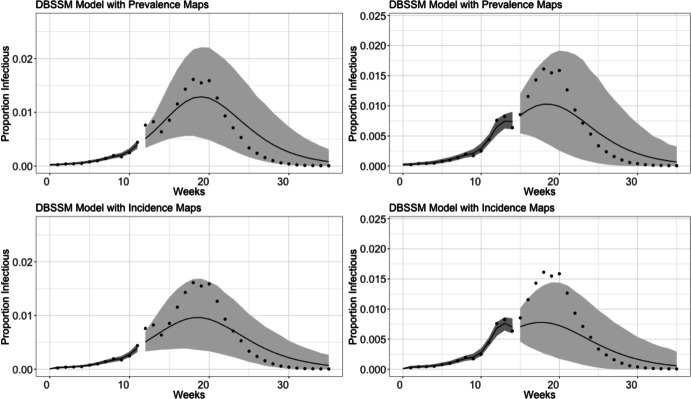 Figure 7
Peer Reviews
No public reviews on file for this paper yet. If you reviewed it on a platform where reviews are public (OpenReview, ICLR, NeurIPS, ICML), you can paste yours below so the community can read it here.
Videos
No videos yet. Explain this paper in a talk, walkthrough, or lecture? Add one.
Taxonomy
TopicsCOVID-19 epidemiological studies · Mathematical and Theoretical Epidemiology and Ecology Models · Viral Infections and Outbreaks Research