Performance of Donor‐Derived Cell‐Free DNA in Surveillance and For‐Cause Biopsies in Pediatric Kidney Transplant Recipients
Stella Kilduff, Joseph Fishbein, Carlos Becerril‐Romero, Matthew Switalski, Debora Matossian, Priya S. Verghese

TL;DR
The study examines whether donor-derived cell-free DNA can detect kidney transplant rejection in children, finding it effective for for-cause biopsies but not surveillance biopsies.
Contribution
Shows dd-cfDNA levels correlate with rejection in for-cause biopsies but not surveillance biopsies in pediatric kidney transplant recipients.
Findings
dd-cfDNA levels were significantly higher before for-cause biopsies with rejection (p=0.02).
dd-cfDNA levels ≥1 had 52% sensitivity and 83% specificity for diagnosing rejection.
No significant association between dd-cfDNA and rejection in surveillance biopsies.
Abstract
Donor‐derived cell‐free DNA (dd‐cfDNA), a biomarker demonstrated to increase with allograft injury, has been considered a possible diagnostic tool for allograft rejection in place of the current gold standard which is invasive kidney biopsies. We tested whether dd‐cfDNA levels were predictive of rejection in our single‐center cohort of pediatric kidney transplant (KT) recipients. All primary pediatric KT recipients that had a dd‐cfDNA level obtained within a month of any kidney biopsy, either surveillance or for‐cause were included. Descriptive analysis was performed stratified by rejection status. Univariate analysis was performed to assess the association between median dd‐cfDNA levels and rejection by each biopsy time point. dd‐cfDNA levels were then further stratified by rejection type (no rejection, T‐cell mediated, antibody mediated, or mixed). Diagnostic performance metrics of…
Genes, proteins, chemicals, diseases, species, mutations and cell lines named across the full text — each resolved to its canonical identifier and authoritative record.
Click any figure to enlarge with its caption.
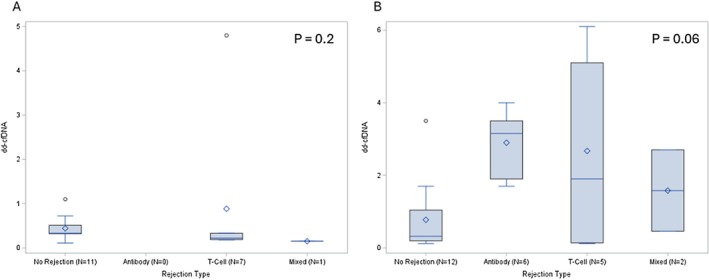 Figure 1
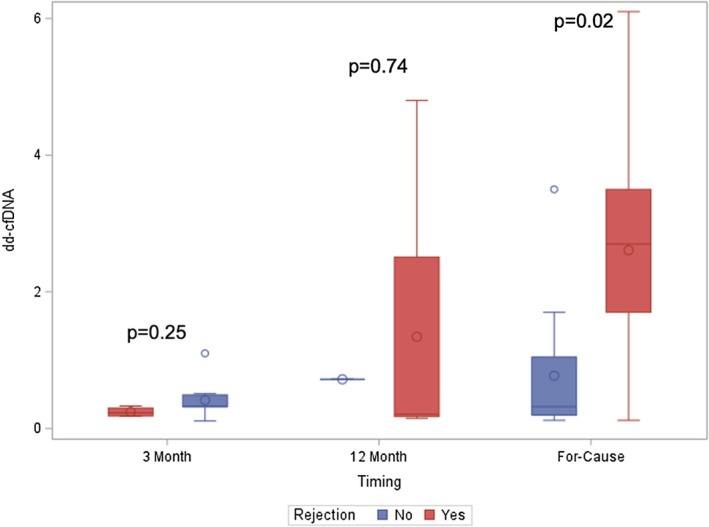 Figure 2
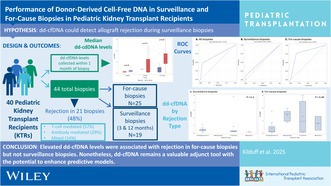 Figure 3
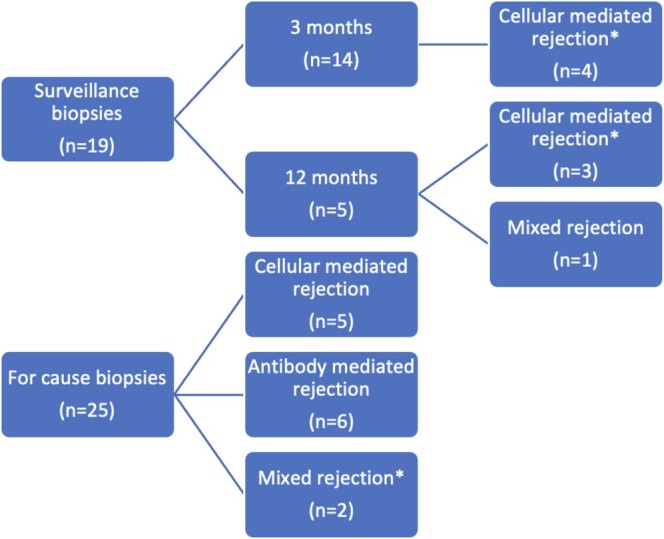 Figure 4
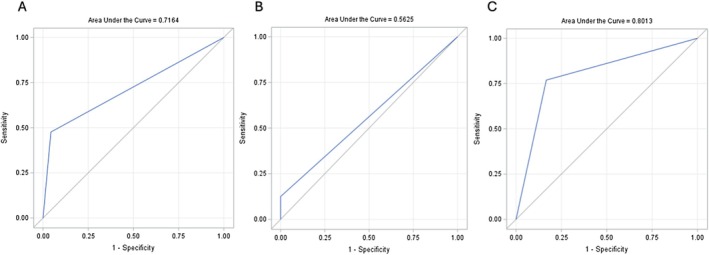 Figure 5
Peer Reviews
No public reviews on file for this paper yet. If you reviewed it on a platform where reviews are public (OpenReview, ICLR, NeurIPS, ICML), you can paste yours below so the community can read it here.
Videos
No videos yet. Explain this paper in a talk, walkthrough, or lecture? Add one.
Taxonomy
TopicsCancer Genomics and Diagnostics · Renal Transplantation Outcomes and Treatments · Prenatal Screening and Diagnostics