Coexistence Tumor of Craniopharyngioma and Pituitary Neuroendocrine Tumor: A Case Report and Literature Review
Yohei Nounaka, Fumihiro Matano, Koshiro Isayama, Keiko Tomiyama, Chie Inomoto, Robert Y Osamura, Shigeyuki Tahara, Yasuo Murai

TL;DR
A rare case of two brain tumors coexisting in the same patient is described, highlighting the importance of accurate diagnosis and tailored surgical approaches.
Contribution
This case report highlights the rare coexistence of craniopharyngioma and pituitary neuroendocrine tumor and emphasizes the importance of preoperative recognition for surgical planning.
Findings
A 72-year-old man had two distinct tumors: a craniopharyngioma and a pituitary neuroendocrine tumor.
Endoscopic surgery successfully removed both lesions, resulting in biochemical remission of acromegaly.
Preoperative recognition of separated tumors allowed tailored resection and preserved pituitary-hypothalamic function.
Abstract
Acromegaly most commonly results from excess growth hormone (GH) produced by pituitary neuroendocrine tumors (PitNETs). Craniopharyngioma (CP) is an uncommon suprasellar tumor characterized by cystic change and calcification. The true coexistence of PitNET and CP is rare and poses diagnostic and operative challenges, particularly when lesions are spatially separated. A 72-year-old man was referred for a pituitary mass and clinical features suggestive of acromegaly (enlarged extremities, prominent supraorbital ridge, and jaw enlargement) without headache or visual complaints. MRI demonstrated two distinct lesions: a heterogeneous, mainly cystic suprasellar mass measuring 2.2×1.2×1.2 cm compressing the optic chiasm and extending toward the third ventricle, and a separate 1.7×1.2×1.1 cm intrasellar lesion extending into the sphenoid sinus. CT showed calcification within the suprasellar…
Genes, proteins, chemicals, diseases, species, mutations and cell lines named across the full text — each resolved to its canonical identifier and authoritative record.
Click any figure to enlarge with its caption.
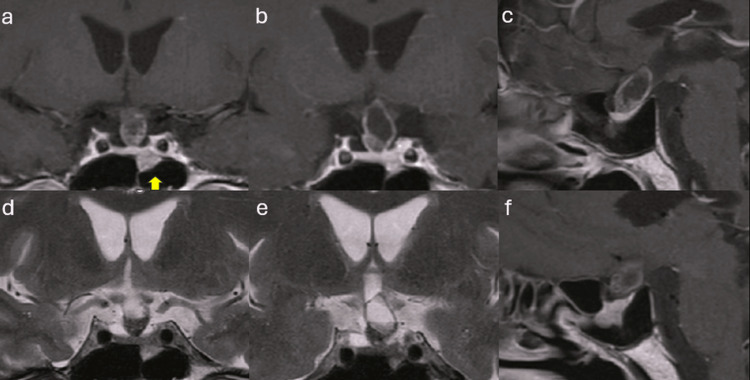 Figure 1
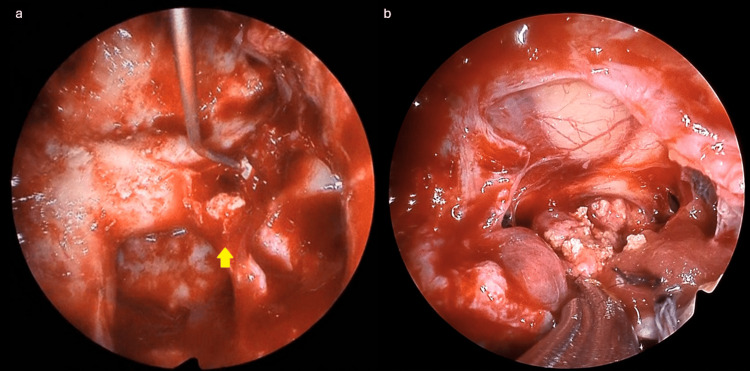 Figure 2
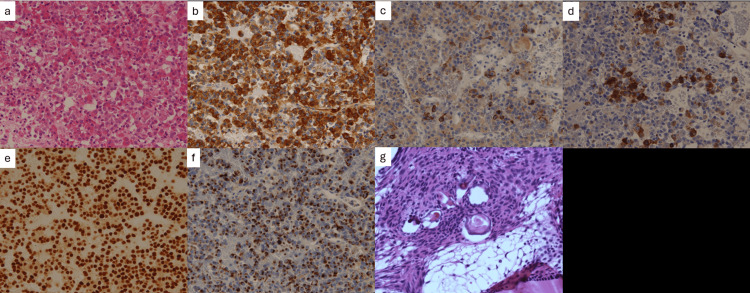 Figure 3
 Figure 4
Peer Reviews
No public reviews on file for this paper yet. If you reviewed it on a platform where reviews are public (OpenReview, ICLR, NeurIPS, ICML), you can paste yours below so the community can read it here.
Videos
No videos yet. Explain this paper in a talk, walkthrough, or lecture? Add one.
Taxonomy
TopicsPituitary Gland Disorders and Treatments · Glioma Diagnosis and Treatment · Growth Hormone and Insulin-like Growth Factors