From Flora to Threat: Septic Emboli Due to Corynebacterium pseudodiphtheriticum in a Patient With Relapsed Acute Myeloid Leukemia
Alan Wang, John Greene

TL;DR
A patient with relapsed leukemia developed a rare infection from Corynebacterium pseudodiphtheriticum, which was confirmed as the cause despite being often dismissed as a contaminant.
Contribution
This case report highlights the pathogenic potential of C. pseudodiphtheriticum in immunocompromised patients.
Findings
C. pseudodiphtheriticum was identified as the causative agent of septic emboli in a neutropenic patient.
The patient showed clinical and radiographic improvement after targeted treatment.
The case underscores the need to consider C. pseudodiphtheriticum as a true pathogen in immunocompromised individuals.
Abstract
Corynebacterium pseudodiphtheriticum (C. pseudodiphtheriticum) is typically a benign inhabitant of the upper respiratory tract but has recently emerged as a potential opportunistic pathogen in immunocompromised individuals. We report a rare case of disseminated C. pseudodiphtheriticum infection in a 60-year-old man with relapsed acute myeloid leukemia (AML) undergoing chemotherapy. The patient developed fever, hypotension, and a diffuse papular rash in the setting of profound neutropenia. Blood cultures from central and peripheral lines grew C. pseudodiphtheriticum, and computed tomography (CT) revealed multiple bilateral pulmonary nodules with ground-glass and tree-in-bud opacities, suggestive of septic emboli. Despite the organism’s frequent dismissal as a contaminant, the clinical picture, imaging, and response to therapy supported its role as the causative pathogen. Following the…
Genes, proteins, chemicals, diseases, species, mutations and cell lines named across the full text — each resolved to its canonical identifier and authoritative record.
Click any figure to enlarge with its caption.
 Figure 1
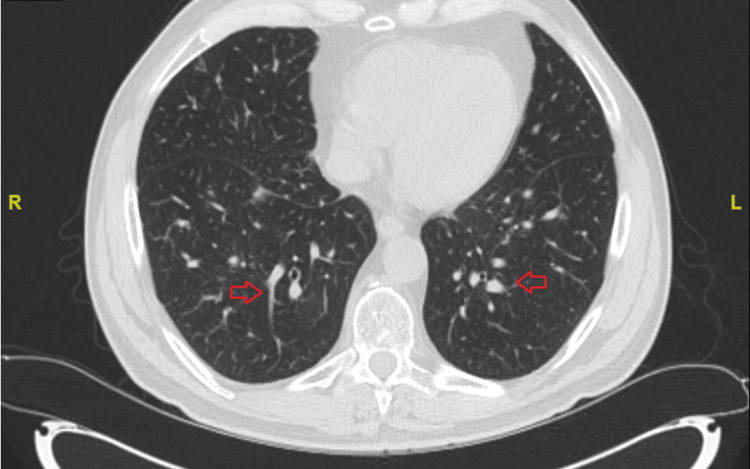 Figure 2
Peer Reviews
No public reviews on file for this paper yet. If you reviewed it on a platform where reviews are public (OpenReview, ICLR, NeurIPS, ICML), you can paste yours below so the community can read it here.
Videos
No videos yet. Explain this paper in a talk, walkthrough, or lecture? Add one.
Taxonomy
TopicsDiphtheria, Corynebacterium, and Tetanus · Mycobacterium research and diagnosis · Bacterial Identification and Susceptibility Testing