The deubiquitinase ElaD is present in the majority of Escherichia coli strains
Xinyu Wang, Weiqi Guo, Jiangang Hu, Beibei Zhang, Jingjing Qi, Mingxing Tian, Yanqing Bao, Lei Deng, Shaohui Wang

TL;DR
The elaD gene, which codes for a deubiquitinase, is found in most E. coli strains and may play a role in their biology.
Contribution
The study reveals the widespread presence and evolutionary relationships of the elaD gene across diverse E. coli strains.
Findings
The elaD gene is present in 66.60% of 530 E. coli strains, including both pathogenic and nonpathogenic types.
ElaD is predominantly found in specific serotypes like O157, O26, O139, and O8, and certain phylogenetic groups.
Some ElaD sequences show premature translation termination, suggesting functional diversity.
Abstract
Pathogens employ a variety of effectors to modulate key host signaling pathways, thereby facilitating bacterial survival and enhancing pathogenicity. Despite lacking a complete ubiquitin system of their own, bacterial effectors frequently function as ubiquitin ligases or deubiquitinases (DUBs) to disrupt the eukaryotic ubiquitin machinery. DUBs have been found in a variety of bacteria, including ElaD, which has recently been recognized as a DUB in Escherichia coli (E. coli). However, the distribution and evolutionary analyses of ElaD in different E. coli remains largely unknown. We retrieved and analyzed the elaD gene sequences of 530 E. coli strains. Then, molecular characterization of each strain was determined. According to all the statistical information, the distribution of elaD gene in E. coli was comprehensively investigated, and the relationship between elaD and E. coli…
Genes, proteins, chemicals, diseases, species, mutations and cell lines named across the full text — each resolved to its canonical identifier and authoritative record.
Click any figure to enlarge with its caption.
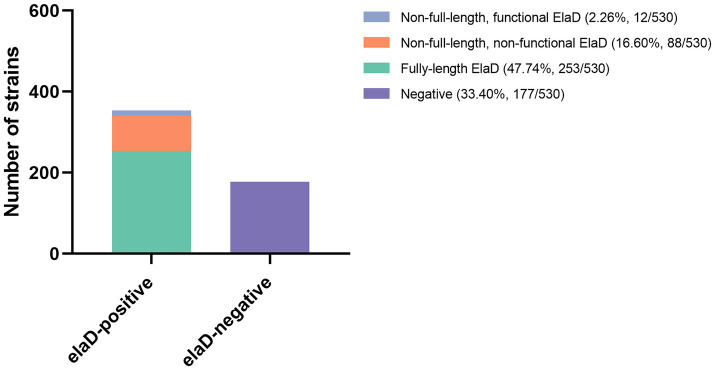 Figure 1
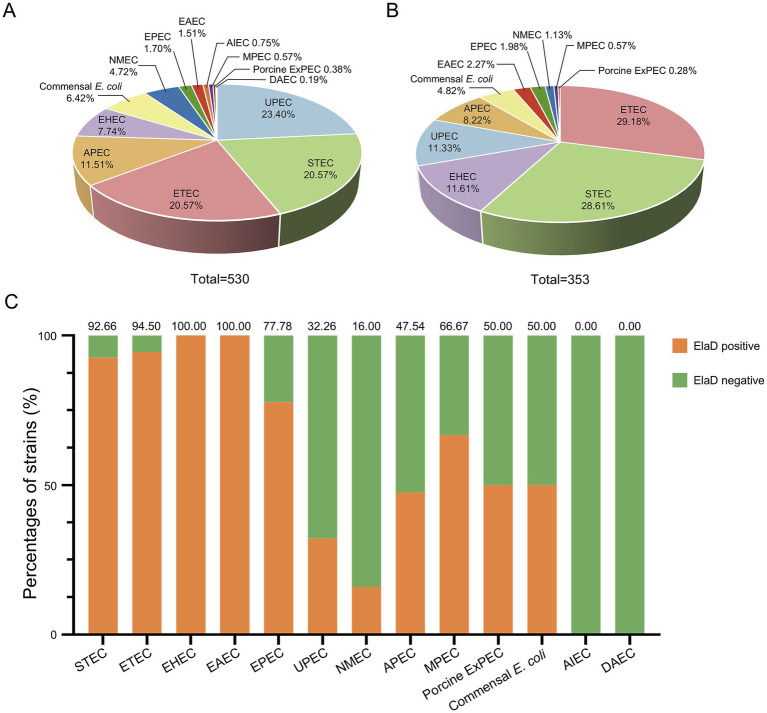 Figure 2
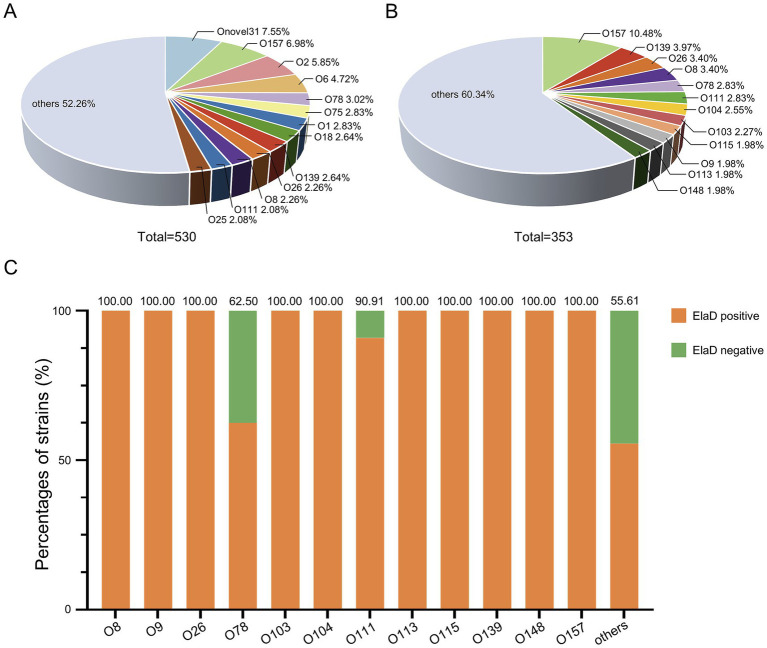 Figure 3
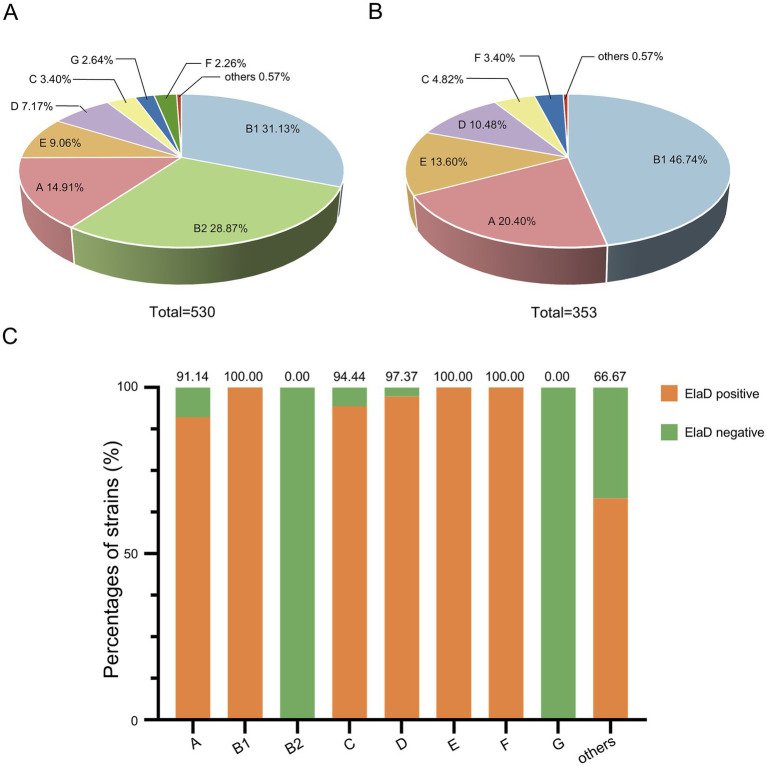 Figure 4
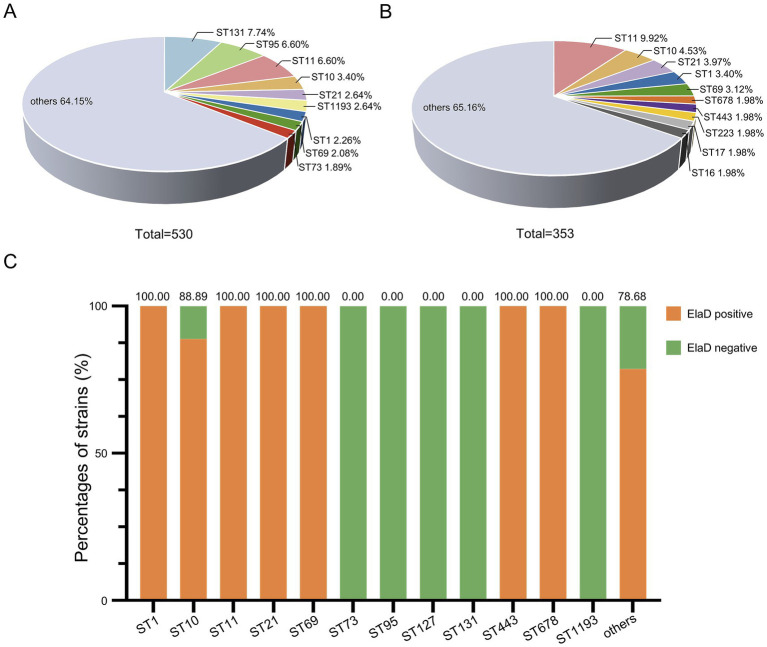 Figure 5
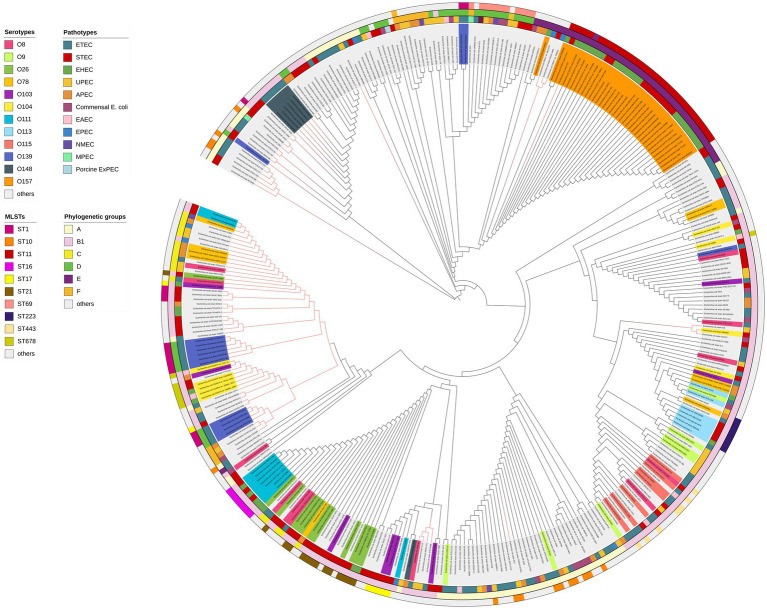 Figure 6
Peer Reviews
No public reviews on file for this paper yet. If you reviewed it on a platform where reviews are public (OpenReview, ICLR, NeurIPS, ICML), you can paste yours below so the community can read it here.
Videos
No videos yet. Explain this paper in a talk, walkthrough, or lecture? Add one.
Taxonomy
TopicsUbiquitin and proteasome pathways · Glycosylation and Glycoproteins Research · Endoplasmic Reticulum Stress and Disease