Molecular mechanisms governing the differentiation and expansion of myeloid-derived suppressor cells
Ke Wang, Xiao Wang, Nan Sun

TL;DR
This paper reviews how myeloid-derived suppressor cells develop and expand, focusing on their role in cancer immune evasion and potential therapeutic targets.
Contribution
The paper provides a comprehensive review of signaling pathways and regulatory factors governing MDSC differentiation and expansion.
Findings
Key signaling pathways like JAK/STAT, NF-κB, and Notch are central to MDSC biology.
Regulatory cytokines, metabolic factors, and epigenetic modifications influence MDSC development.
Understanding these mechanisms can lead to novel cancer immunotherapies targeting MDSC-mediated immunosuppression.
Abstract
Myeloid-derived suppressor cells (MDSCs) play critical roles in tumor immune evasion. These heterogeneous cells are broadly classified into granulocytic (G-MDSC), monocytic (M-MDSC), and their immature precursors, early-stage MDSCs (e-MDSCs). Elucidating their differentiation and expansion mechanisms is crucial for advancing cancer immunotherapy. This review examines the key signaling pathways (e.g., JAK/STAT, NF-κB, Notch), regulatory cytokines, metabolic factors, and epigenetic modifications central to MDSC biology. A comprehensive understanding of these intricate networks provides valuable insights into tumor immune evasion and facilitates the identification of novel therapeutic targets designed to overcome MDSC-mediated immunosuppression.
Genes, proteins, chemicals, diseases, species, mutations and cell lines named across the full text — each resolved to its canonical identifier and authoritative record.
Click any figure to enlarge with its caption.
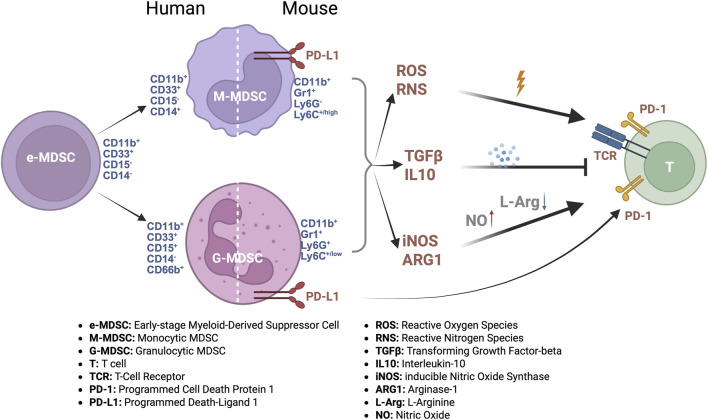 Figure 1
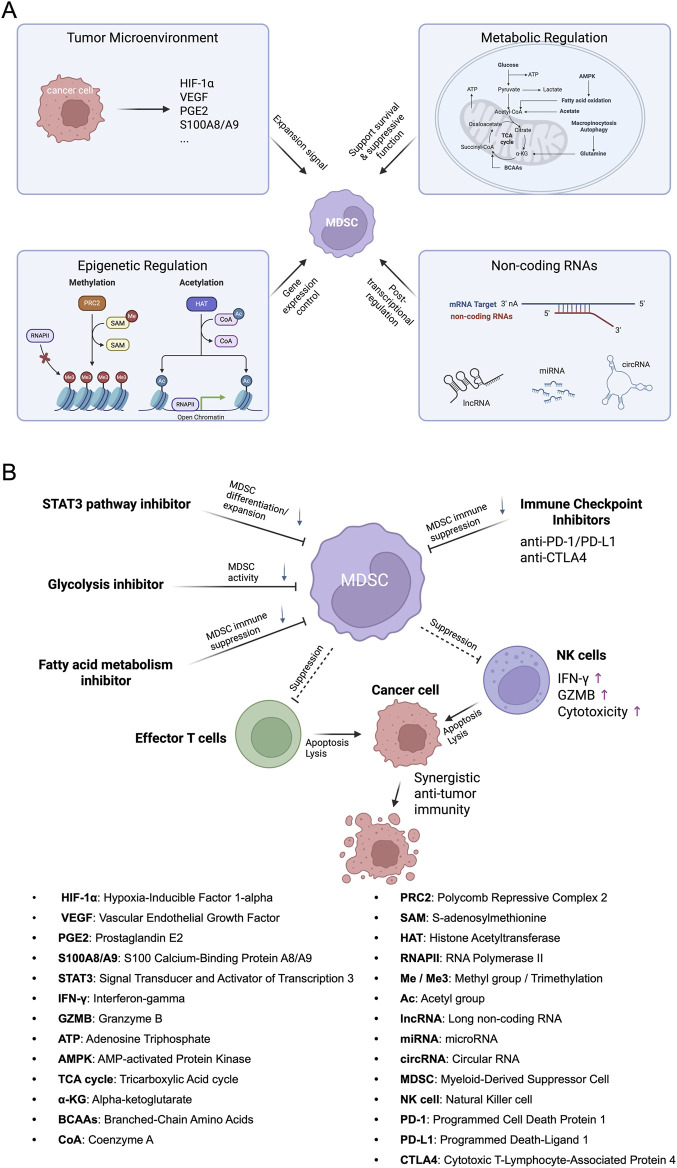 Figure 2
Peer Reviews
No public reviews on file for this paper yet. If you reviewed it on a platform where reviews are public (OpenReview, ICLR, NeurIPS, ICML), you can paste yours below so the community can read it here.
Videos
No videos yet. Explain this paper in a talk, walkthrough, or lecture? Add one.
Taxonomy
TopicsImmune cells in cancer · Neuroinflammation and Neurodegeneration Mechanisms · Phagocytosis and Immune Regulation