The role of post-systolic strain and electrocardiographic changes during dobutamine stress echocardiography in enhancing detection of symptomatic coronary artery disease
Aleksandra Zivanic, Ivan Stankovic, Ivona Vranic Jovanovic, Milos Panic, Milica Scepanovic, Aleksandra Maksimovic, Predrag Milicevic, Tijana Kalezic-Radmili, Aleksandar N. Neskovic

TL;DR
This study investigates whether post-systolic strain and ECG changes during dobutamine stress echocardiography improve detection of coronary artery disease in patients with chest pain.
Contribution
The study evaluates the role of post-systolic strain index during recovery in detecting coronary artery disease alongside traditional methods.
Findings
LV wall motion abnormalities were strongly associated with obstructive CAD.
ECG changes during DSE correlated with obstructive CAD.
PSI during recovery was not linked to CAD but was associated with ECG changes.
Abstract
To enhance the diagnosis of coronary artery disease (CAD) during dobutamine stress echocardiography (DSE), subjective visual evaluation of left ventricular (LV) wall motion abnormalities may be complemented by analyzing myocardial deformation and electrocardiographic (ECG) changes. This study evaluates the post-systolic strain index (PSI) measured during the recovery phase of DSE for detecting obstructive CAD and explores its relationship with wall motion abnormalities and ECG changes during DSE in patients with anginal symptoms. We retrospectively analyzed data from 72 patients who underwent both DSE and coronary angiography. We compared visual interpretation of DSE at peak stress, ECG abnormalities during DSE, and PSI during the recovery phase with obstructive CAD. LV wall motion abnormalities induced by dobutamine were independently associated with obstructive CAD [odds ratio (OR)…
Genes, proteins, chemicals, diseases, species, mutations and cell lines named across the full text — each resolved to its canonical identifier and authoritative record.
Click any figure to enlarge with its caption.
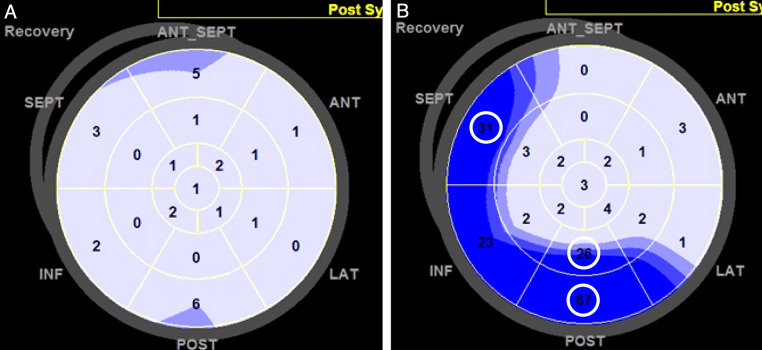 Figure 1
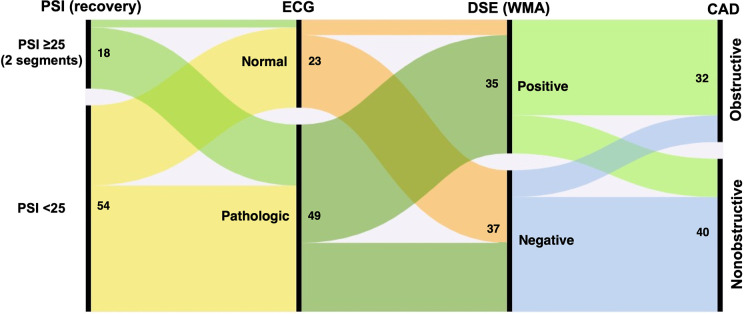 Figure 2
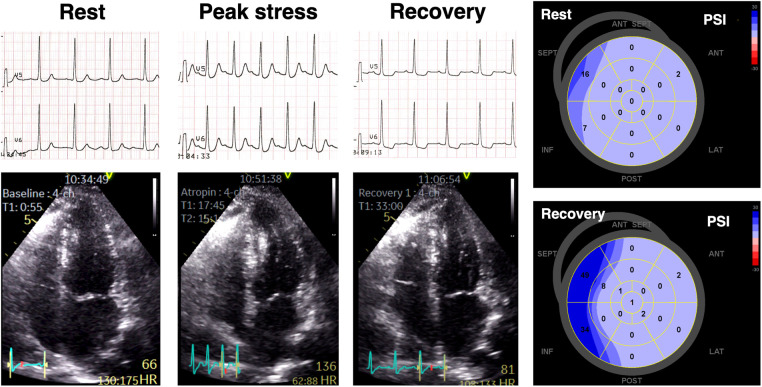 Figure 3
Peer Reviews
No public reviews on file for this paper yet. If you reviewed it on a platform where reviews are public (OpenReview, ICLR, NeurIPS, ICML), you can paste yours below so the community can read it here.
Videos
No videos yet. Explain this paper in a talk, walkthrough, or lecture? Add one.
Taxonomy
TopicsCardiac Imaging and Diagnostics · Cardiovascular Function and Risk Factors · Cardiovascular Disease and Adiposity