Knowledge, attitude, and practice towards food safety amongst school children, food handlers and consumers: protocol for a pre-post longitudinal study in North East India
Rashmi Savant, Rajkumar James Singh, Suranjana Chaliha Hazarika, Tapan Majumdar, Karma G. Dolma, Sarangthem Indira Devi, Tapan Kumar Dutta, Valerie Lyngdoh, Dilem Modi, Swagnik Roy, Rajkumari Mandakini Devi, Hosterson Kylla, Megongusie Meru, Samaresh Das, Shalony Roy

TL;DR
This study aims to improve food safety knowledge and practices among school children, food handlers, and consumers in North East India through an educational intervention and a mobile app.
Contribution
The study introduces a mobile app for scalable data collection and a framework adaptable to diverse regions for food safety awareness.
Findings
The study will assess changes in knowledge, attitudes, and practices before and after an educational intervention.
A mobile app will be used to streamline data collection and improve consistency in field surveys.
Findings will support the development of a Social and Behavior Change Communication model for food safety.
Abstract
The North Eastern states of India exhibit a rich diversity of cultural, geographical, and traditional food practices, which, while unique and valuable, contribute to an increased susceptibility to foodborne and waterborne diseases. While these practices contribute to the region’s identity, inadequate food safety measures increase the risk of foodborne diseases, constituting a pressing public health issue. This study aims to assess the knowledge, attitudes, and practices (KAP) related to food safety among school children, food handlers, and consumers in eight North Eastern (NE) states of India. It also evaluates the changes in KAP scores across all three study groups following an educational intervention program. A pre-post quasi experimental longitudinal study design involving 11 NE centres under the ICMR FoodNet program and comprising three waves: Wave 1: Baseline cross-sectional…
Genes, proteins, chemicals, diseases, species, mutations and cell lines named across the full text — each resolved to its canonical identifier and authoritative record.
Click any figure to enlarge with its caption.
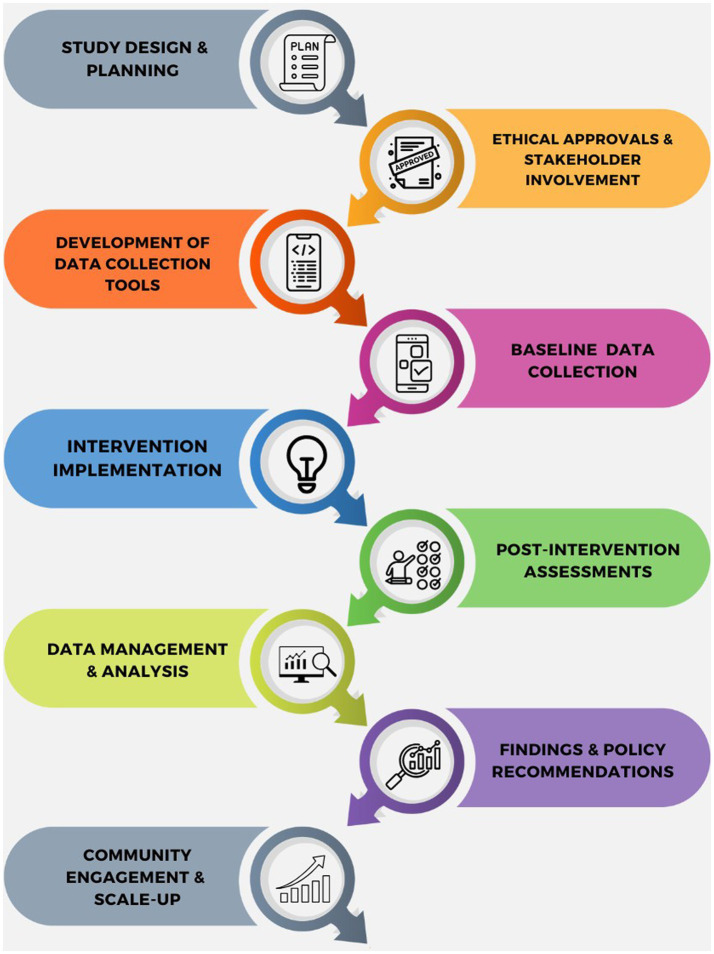 Figure 1
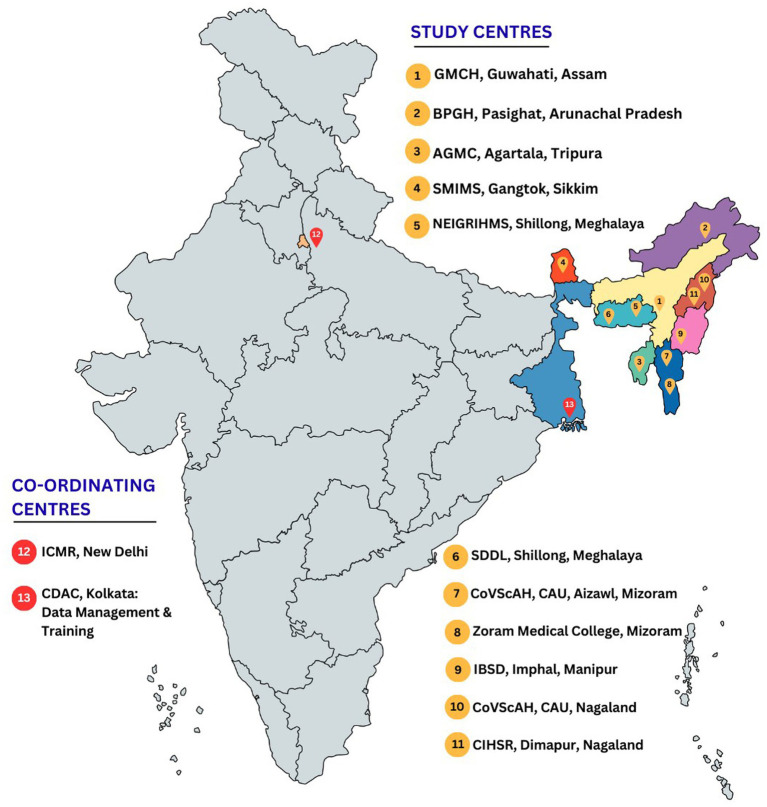 Figure 2
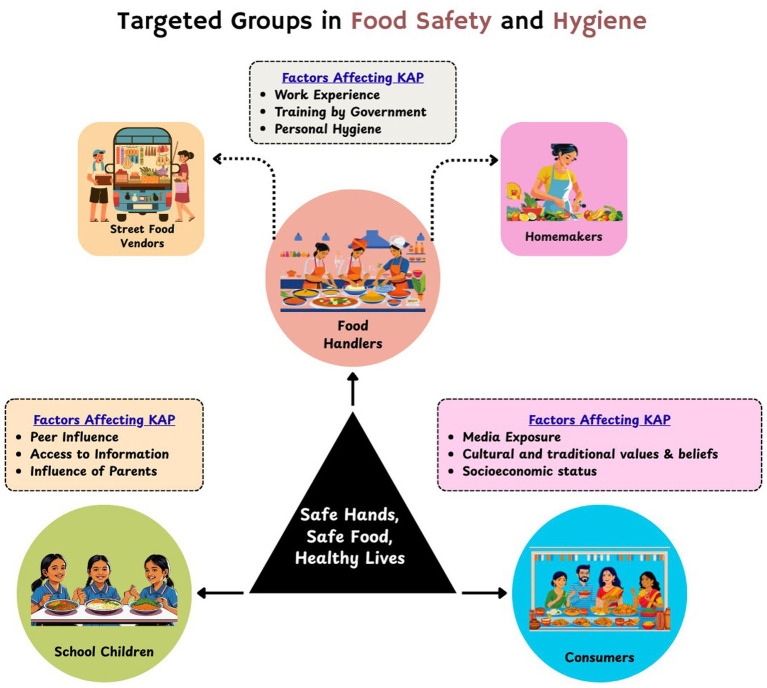 Figure 3
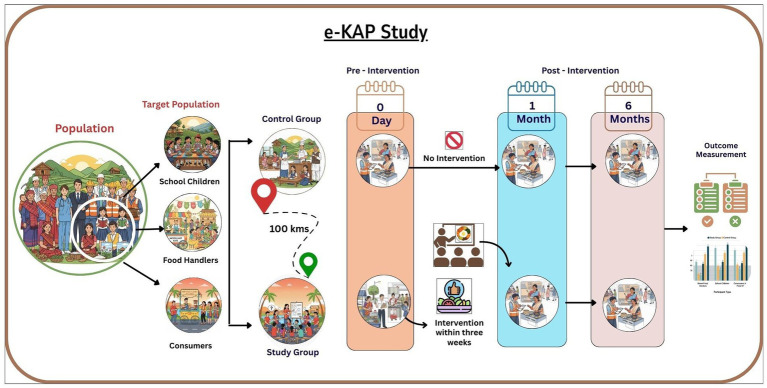 Figure 4
Peer Reviews
No public reviews on file for this paper yet. If you reviewed it on a platform where reviews are public (OpenReview, ICLR, NeurIPS, ICML), you can paste yours below so the community can read it here.
Videos
No videos yet. Explain this paper in a talk, walkthrough, or lecture? Add one.
Taxonomy
TopicsFood Safety and Hygiene · Food Waste Reduction and Sustainability