Paired reentries maintain ventricular tachycardia: a topological analysis of arrhythmic mechanisms using the index theorem
Robin Van Den Abeele, Sebastiaan Lootens, Bjorn Verstraeten, Arthur Santos Bezerra, Arstanbek Okenov, Timur Nezlobinskii, Viktor Van Nieuwenhuize, Sander Hendrickx, Nele Vandersickel

TL;DR
This paper uses topological analysis to identify and terminate scar-related ventricular tachycardia by connecting critical boundaries in 3D simulations.
Contribution
The paper extends the index theorem to 3D scar-related ventricular tachycardia and proposes a topology-based ablation strategy.
Findings
Paired counter-rotating critical boundaries were consistently found in each transmural layer of scar-related VT simulations.
Ablation strategies connecting these boundary pairs successfully terminated all simulated VT cases.
The index theorem remains valid for scar-related VT when applied to 2D surfaces derived from 3D simulations.
Abstract
In previous research on reentrant atrial tachycardia (AT), the index theorem has proven instrumental in uncovering consistent paired counter-rotating anatomical reentry (either complete or near-complete), driving the arrhythmia rotating around critical boundaries (CB). Furthermore, interconnecting each CB-pair with an ablation line has been shown to terminate the AT. In this study, we extend this approach to scar-related ventricular tachycardia (VT), complicating the calculations as VT is inherently a 3-dimensional problem. We propose that scar-related VT can be topologically simplified to one or more of four basic physiologically distinct scar-types: transmural (I-shaped), epicardially connected or endocardially connected (U-shaped) or intramural (O-shaped). Six simulations of scar-related VT were created, each featuring a distinct critical scar configuration. From each simulation,…
Genes, proteins, chemicals, diseases, species, mutations and cell lines named across the full text — each resolved to its canonical identifier and authoritative record.
Click any figure to enlarge with its caption.
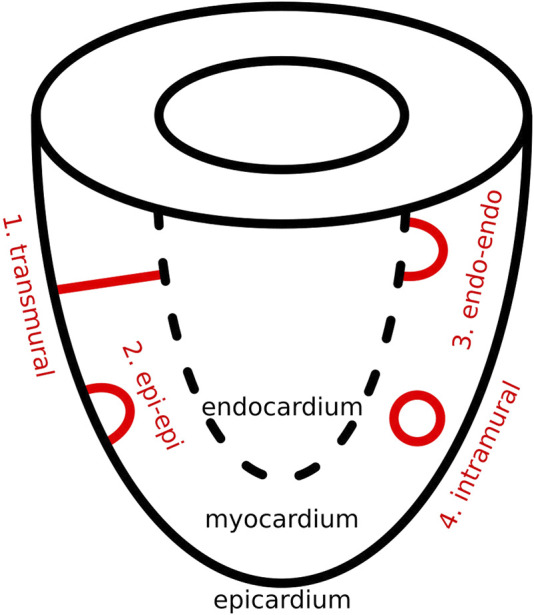 Figure 1
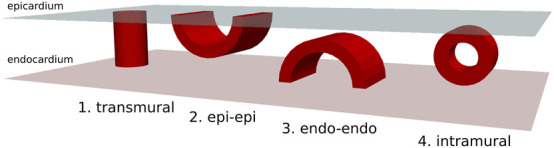 Figure 2
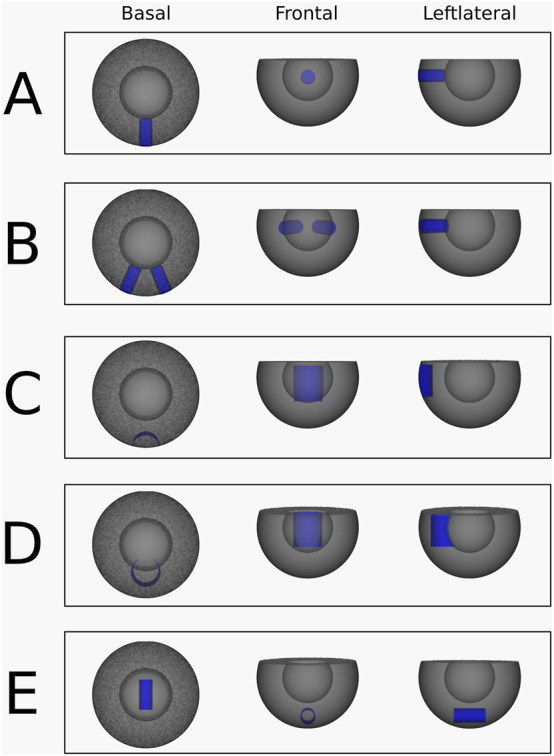 Figure 3
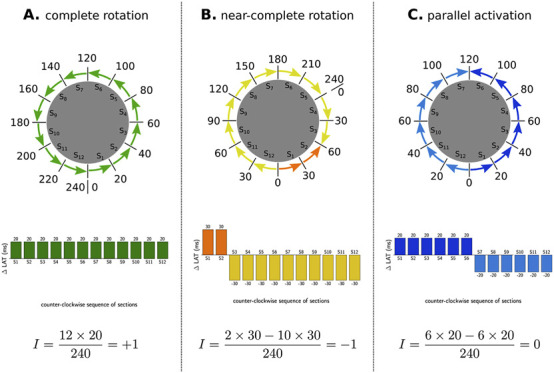 Figure 4
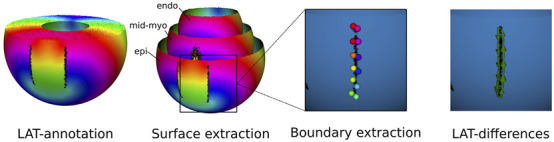 Figure 5
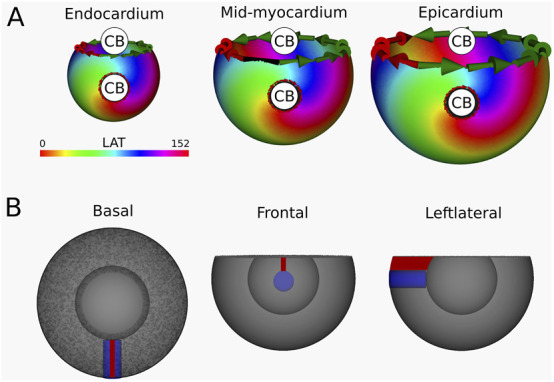 Figure 6
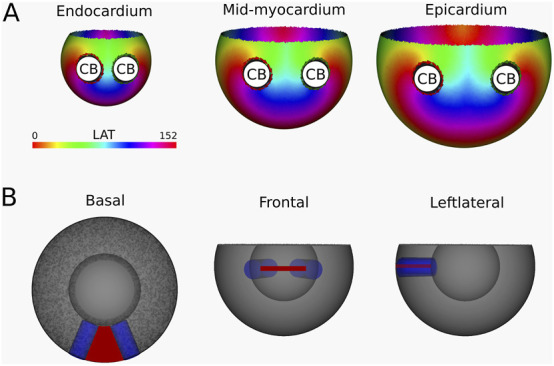 Figure 7
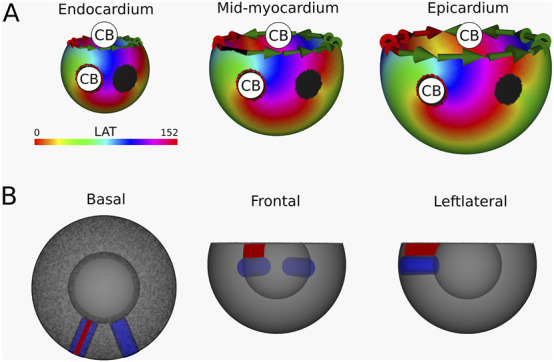 Figure 8
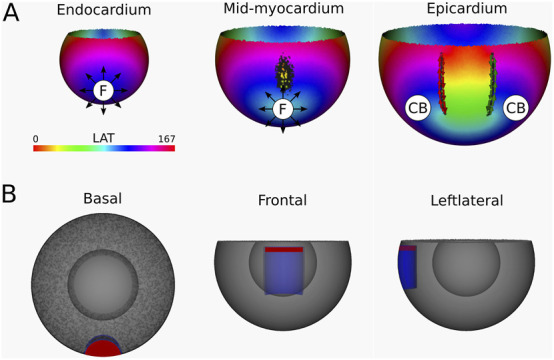 Figure 9
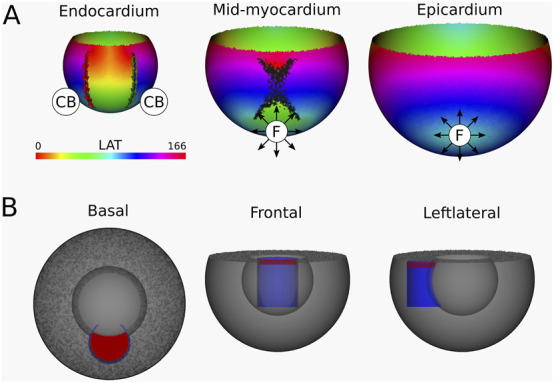 Figure 10
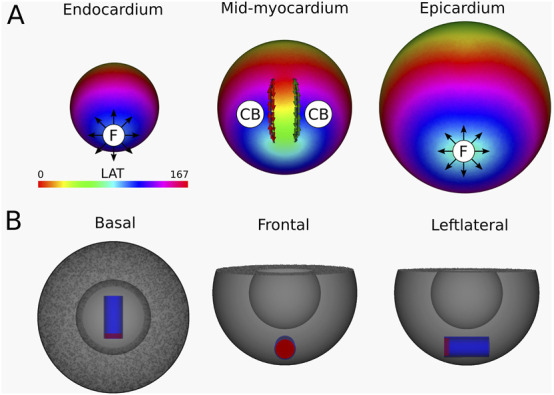 Figure 11
Peer Reviews
No public reviews on file for this paper yet. If you reviewed it on a platform where reviews are public (OpenReview, ICLR, NeurIPS, ICML), you can paste yours below so the community can read it here.
Videos
No videos yet. Explain this paper in a talk, walkthrough, or lecture? Add one.
Taxonomy
TopicsCardiac electrophysiology and arrhythmias · Cardiac Arrhythmias and Treatments · Cardiovascular Syncope and Autonomic Disorders