Aperiodic brain activity changes in patients with stroke following virtual reality-based upper limb robotic rehabilitation: a pilot Randomized Controlled Trial
Maria Cristina Mauro, Alessio Fasano, Marco Germanotta, Laura Cortellini, Sabina Insalaco, Arianna Pavan, Angela Comanducci, Eugenio Guglielmelli, Irene Giovanna Aprile

TL;DR
This pilot study shows that robotic rehabilitation with virtual reality can change brain activity in stroke patients, potentially helping track recovery.
Contribution
The study introduces the use of aperiodic EEG changes as a potential biomarker for tracking stroke recovery after robotic rehabilitation.
Findings
Aperiodic EEG changes in the affected hemisphere mirrored motor recovery after rehabilitation.
SEI values increased after training and decreased at follow-up, but remained lower than in the unaffected hemisphere.
No significant differences were found between unilateral and bilateral training approaches.
Abstract
Stroke-related brain changes have traditionally been studied through oscillatory electroencephalographic (EEG) activity, but recent evidence highlights the value of aperiodic components. This pilot randomized controlled trial aimed to assess stroke-related aperiodic EEG changes following virtual reality-based robotic rehabilitation using the Spectral Exponent Index (SEI). Nineteen patients with subacute stroke were randomized to unilateral (n = 9) or bilateral (n = 10) upper limb training with a robotic exoskeleton (30 sessions). EEG was recorded at rest before (T0), after (T1), and at 1-week follow-up (T2). SEI was computed for hemispheric and sensorimotor clusters, in affected (AH) and unaffected (UH) hemispheres. Clinical evaluation was performed at T0 and T1 with validated clinical scales. At T0, the SEI in the sensorimotor cluster of the AH was significantly lower than in the UH.…
Genes, proteins, chemicals, diseases, species, mutations and cell lines named across the full text — each resolved to its canonical identifier and authoritative record.
Click any figure to enlarge with its caption.
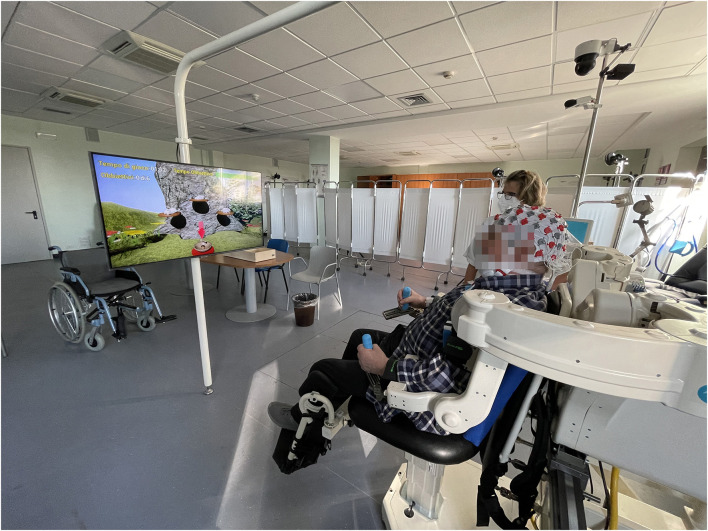 Figure 1
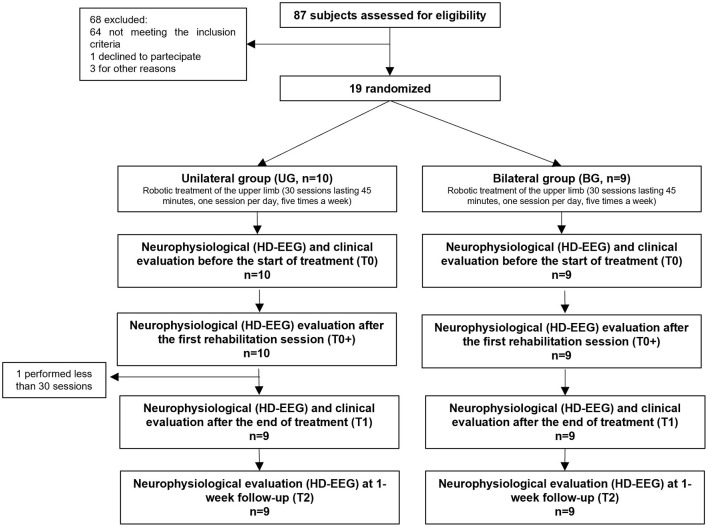 Figure 2
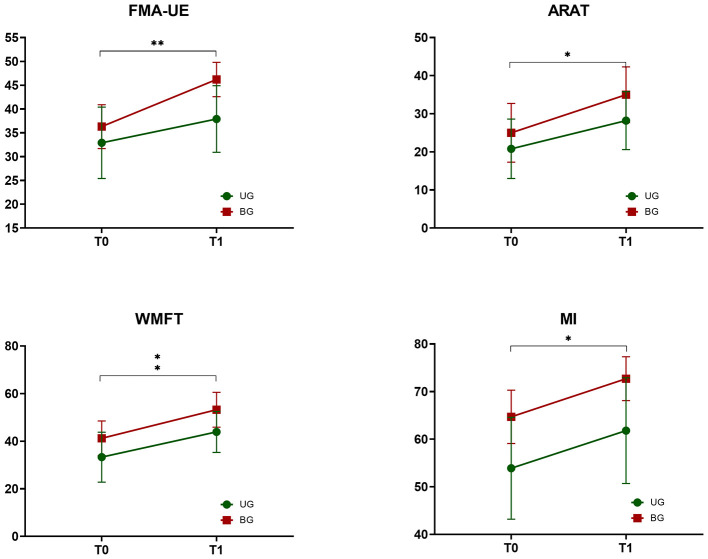 Figure 3
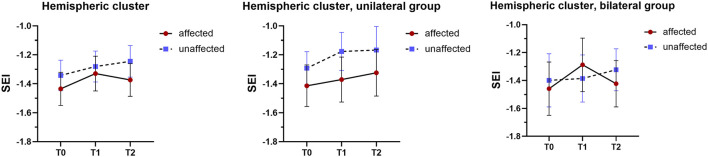 Figure 4
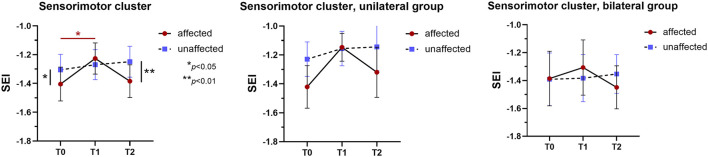 Figure 5
Peer Reviews
No public reviews on file for this paper yet. If you reviewed it on a platform where reviews are public (OpenReview, ICLR, NeurIPS, ICML), you can paste yours below so the community can read it here.
Videos
No videos yet. Explain this paper in a talk, walkthrough, or lecture? Add one.
Taxonomy
TopicsStroke Rehabilitation and Recovery · EEG and Brain-Computer Interfaces · Acute Ischemic Stroke Management