Genome-centric investigation of bile acid-metabolizing microbiota in chickens and their association with Eimeria tenella and Salmonella typhimurium infections
Kai-Meng Shang, Hany M. Elsheikha, Yong-Jie Wei, Xiao-Xuan Zhang, Xin-Wen Hou, Hai-Long Yu, Yanan Cai, Hong-Bo Ni, Rui Liu, He Ma, Jing Jiang, Fulong Nan, Xing Yang

TL;DR
This study explores how gut microbes in chickens process bile acids and how infections affect this process, offering insights into gut health and disease resistance.
Contribution
The study provides a genome-centric analysis of bile acid-metabolizing microbiota in chickens and their response to infections.
Findings
Bacillota_A is the predominant phylum with key bile acid-transforming enzymes in chicken gut microbiota.
Chickens have a higher proportion of BSH genes compared to humans and pigs, mainly from Ligilactobacillus and Alistipes.
Salmonella typhimurium infection alters BSH gene abundance, while Eimeria tenella increases richness but reduces evenness.
Abstract
Bile acid (BA) metabolism by gut microbiota plays a crucial role in host health by influencing nutrient absorption, immune responses, and resistance to pathogens. Elucidating how enteric infections disrupt the BA-microbiota axis is crucial for advancing microbiota-based therapeutics, precision nutrition, and post-antibiotic disease control strategies. We reconstructed 9,990 high-quality microbial genomes from the gut microbiota of chicken and performed genome-resolved metabolic profiling. Comparative analyses were conducted across host species, including humans and pigs. Also, 135 intestinal samples collected from different regions of the chicken gut were analyzed. Additional samples from chickens infected with Salmonella typhimurium and Eimeria tenella were included to assess infection-associated alterations. Our results reveal that the phylum Bacillota_A is predominant, with key…
Genes, proteins, chemicals, diseases, species, mutations and cell lines named across the full text — each resolved to its canonical identifier and authoritative record.
Click any figure to enlarge with its caption.
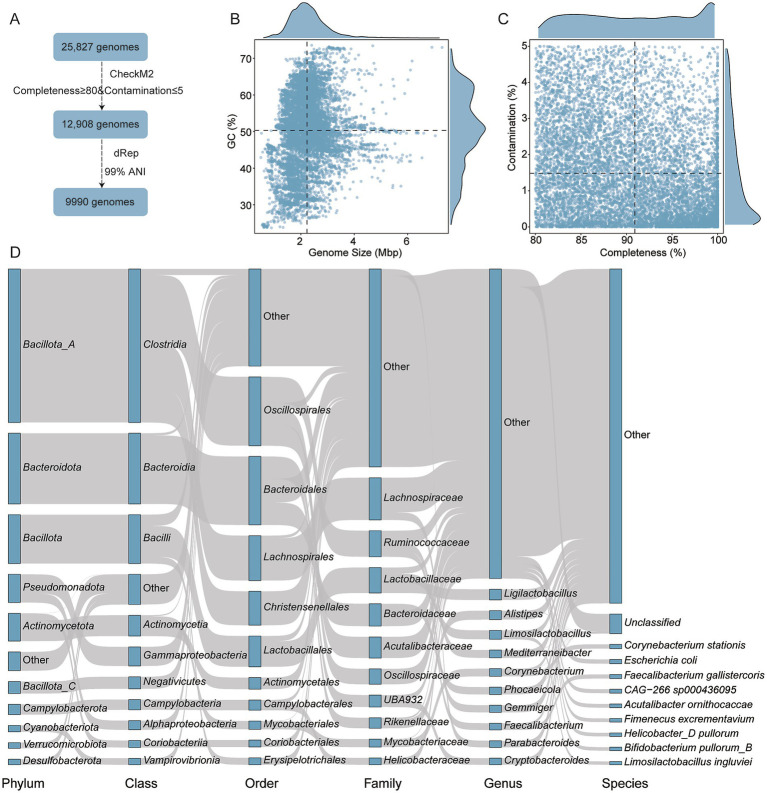 Figure 1
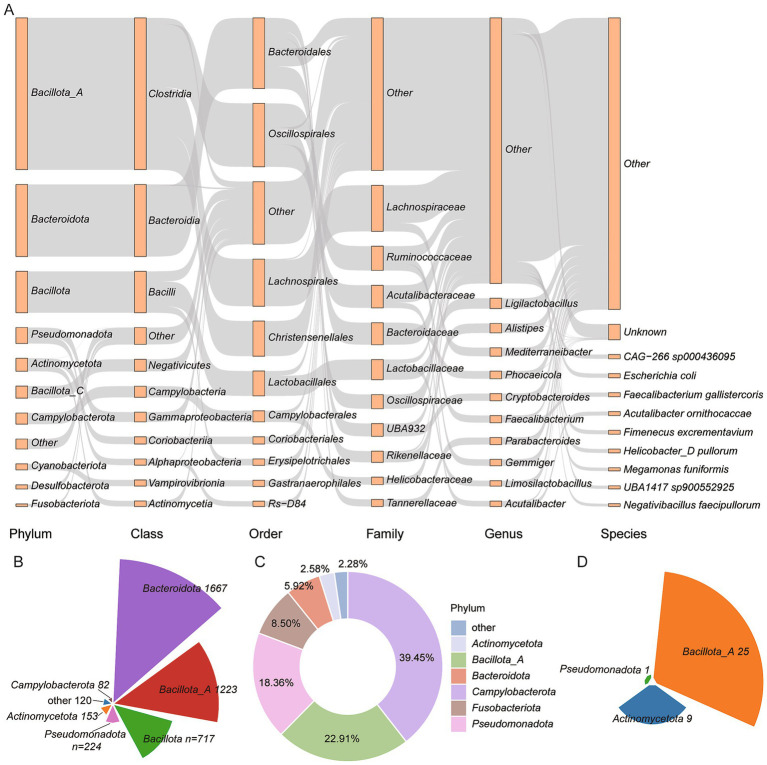 Figure 2
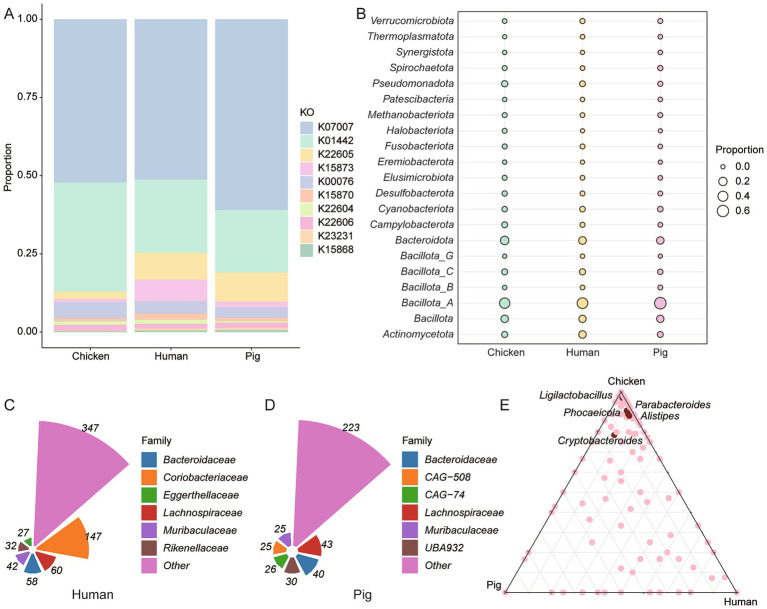 Figure 3
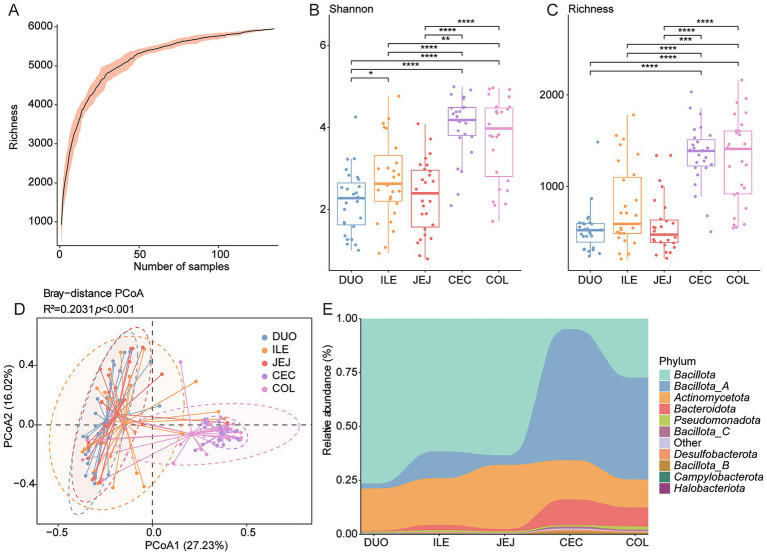 Figure 4
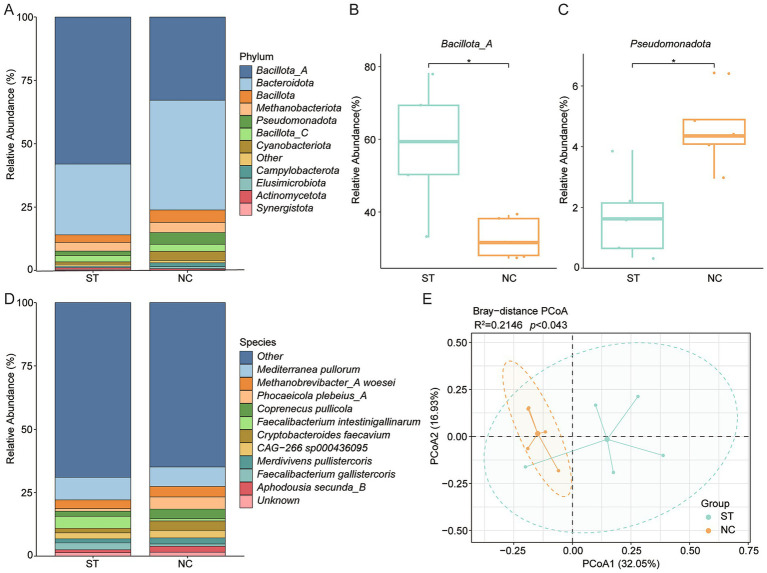 Figure 5
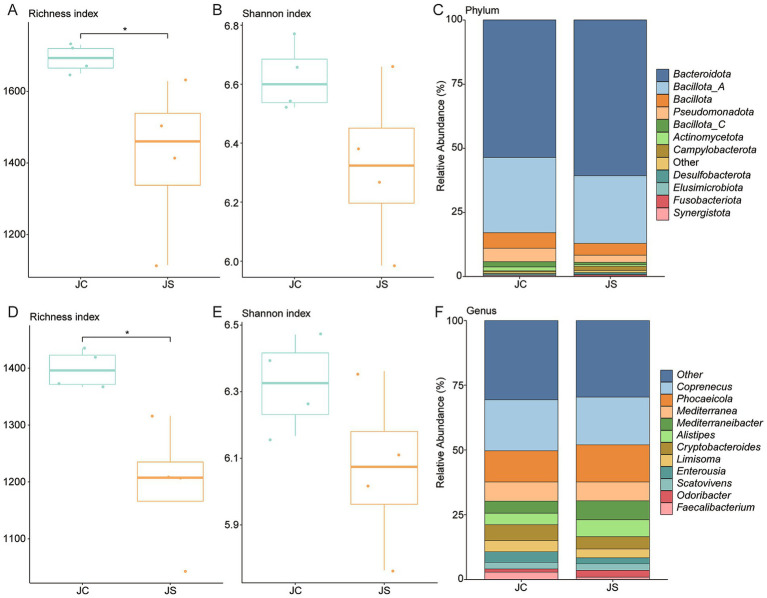 Figure 6
Peer Reviews
No public reviews on file for this paper yet. If you reviewed it on a platform where reviews are public (OpenReview, ICLR, NeurIPS, ICML), you can paste yours below so the community can read it here.
Videos
No videos yet. Explain this paper in a talk, walkthrough, or lecture? Add one.
Taxonomy
TopicsAnimal Nutrition and Physiology · Clostridium difficile and Clostridium perfringens research · Gut microbiota and health