Early marathon running metrics from inertial measurement units predict significant pace reduction
Yosuke Miyazaki, Hidetoshi Matsui, Kodayu Zushi, Takumi Fukui

TL;DR
This study uses early marathon running data from sensors to predict when runners will experience a significant slowdown, known as 'hitting the wall', later in the race.
Contribution
The study introduces a functional logistic regression model using biomechanical data from early in the marathon to predict performance decline.
Findings
A model achieved 73.9% accuracy in predicting 'hitting the wall' based on early marathon biomechanics.
Step length, ground contact time, and vertical stiffness were the strongest predictors of performance decline.
The model could help develop personalized training strategies to prevent significant pace reduction.
Abstract
Marathon runners occasionally experience significant pace reduction in the latter stages of races, a phenomenon known as “hitting the wall”. This study aimed to develop an interpretable model to predict this performance decline using biomechanical variables collected during the early stages of marathons. We analyzed data from 1,437 runners collected during official marathon events held in Japan from August 2022 to May 2025. Biomechanical variables were measured using inertial measurement unit attached to the runners’ lower back. “Hitting the wall” was defined as maintaining a pace exceeding 125% of the average pace from 5 to 20 km continuously for more than 5 km after the 25 km point. Conversely, runners were classified as “NOT hitting the wall” if their pace remained less than 110% of the average pace for more than 10 km. Cases not meeting either criterion were excluded from analysis,…
Genes, proteins, chemicals, diseases, species, mutations and cell lines named across the full text — each resolved to its canonical identifier and authoritative record.
Click any figure to enlarge with its caption.
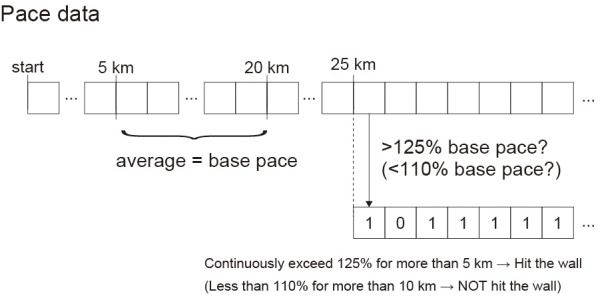 Figure 1
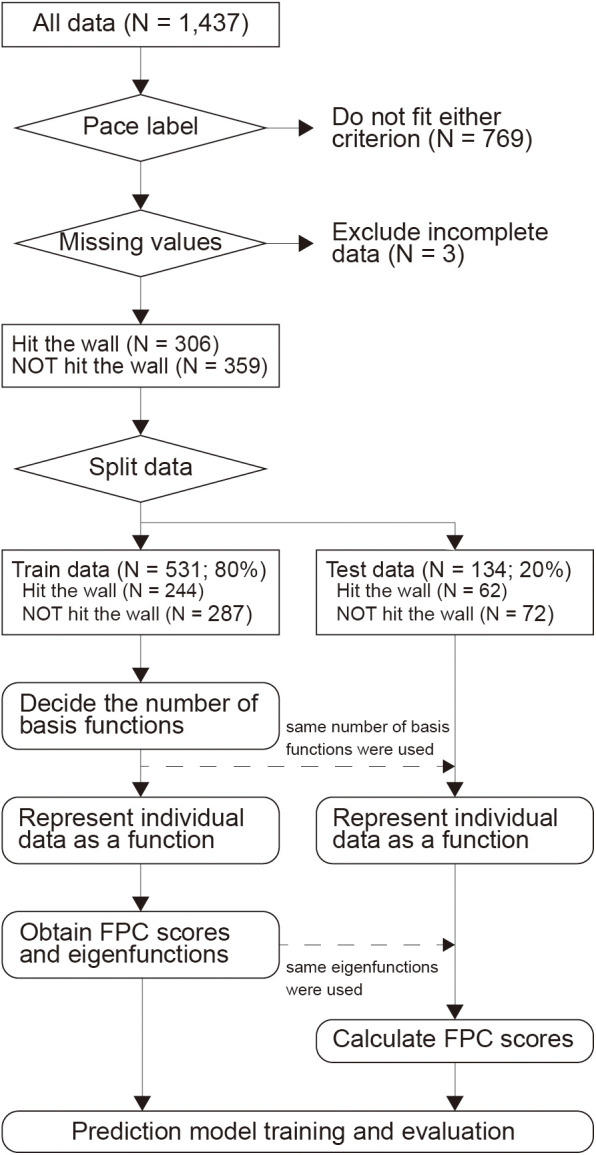 Figure 2
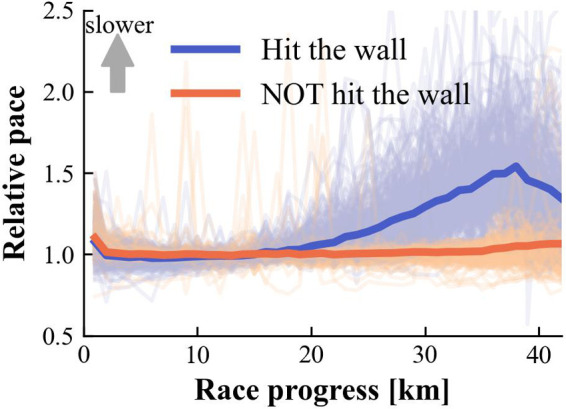 Figure 3
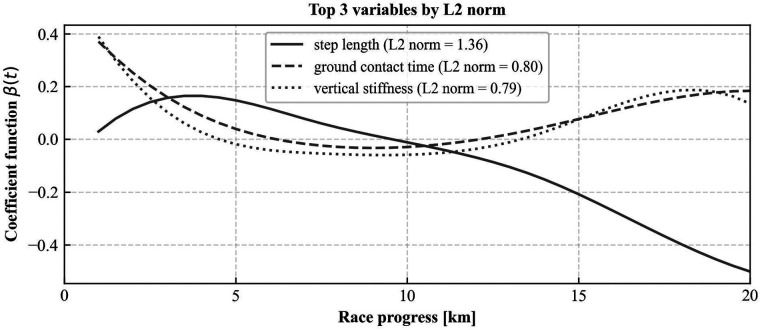 Figure 4
Peer Reviews
No public reviews on file for this paper yet. If you reviewed it on a platform where reviews are public (OpenReview, ICLR, NeurIPS, ICML), you can paste yours below so the community can read it here.
Videos
No videos yet. Explain this paper in a talk, walkthrough, or lecture? Add one.
Taxonomy
TopicsSports Performance and Training · Muscle metabolism and nutrition · Lower Extremity Biomechanics and Pathologies