Relationship between recurrently elevated hsCRP and adverse cardiovascular events among depressed patients in China: a time-to-event analysis
Ying Wu, Yuwei Mi, Hanbin Cui, Qifa Song, Liemin Ruan

TL;DR
This study finds that repeated high levels of a blood marker called hsCRP are linked to more heart problems in people with depression.
Contribution
The study introduces a new method to analyze repeated inflammation measurements and their link to heart events in depressed patients.
Findings
Higher cumulative heart disease risk was observed in patients with more frequent high hsCRP measurements.
Recurrent hsCRP elevations were more strongly associated with heart events than single measurements.
Persistent inflammation appears to be a biological link between depression and cardiovascular diseases.
Abstract
Persistent inflammation has been considered a biological link between depression and cardiovascular diseases(CVDs). Multipoint assessments of inflammation provide a more reasonable understanding of an individual's inflammatory status compared to single-point measurements. However, few studies have established strategies to investigate multipoint measurements of plasma high-sensitivity C-reactive protein(hsCRP). To elucidate the association between recurrent elevations in hsCRP and cardiovascular events among depressed patients. This retrospective cohort study analyzed medical records over a ten-year follow-up to evaluate the association between longitudinal hsCRP patterns and recurrent cardiovascular events in patients with depression. An age-adjusted gamma frailty time-to-event model was used to assess the risk for three primary outcomes: chronic ischemic heart disease (CIHD), atrial…
Genes, proteins, chemicals, diseases, species, mutations and cell lines named across the full text — each resolved to its canonical identifier and authoritative record.
Click any figure to enlarge with its caption.
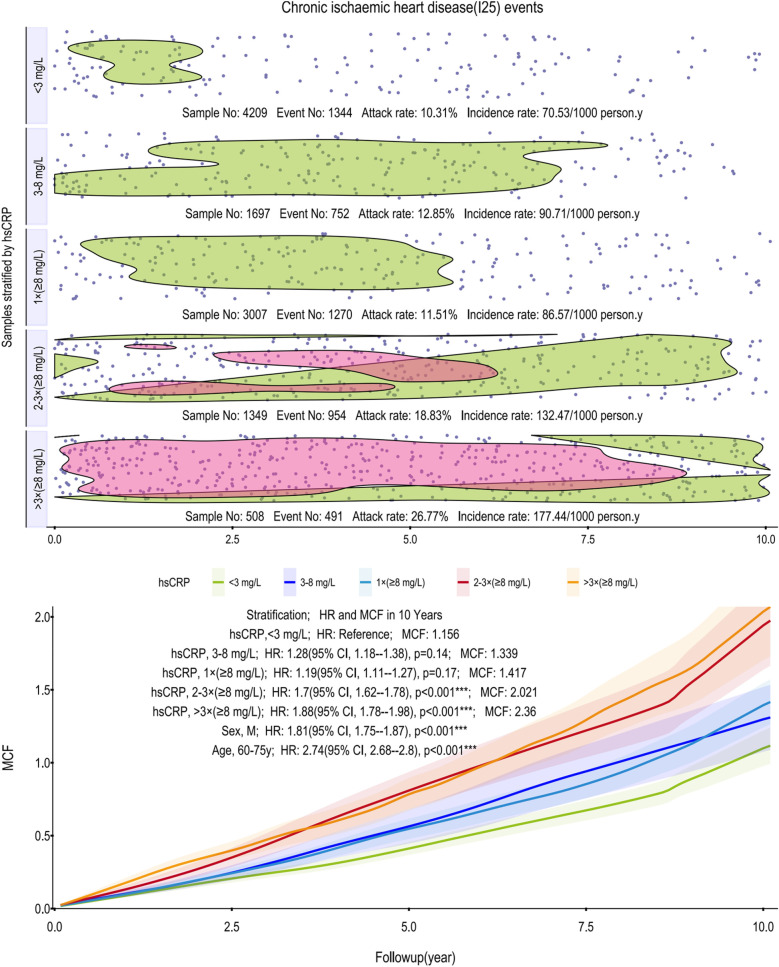 Figure 1
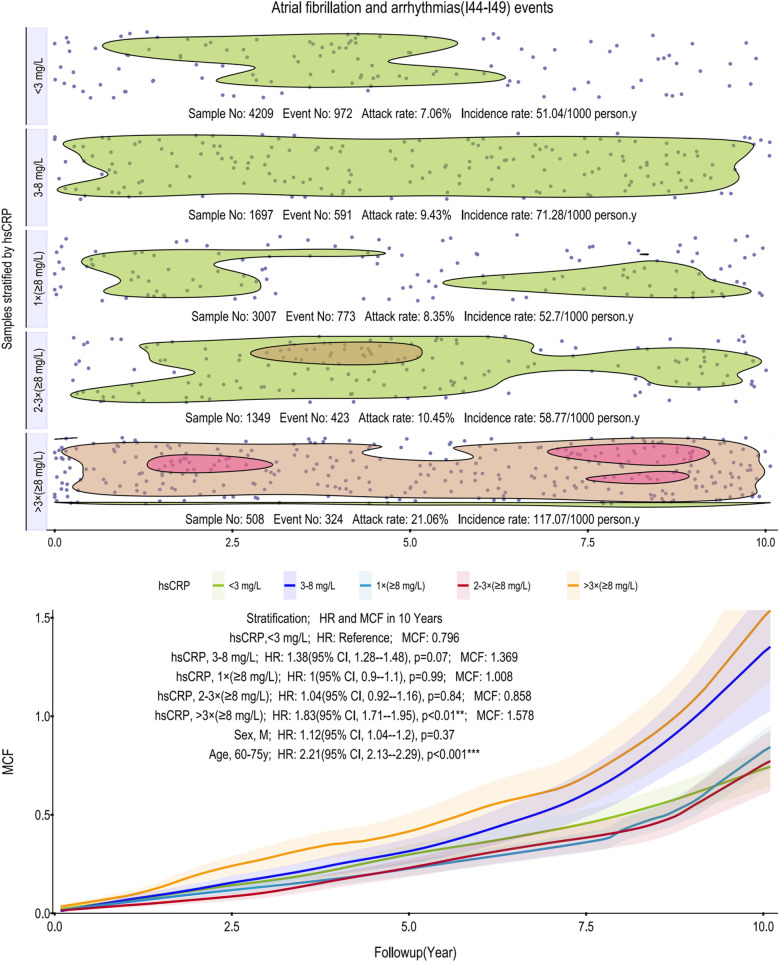 Figure 2
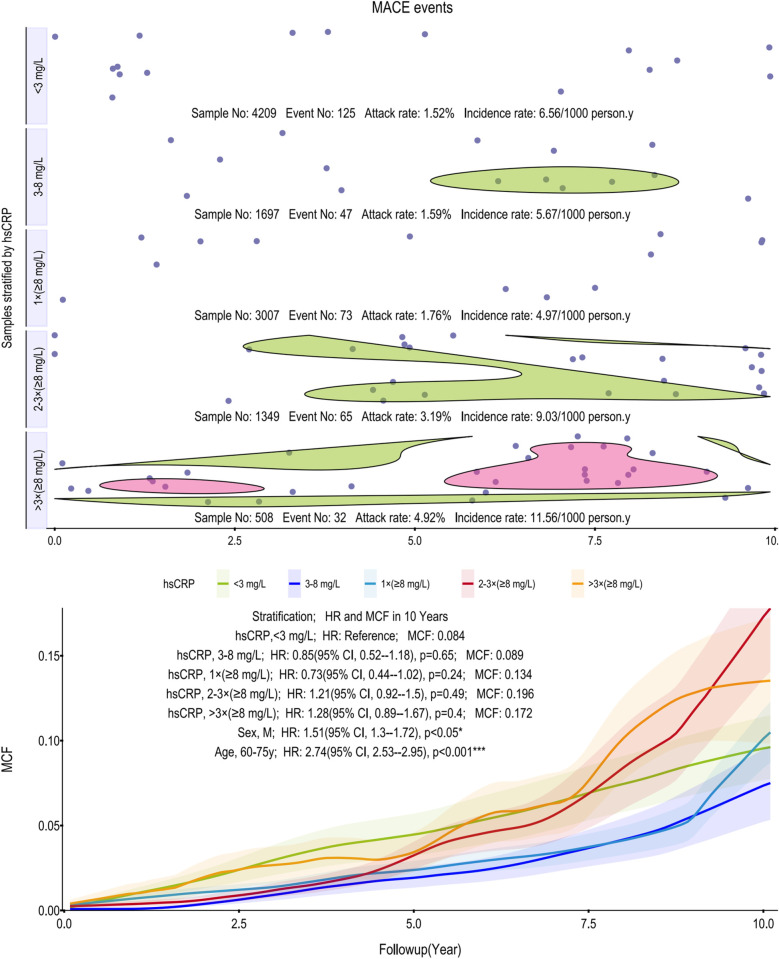 Figure 3
Peer Reviews
No public reviews on file for this paper yet. If you reviewed it on a platform where reviews are public (OpenReview, ICLR, NeurIPS, ICML), you can paste yours below so the community can read it here.
Videos
No videos yet. Explain this paper in a talk, walkthrough, or lecture? Add one.
Taxonomy
TopicsCardiac Health and Mental Health · Tryptophan and brain disorders · Treatment of Major Depression