Extreme gradient boosting using conventional parameters accurately predicts insulin sensitivity in young and middle-aged Japanese persons
Norimitsu Murai, Naoko Saito, Sayuri Nii, Hiroto Nishikawa, Eriko Kodama, Tatsuya Iida, Hideyuki Imai, Mai Hashizume, Rie Tadokoro, Chiho Sugisawa, Toru Iizaka, Fumiko Otsuka, Shun Ishibashi, Shoichiro Nagasaka

TL;DR
The study shows that machine learning can accurately predict insulin sensitivity in Japanese individuals using physical indicators and additional blood markers.
Contribution
Extreme gradient boosting outperforms conventional methods in predicting insulin sensitivity using clinical factors.
Findings
Extreme gradient boosting provided the best correlation with insulin sensitivity indices among ML methods.
The contribution of clinical factors to insulin sensitivity varies by age and glucose tolerance status.
Conventional lipid-related estimates showed weaker correlations with insulin sensitivity than ML-derived estimates.
Abstract
This study tested the hypothesis that insulin sensitivity (SI) can be estimated using machine learning (ML) based only on physical indicators or with the addition of lipid and fasting glucose levels. In 1,268 young (age <40 years, normal glucose tolerance; NGT) and 1,723 middle-aged Japanese persons with NGT (n=1,276) and glucose intolerance (n=447), the Matsuda index and the 1/homeostasis model assessment of insulin resistance were calculated as SI. In each group, SI was estimated by using eight ML methods, based only on physical indicators, as well as by using physical indicators together with lipid and fasting glucose levels. Moreover, 11 lipid-related estimates for SI were calculated. Estimates by extreme gradient boosting showed the best correlations with SI indices among eight ML methods. According to feature importance and SHapley Additive exPlanations values, the contribution…
Genes, proteins, chemicals, diseases, species, mutations and cell lines named across the full text — each resolved to its canonical identifier and authoritative record.
Click any figure to enlarge with its caption.
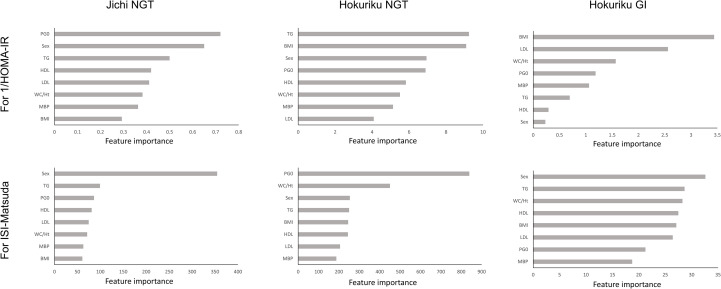 Figure 1
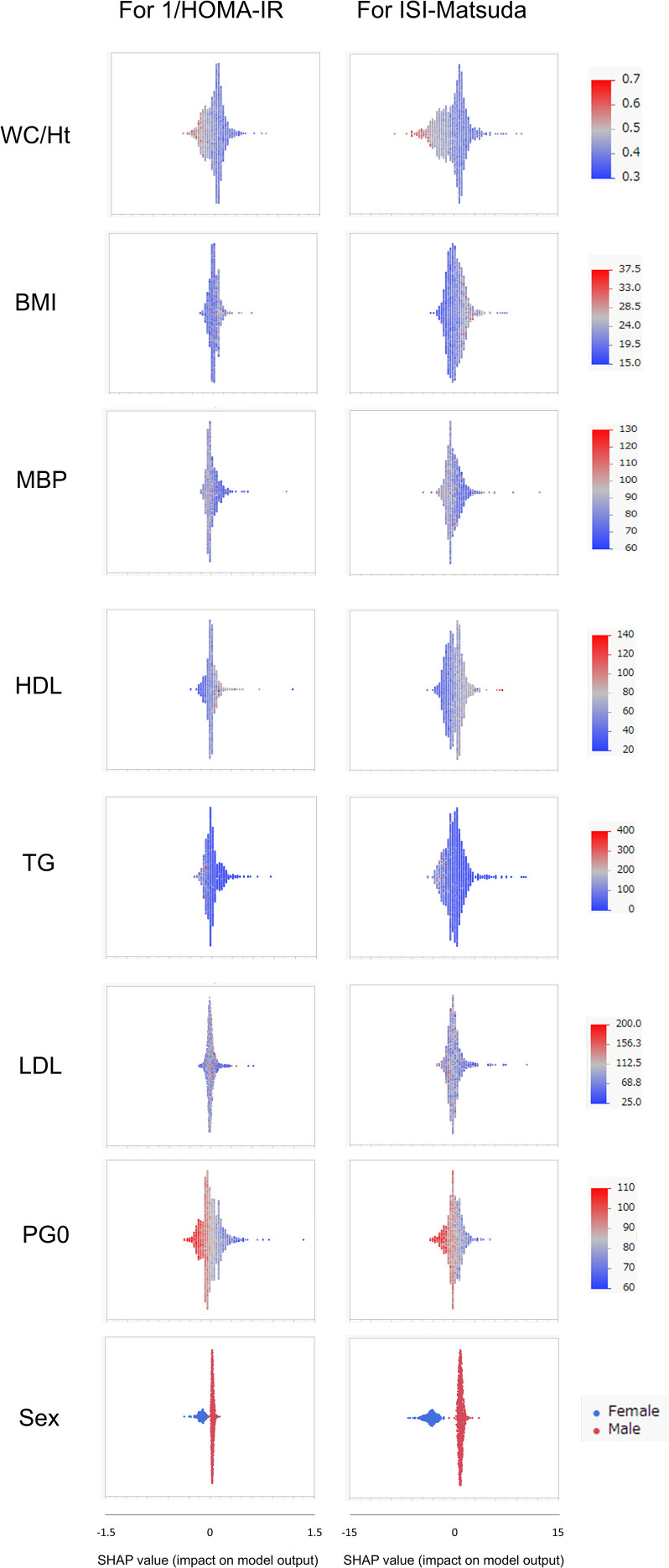 Figure 2
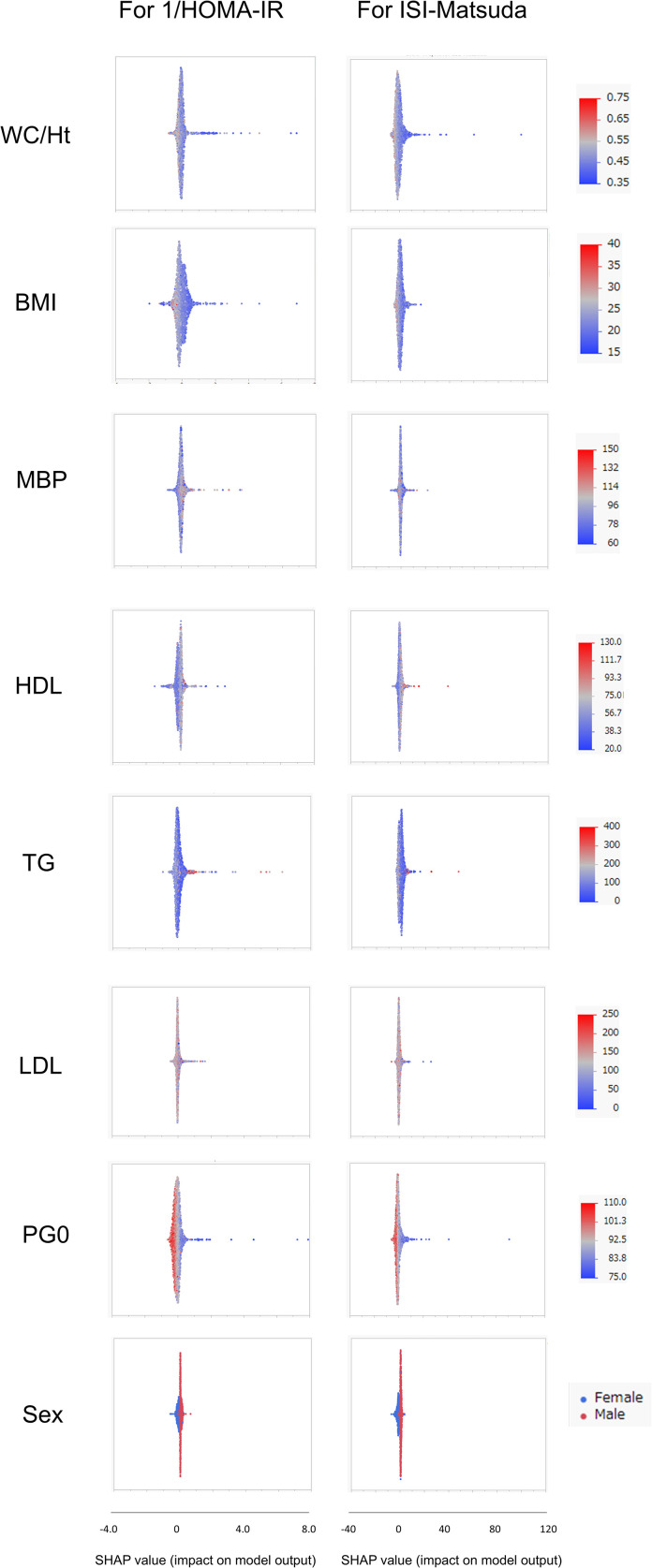 Figure 3
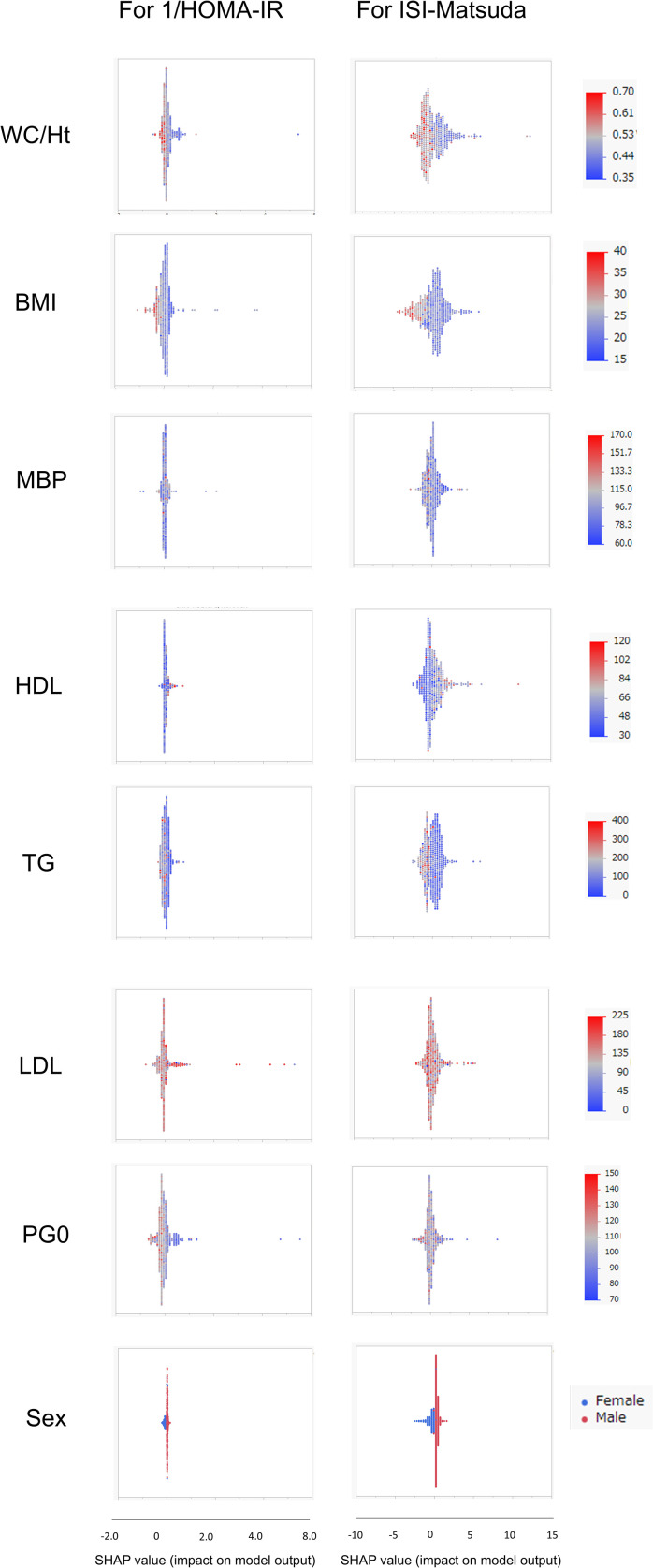 Figure 4
Peer Reviews
No public reviews on file for this paper yet. If you reviewed it on a platform where reviews are public (OpenReview, ICLR, NeurIPS, ICML), you can paste yours below so the community can read it here.
Videos
No videos yet. Explain this paper in a talk, walkthrough, or lecture? Add one.
Taxonomy
TopicsLiver Disease Diagnosis and Treatment · Cardiovascular Function and Risk Factors · Adipose Tissue and Metabolism