Applying a hexapod circular frame to gradually correct persistent knee flexion due to congenital aplasia of the quadriceps—a case report and review of the literature
Maxime Pilloux, Victor Aye, Dimitri Fasel, Elio Paris, Giacomo De Marco, Oscar Vazquez, Christina Steiger, Romain Dayer, Sana Boudabbous, Dimitri Ceroni

TL;DR
A 10-year-old girl with a rare condition causing severe knee flexion was treated using a hexapod circular frame, significantly improving her mobility and gait.
Contribution
This case demonstrates the successful use of a hexapod circular frame to correct a previously irreversible knee deformity due to quadriceps aplasia.
Findings
Hexapod circular frames enabled safe and controlled correction of a severe knee flexion deformity.
The treatment improved the patient's gait and functional mobility significantly.
Combining patellar mobilization and hamstring tendon transfer with the frame enhanced the correction outcome.
Abstract
Congenital aplasia or hypoplasia of the quadriceps muscle are rare conditions that significantly impair the extension of the knee joint, resulting in a sustained flexion deformity. These conditions alter overall gait quality, impede daily activities and require effective, timely intervention. Surgical techniques for correction have been described, including soft-tissue release, guided growth, tendon transfer and external fixators. Among the external fixators available, hexapod circular frames are probably the most effective because they enable the precise, progressive correction of complex multiaxial deformities. We present the case of a 10-year-old girl with quadriceps aplasia and a severe flexion contracture of the knee. Surgical treatment involved the mobilisation of the patella, a transfer of hamstring tendons and the application of a hexapod circular frame to control the correction…
Genes, proteins, chemicals, diseases, species, mutations and cell lines named across the full text — each resolved to its canonical identifier and authoritative record.
Click any figure to enlarge with its caption.
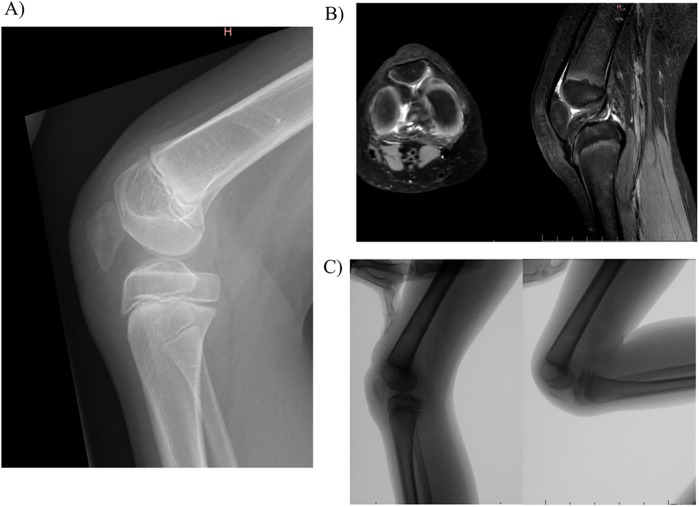 Figure 1
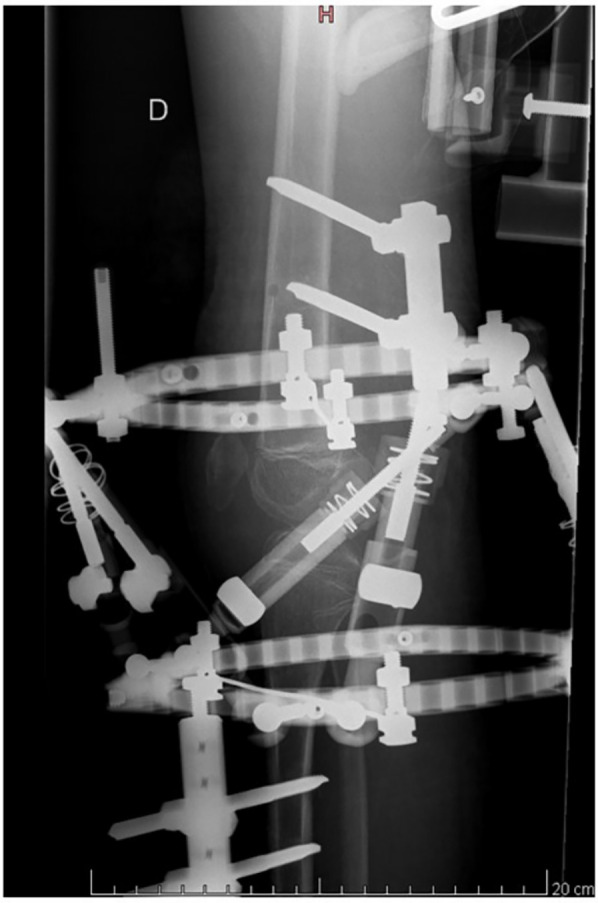 Figure 2
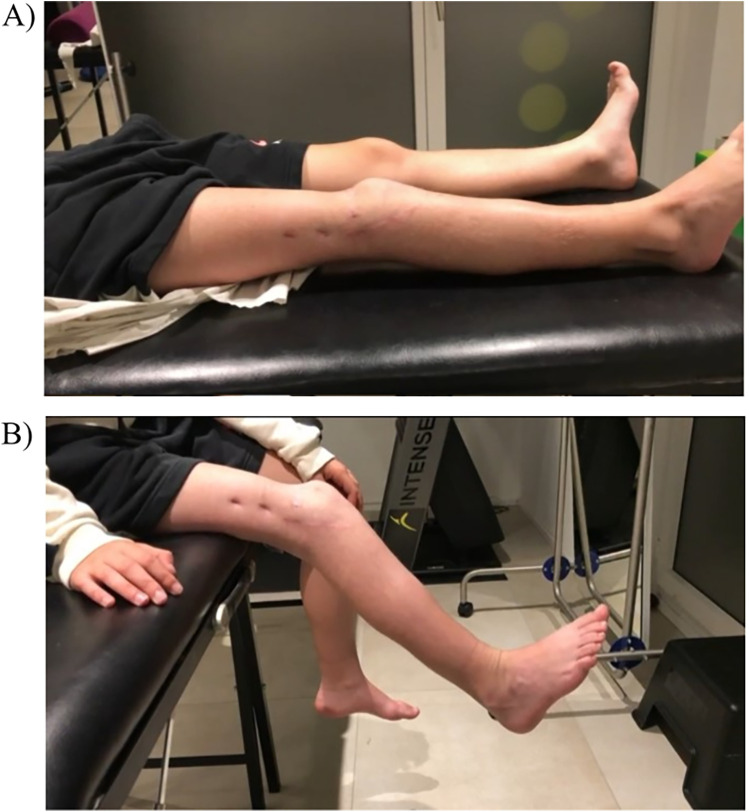 Figure 3
Peer Reviews
No public reviews on file for this paper yet. If you reviewed it on a platform where reviews are public (OpenReview, ICLR, NeurIPS, ICML), you can paste yours below so the community can read it here.
Videos
No videos yet. Explain this paper in a talk, walkthrough, or lecture? Add one.
Taxonomy
TopicsKnee injuries and reconstruction techniques · Bone fractures and treatments · Sarcoma Diagnosis and Treatment