Development and validation of an interpretable machine learning model for acute radiation dermatitis in breast cancer
Xuejuan Duan, Yadong Liu, Yuguang Shang, Xiaomeng Lu, Yanhong Zhou, Liguo Liu, Zhikun Liu

TL;DR
This study develops an interpretable machine learning model to predict acute radiation dermatitis in breast cancer patients, aiming to improve treatment planning and reduce severe side effects.
Contribution
The novel contribution is an interpretable machine learning model for predicting acute radiation dermatitis with key predictors identified via SHAP analysis.
Findings
A random forest model achieved an AUC of 0.84 in training and 0.748 in testing for predicting acute radiation dermatitis.
SHAP analysis identified CTVsc, CTVim, TNM stage II, and diabetic status as key predictors of radiation dermatitis.
The model showed better net benefits than 'treat-all' or 'treat-none' strategies at treatment thresholds of 25%–75%.
Abstract
Radiation dermatitis (RD), a common adverse reaction in breast cancer radiotherapy, impairs quality of life and increases healthcare burdens. Developing an effective risk prediction model is crucial for early high-risk patient identification and preventive interventions. This study enrolled 691 breast cancer patients undergoing postoperative radiotherapy at our center from February 1 to December 19, 2024. RD severity and correlates were monitored during and 2 weeks after radiotherapy. The dataset was divided into training (n=552) and test (n=139) cohorts. Fourteen machine learning algorithms were evaluated via 10-fold cross-validation, with model selection based on Area Under the Curve (AUC) and other metrics. Model reliability was verified using an internal hold-out test set, and SHAP analysis ensured interpretability. Among 691 patients,52.68% (n=364) developed grade ≥2 acute RD.…
Genes, proteins, chemicals, diseases, species, mutations and cell lines named across the full text — each resolved to its canonical identifier and authoritative record.
Click any figure to enlarge with its caption.
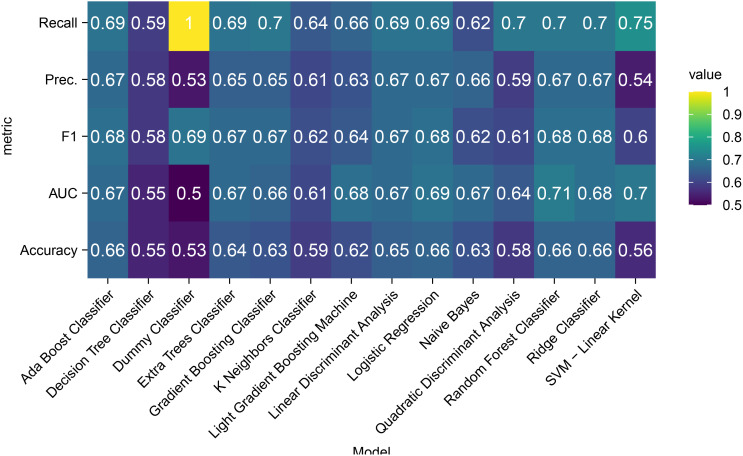 Figure 1
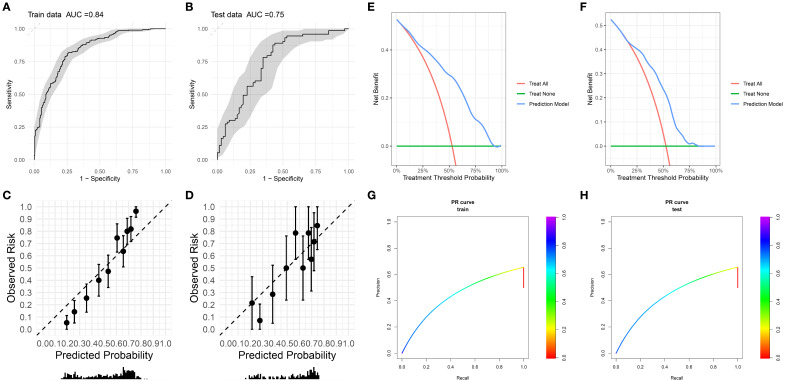 Figure 2
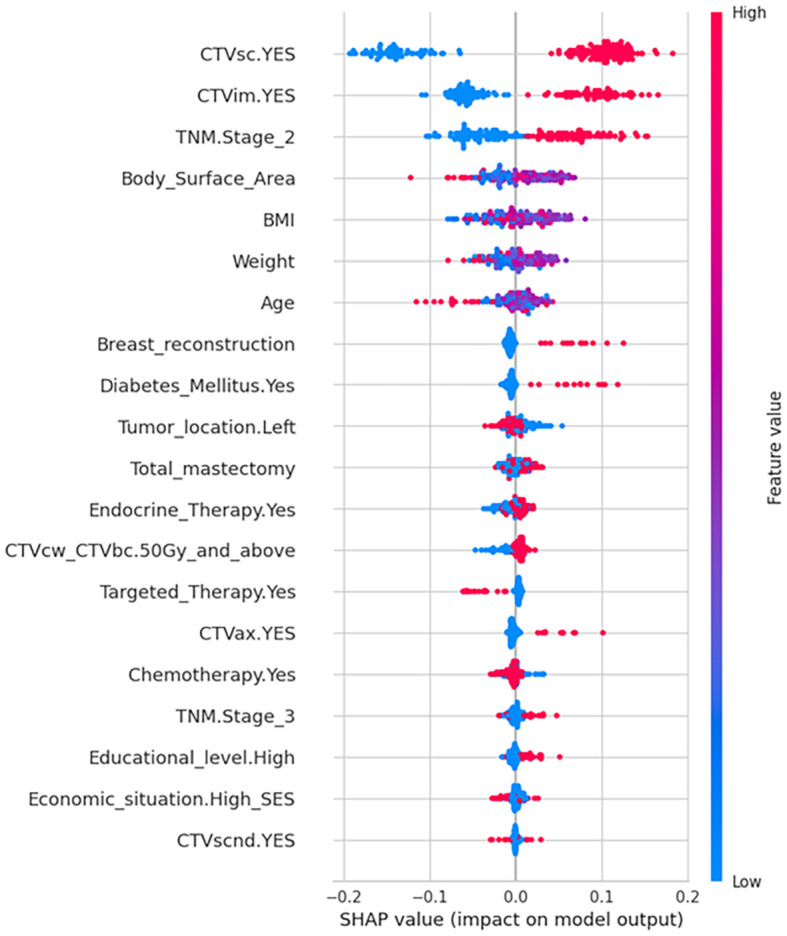 Figure 3
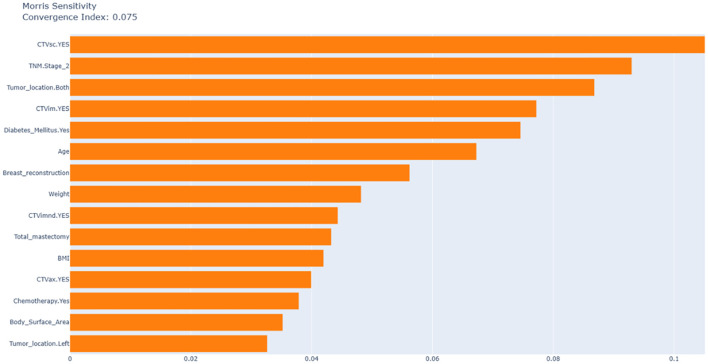 Figure 4
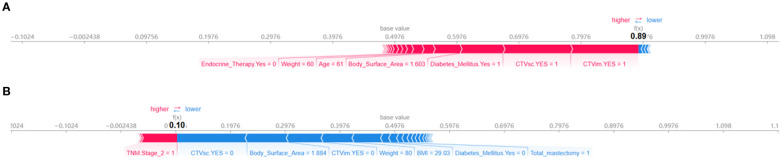 Figure 5
Peer Reviews
No public reviews on file for this paper yet. If you reviewed it on a platform where reviews are public (OpenReview, ICLR, NeurIPS, ICML), you can paste yours below so the community can read it here.
Videos
No videos yet. Explain this paper in a talk, walkthrough, or lecture? Add one.
Taxonomy
TopicsEffects of Radiation Exposure · Breast Cancer Treatment Studies · Advanced Radiotherapy Techniques