Phenotypically anchored transcriptomics across diverse agrichemicals reveals conserved pathways and unique gene expression signatures in zebrafish
Lindsey St. Mary, Ryan McClure, Lisa Truong, Steven J. Carrell, Katrina M. Waters, Robyn L. Tanguay

TL;DR
This study uses zebrafish to explore how different agrichemicals affect gene expression and development, revealing shared and unique biological responses.
Contribution
The study provides a framework linking agrichemical structure to biological effects using transcriptomics in a vertebrate model.
Findings
Differential gene expression analysis revealed 0 to 4,538 DEGs per chemical with no clear link to morphological severity.
Chemical-specific gene expression patterns converged on shared pathways like neurodevelopment and cytoskeletal organization.
Semantic similarity analysis highlighted gaps in neurodevelopmental process annotations in current datasets.
Abstract
Agrichemicals such as herbicides, fungicides, insecticides, and biocides are widely used in agriculture, yet some are associated with adverse effects in humans and the environment. While many of these chemicals have been extensively studied in vitro and are included in the EPA’s ToxCast program, comprehensive in vivo comparisons using RNA sequencing across structurally diverse agrichemicals, in a single screening platform, are lacking. In this study, we examined structurally diverse agrichemicals found in the U.S. Environmental Protection Agency’s (EPA) Toxcast Phase I and II library by statically exposing early life stage zebrafish at 6 h post fertilization (hpf) until 120 hpf at concentrations ranging from 0.25 to 100 µM. Morphological outcomes were assessed at 120 hpf across 10 endpoints, including yolk sac edema, craniofacial malformations, and axis abnormalities. Chemicals that…
Genes, proteins, chemicals, diseases, species, mutations and cell lines named across the full text — each resolved to its canonical identifier and authoritative record.
Click any figure to enlarge with its caption.
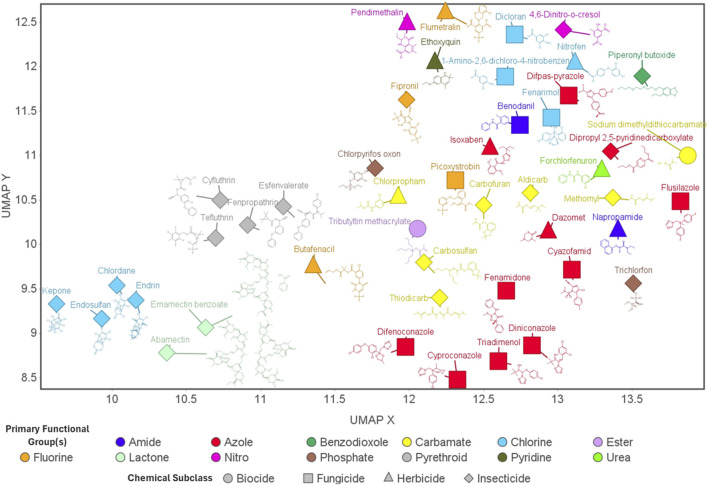 Figure 1
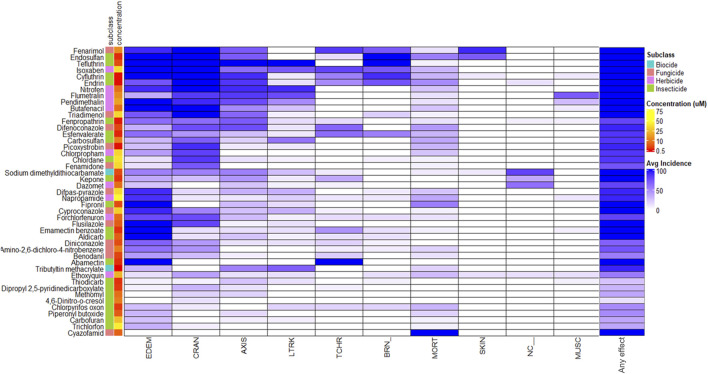 Figure 2
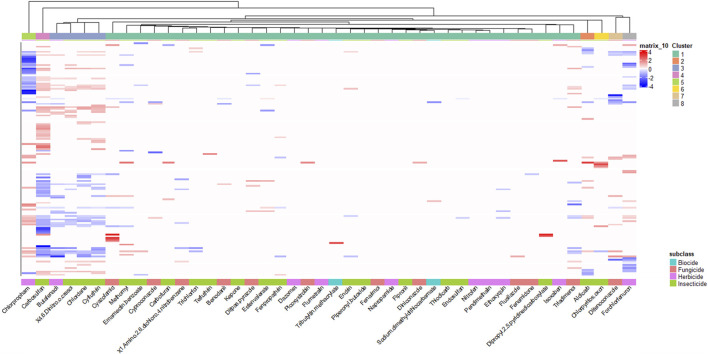 Figure 3
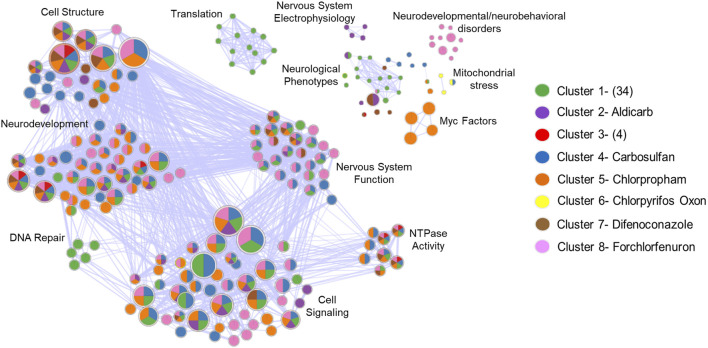 Figure 4
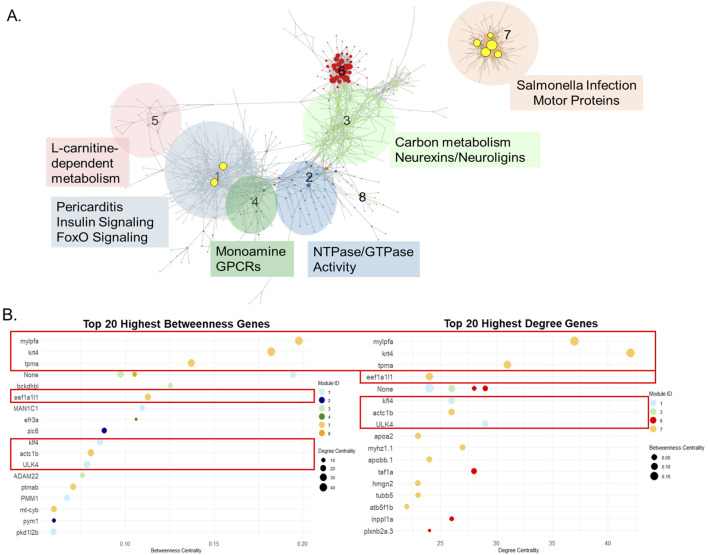 Figure 5
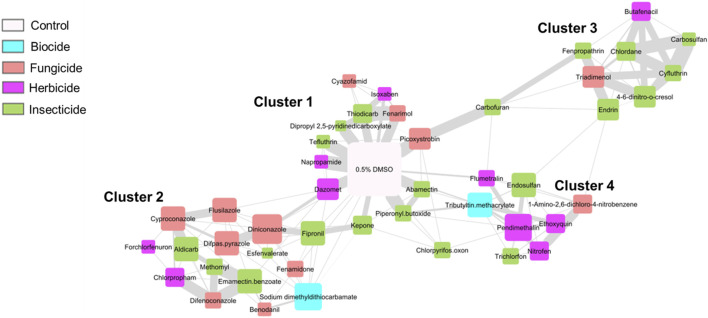 Figure 6
Peer Reviews
No public reviews on file for this paper yet. If you reviewed it on a platform where reviews are public (OpenReview, ICLR, NeurIPS, ICML), you can paste yours below so the community can read it here.
Videos
No videos yet. Explain this paper in a talk, walkthrough, or lecture? Add one.
Taxonomy
TopicsAquaculture disease management and microbiota · Zebrafish Biomedical Research Applications · CRISPR and Genetic Engineering