Danger on the plate: human health risks derived from the consumption of angular angelshark (Squatina guggenheim) meat in southeastern Brazil
Amanda Pontes Lopes, Rebeca Dias de Souza Coutinho, Tatiana Dillenburg Saint’Pierre, Rachel Ann Hauser-Davis

TL;DR
This study shows that eating angular angelshark meat in Brazil poses serious health risks, especially for children, due to dangerous levels of metals and metalloids.
Contribution
The study reports metal and metalloid contamination in S. guggenheim for the first time in Brazil and quantifies health risks for different age groups.
Findings
Arsenic levels in the shark meat exceeded Brazilian safety limits by up to 415 times.
Health risk indices for arsenic, copper, mercury, and selenium surpassed safe thresholds.
Infants and children face the highest non-carcinogenic and carcinogenic risks from consuming this shark meat.
Abstract
Shark and ray species are particularly vulnerable to pollutant bioaccumulation, including metals and metalloids, due to their k-strategist characteristics and mid–high trophic level. The angular angelshark (Squatina guggenheim) is a benthic and highly endangered species distributed from southeastern Brazil to southern Argentina. Despite being threatened with extinction and banned from marketing and consumption in Brazil, it is still widely consumed in several states. However, studies addressing metal and metalloid contamination in the meat of this species have not yet been conducted in Brazil. This study aimed to determine metal and metalloid contamination levels in S. guggenheim and to assess human health risks associated with its consumption by infants, children, teenagers, and adults, considering consumption frequencies ranging from one to five times per week. etal and metalloid…
Genes, proteins, chemicals, diseases, species, mutations and cell lines named across the full text — each resolved to its canonical identifier and authoritative record.
Click any figure to enlarge with its caption.
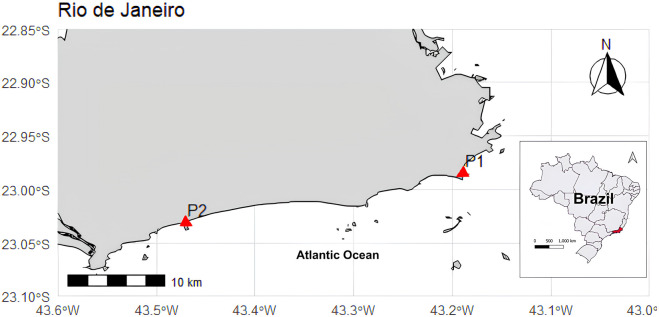 Figure 1
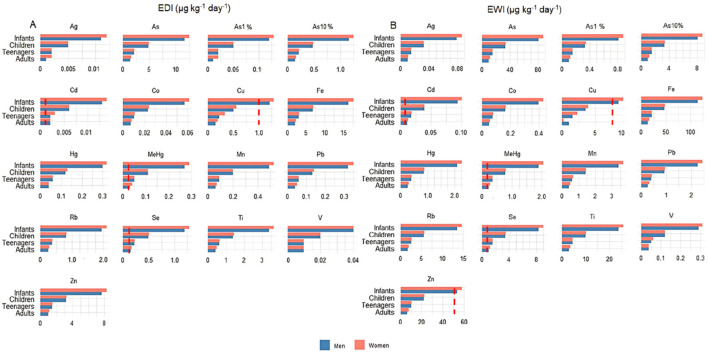 Figure 2
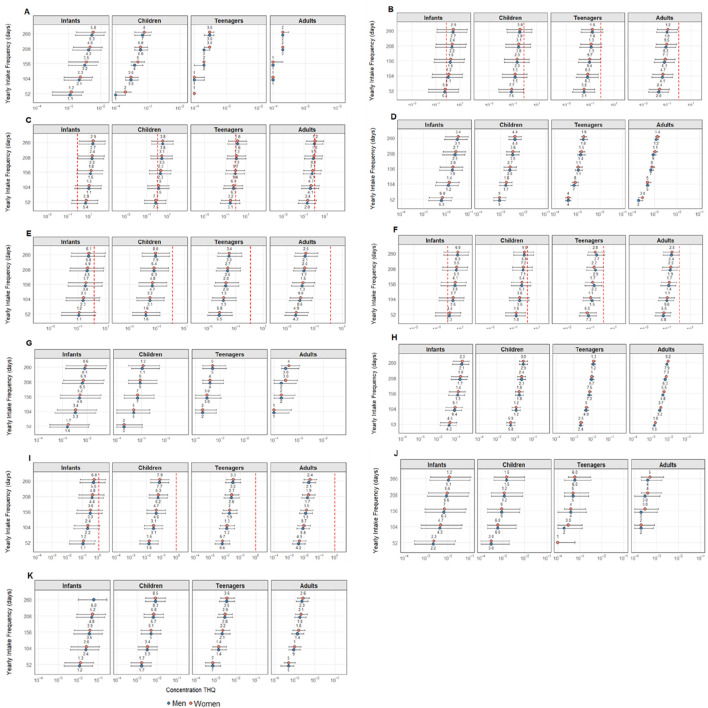 Figure 3
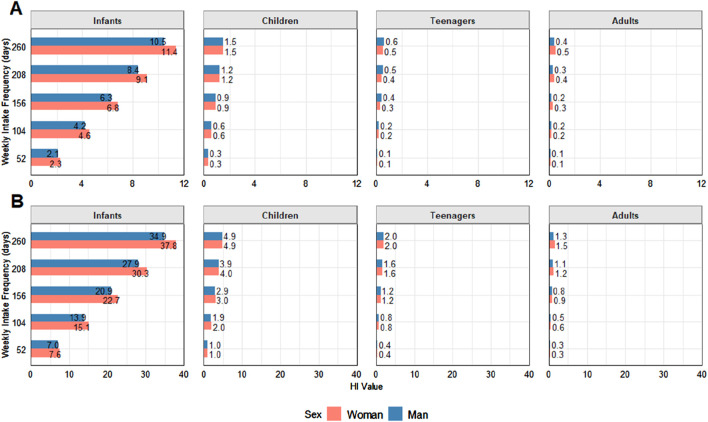 Figure 4
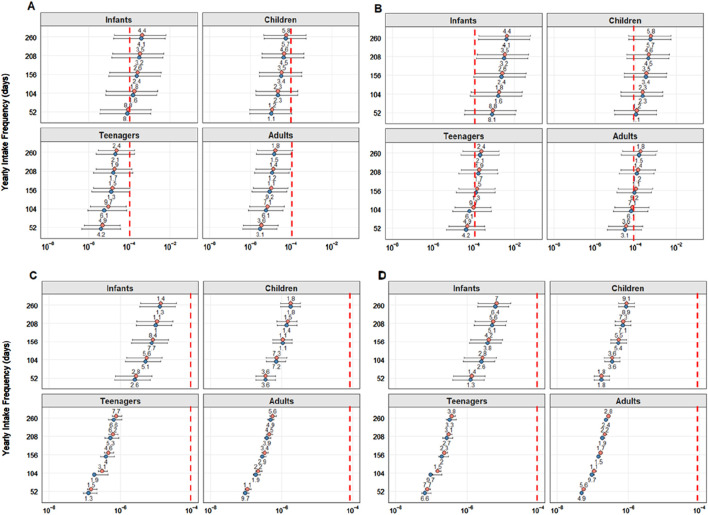 Figure 5
Peer Reviews
No public reviews on file for this paper yet. If you reviewed it on a platform where reviews are public (OpenReview, ICLR, NeurIPS, ICML), you can paste yours below so the community can read it here.
Videos
No videos yet. Explain this paper in a talk, walkthrough, or lecture? Add one.
Taxonomy
TopicsMercury impact and mitigation studies · Identification and Quantification in Food