Association of serum bicarbonate with 28-day and 90-day mortality in patients with epilepsy and concurrent sepsis: a retrospective cohort study
Yichen Liu, Shuchang Zhou, Yingchun Mao, Qing Hu, Zhixin Li, Zhihui Li

TL;DR
This study finds that serum bicarbonate levels have a U-shaped relationship with mortality in ICU patients with epilepsy and sepsis, with the lowest risk at around 25 mEq/L.
Contribution
The study is the first to identify non-linear associations between serum bicarbonate and mortality in patients with epilepsy and sepsis.
Findings
Lower mortality risk was observed with each unit increase in serum bicarbonate below threshold levels at 28 and 90 days.
Higher bicarbonate levels above thresholds were linked to increased mortality risk at 90 days.
Kaplan-Meier analysis showed significant survival differences across bicarbonate levels, with normal levels correlating to better outcomes.
Abstract
Serum bicarbonate concentration is a predictor of adverse outcomes in various diseases. However, its role in forecasting outcomes specifically for patients with epilepsy and concurrent sepsis remains unclear. This study examines the relationship between serum bicarbonate levels and 28-day and 90-day mortality in patients with epilepsy and sepsis who were admitted to the intensive care unit (ICU). Clinical data from 1,271 patients with epilepsy and concurrent sepsis were retrieved from the Medical Information Mart for Intensive Care (MIMIC)-IV database (2008–2022) for retrospective analysis. The primary outcomes measured were mortality rates at 28 and 90 days. We used multivariate Cox regression analysis, restricted cubic splines, threshold effect analysis, and survival curves to assess the impact of serum bicarbonate levels on 28-day and 90-day mortality. Mortality rates for patients…
Genes, proteins, chemicals, diseases, species, mutations and cell lines named across the full text — each resolved to its canonical identifier and authoritative record.
Click any figure to enlarge with its caption.
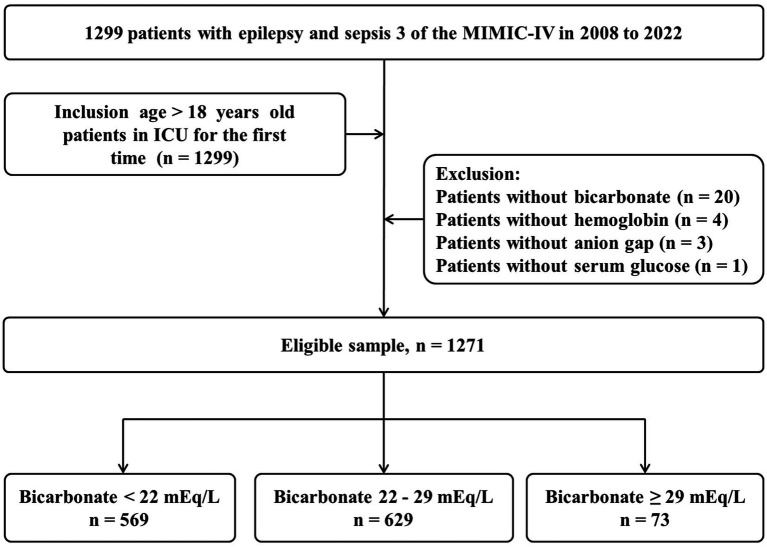 Figure 1
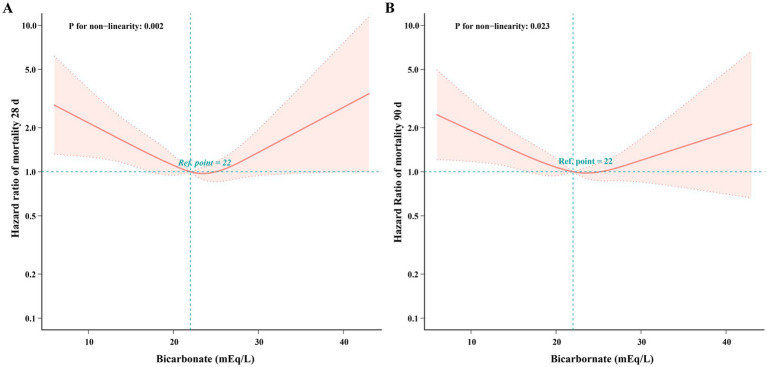 Figure 2
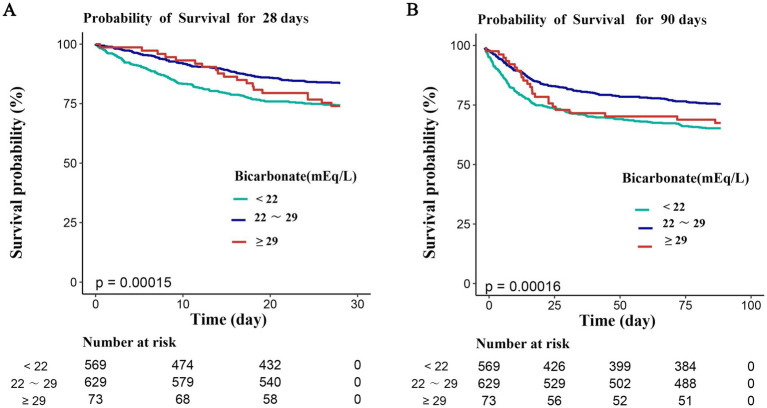 Figure 3
Peer Reviews
No public reviews on file for this paper yet. If you reviewed it on a platform where reviews are public (OpenReview, ICLR, NeurIPS, ICML), you can paste yours below so the community can read it here.
Videos
No videos yet. Explain this paper in a talk, walkthrough, or lecture? Add one.
Taxonomy
TopicsRenal function and acid-base balance · Epilepsy research and treatment · Pharmacological Effects and Toxicity Studies