The ribonuclease E regulator RebA is essential for diazotrophic growth in the cyanobacterium Anabaena PCC 7120
Sujuan Liu, Zhenyu Wang, Guiming Lin, Wenkai Li, Xiaoli Zeng, Ju‐Yuan Zhang, Cheng‐Cai Zhang

TL;DR
The protein RebA is crucial for nitrogen fixation in the cyanobacterium Anabaena PCC 7120 by regulating RNA metabolism during heterocyst development.
Contribution
This study reveals a novel posttranscriptional regulatory mechanism linking RNase E activity to heterocyst development and nitrogen transport in cyanobacteria.
Findings
The rebA mutant (ΔrebA) shows severe growth defects under nitrogen starvation despite increased heterocyst formation.
RebA is transiently upregulated during heterocyst differentiation and is required for normal thylakoid structure and pigment synthesis.
The ΔrebA phenotype is rescued only by wild-type RebA, confirming its function depends on binding to RNase E.
Abstract
Ribonuclease E (RNase E) is central to bacterial RNA metabolism. In cyanobacteria, its activity is inhibited by RebA, a key mechanism for controlling cell morphology. Here, we demonstrate that rebA is essential for diazotrophic growth of Anabaena PCC 7120, a filamentous cyanobacterium capable of forming heterocysts—specialized nitrogen‐fixing cells—upon nitrogen starvation. The rebA mutant strain (ΔrebA) showed severe growth defects in nitrogen‐deprived conditions, despite forming more heterocysts than the wild type. With a GFP fusion strain, we show that RebA is transiently upregulated during heterocyst differentiation. Microscopic and ultrastructural analyses revealed that ΔrebA heterocysts accumulated abnormally large cyanophycin granules, while vegetative cells showed reduced pigment levels and disorganized thylakoid membranes, phenotypes indicative of a severe nitrogen deficiency…
Genes, proteins, chemicals, diseases, species, mutations and cell lines named across the full text — each resolved to its canonical identifier and authoritative record.
Click any figure to enlarge with its caption.
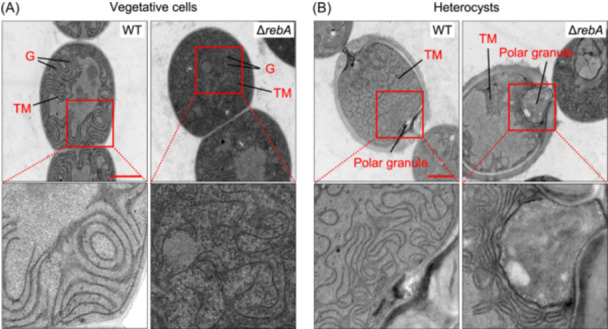 Figure 1
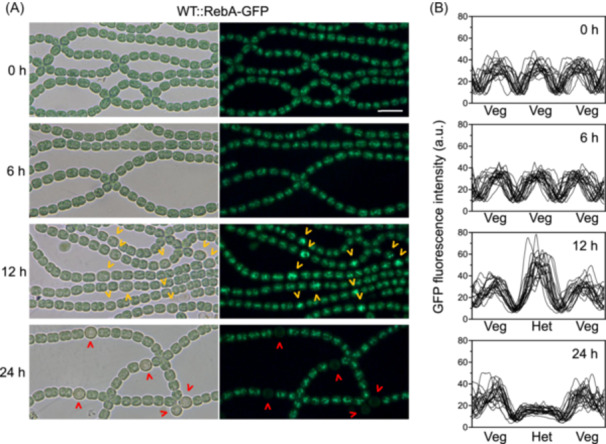 Figure 2
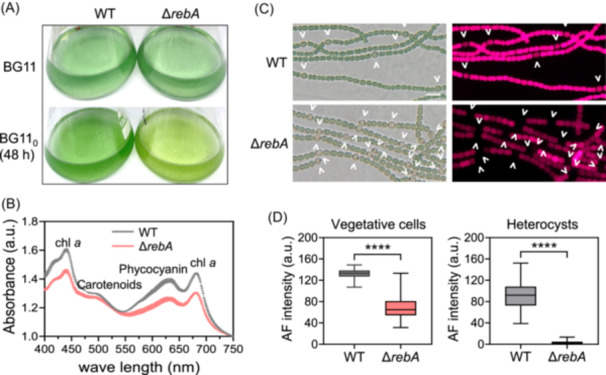 Figure 3
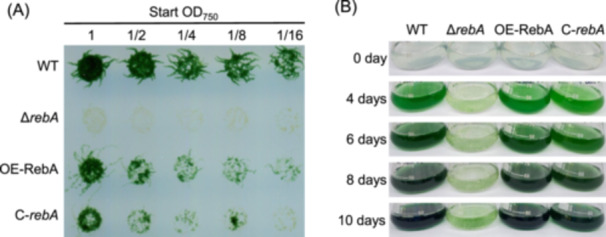 Figure 4
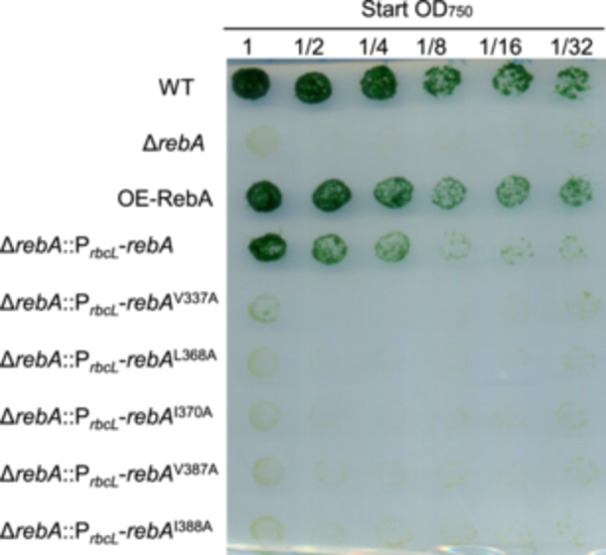 Figure 5
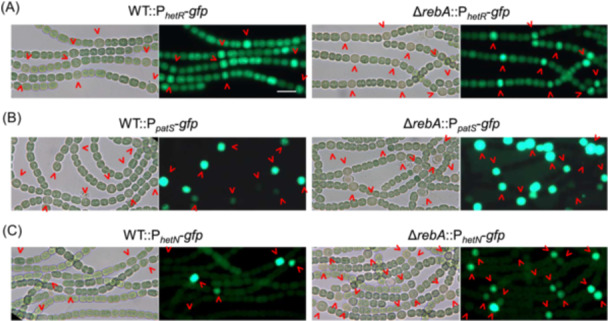 Figure 6
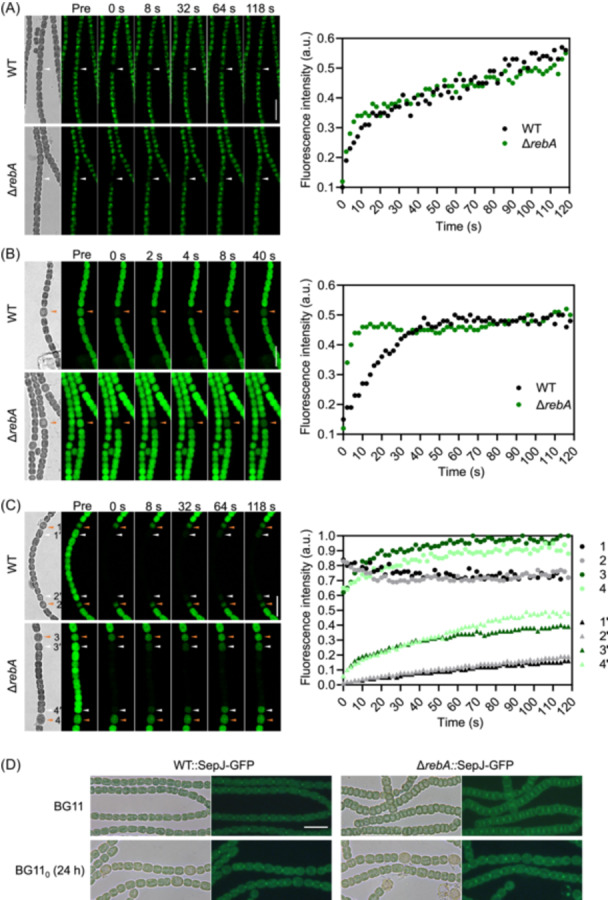 Figure 7
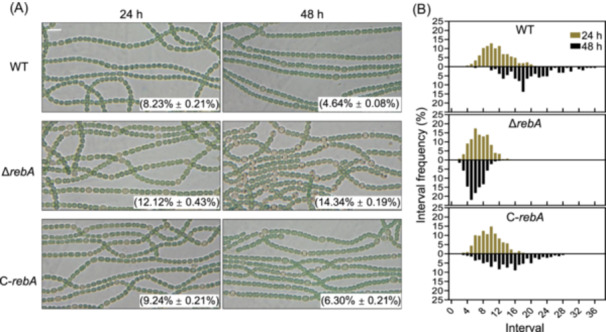 Figure 8
Peer Reviews
No public reviews on file for this paper yet. If you reviewed it on a platform where reviews are public (OpenReview, ICLR, NeurIPS, ICML), you can paste yours below so the community can read it here.
Videos
No videos yet. Explain this paper in a talk, walkthrough, or lecture? Add one.
Taxonomy
TopicsPhotosynthetic Processes and Mechanisms · Bacterial Genetics and Biotechnology · Microbial Metabolic Engineering and Bioproduction